We support and service your measurement equipment through its entire life-cycle, from installation to preventive maintenance and calibration to equipment repair.
Please choose your equipment type:
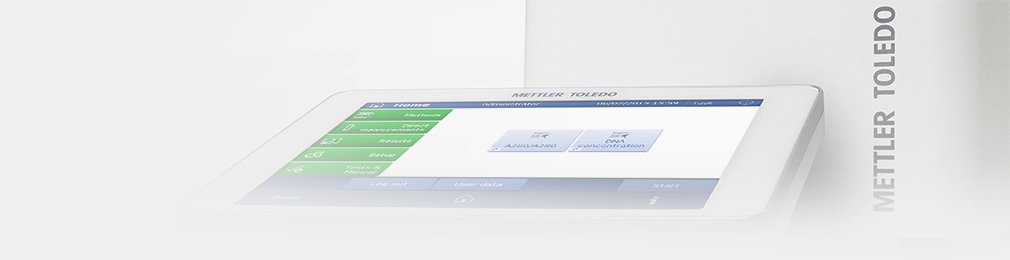
A pharma spectrophotometer is an analytical device used in the pharmaceutical industry that uses light absorption to conduct qualitative and quantitative analyses of active pharmaceutical ingredients. Our pharma spectrophotometer fully complies with European and US pharmacopeia regulations and FDA 21 CFR Part 11 requirements, making it ideal for use in regulated environments. Compact and designed with the One Click™ interface, it can also run one-second measurements at the touch of a button.
METTLER TOLEDO'S UV/VIS Excellence Spectrophotometers offer a range of benefits to optimize and simplify your spectrophotometric analysis workflow. Watch the video and learn more about our UV Vis instruments.
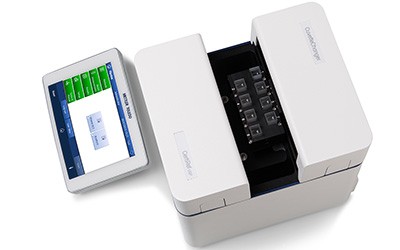
Don't compromise performance — save space with our small footprint instruments that are about the size of a piece of paper. Tailor our instruments to your needs with smart accessories and automation solutions. Read more
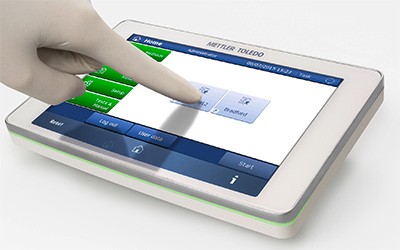
An easy and intuitive way to run tasks right from the terminal. Get secure guidance with step-by-step instructions. Customizable shortcuts are easily linked directly on the home screen.

Sample handling is fast and easy due to the open sample compartment. The direct access also allows for straightforward installation of accessories. Read more

Optimize your spectroscopic workflow using our smart accessories, such as a cuvette changer, autosampler, thermostat, etc. Read more

Automated and simple UV Vis performance qualification according to the European and US pharmacopoeia with error-free evaluation and documentation to ensure regulatory compliance. Read more

LabX™ PC software is used with our UV Vis instrument to support data integrity compliance with FDA 21 CFR Part 11. LabX supports multi-parameter analysis and automated calculations to enhance lab productivity. Read more

Choose between the Flex, Pro, and Max UV Vis InMotion™ autosampler base, and combine it with a sample rack. Finish your system with a UV Vis sample kit to make it the perfect fit for your laboratory. Read more

The METTLER TOLEDO cuvette portfolio offers reliable and economic macro glass cuvettes in 10 and 50 mm optical path length (OPL), Micro Cuvettes and Flow Cells. Read more

Find our publications in the topics of UV Vis spectrophotometric fundamental, applications, instrumentation, pharmacopeia compliance, etc. Read more
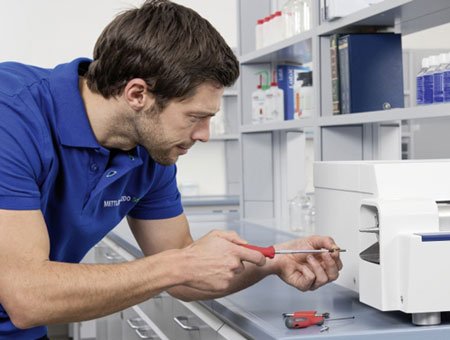
We support and service your measurement equipment through its entire life-cycle, from installation to preventive maintenance and calibration to equipment repair.
Please choose your equipment type: