
Manage your online profile and customize your mt.com experience
Browse a custom portfolio, access quotes, and manage your installed devices on our extended digital platform.

High-quality materials and superior weighing cell technology from over 75 years of experience deliver accurate and reliable weighing results for every measurement.
Hello and welcome to our product demonstration video of Mettler Toledo MSTs balance. MSTs laboratory balances are available both as analytical balances up to 300 gram and as precision balances up to 12 kg capacity. These balances are characterized by their simple and intuitive user interface. In addition to reliable and accurate weighing performance and a robust mechanical housing, these balances features various built-in weighing applications and connectivity functions for connecting to PC or other laboratory instruments. So let's discover all these features together and get a closer look to them. The housing surface of the balance are large and flat. corners around it, making them very easy to clean. The large 7-inch color display is swipe sensitive and offers a user experience that we are used to from tablets or smartphones, even when wearing laboratory gloves. The balance housing is made of die-cast aluminum, which gives the balance a robust design and an increased resistance to harsh working conditions. The draft shield of the analytical balance has two quick lock latches that allow the doors to be dismantled within seconds. Thanks to the large display that covers almost the entire width of the balance, the weighing results can be displayed large and clearly. The user interface is logical and intuitive. To configure your balance according to your needs, but also to support you in your daily weighing task with clever weighing application like formulation or differential weighing, which guides you through your process, records and calculates all relevant data automatically. The need for connecting laboratory equipment to PCs or interconnecting balances to other laboratory instruments are constantly increasing. For this reason, MSTs balances are equipped with inbuilt state-of-the-art communication interfaces. One RS232 interface is integrated. In addition, there are two USB interfaces for connecting the balance to a PC and for connecting peripheral devices such a printer or a barcode reader. A connected USB memory stick enables the export of weighing protocols electronically as CSV, XML or PDF files without the need of an additional PC software. If you need to export weighing results to a secure database or want to remotely control the balance via web browser, the integrated Ethernet interface can be used. For advanced data management application, we offer our EasyDirect balance software solution. The software is optionally available and can be installed on any computer running a Windows 10 operating system. EasyDirect can be connected to up to 10 balances simultaneously. The weighing results can be easily transferred to a secured SQL database via RS232 or Ethernet at the same time of creation. Immediate balance status queries and report generation are fully supported via the Ethernet interface. With the MSTS balance, we build up our 75 years of weighing experience to design the ideal balance for the everyday usage. Thanks for watching our demo and feel free to contact us for more information.
Your daily weighing tasks are faster and more efficient with an intuitive user interface allowing users of all skill levels to operate the balance quickly.

Multiple connection interfaces, such as LAN, USB, and RS232, make it easy to connect your laboratory balance to a PC, printer, and barcode reader for quick and error-free transfer of weighing data.

LabX™ laboratory software works with our XPR and XSR laboratory balances to take care of all your data automatically, centrally control multiple laboratory instruments and users, and support compliance with 21 CFR part 11.
Metal housing, overload protection and high-quality materials contribute to your laboratory balances performing reliably for many years to come.

Cleaning your laboratory balances is fast and easy thanks to smooth and flat surfaces and innovative design features such as quick-release draft shields.
Hmm
The innovative weighing pans, such as SmartGrid™ and SmartPan™ Pro, minimize the effects of airflow on the weighing cell, yielding faster stabilization times and improved repeatability.

Tailor your balance to meet your exact needs. With different options for minimizing static, weighing ergonomically into a variety of vessels, performing routine pipette testing, or measuring density, we offer excellent solutions to let you make the most out of your investment.
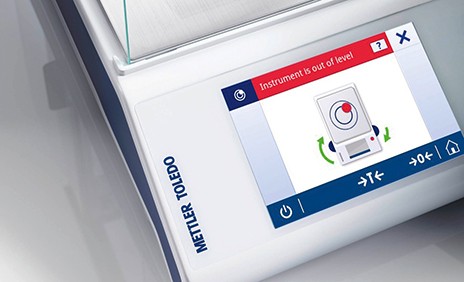
The built-in balance leveling gives a warning when your laboratory balance is not level. On-screen guidance tells you how much to turn each of the adjustable feet to help you level the balance in seconds.

Create a customized package for your METTLER TOLEDO laboratory balance from our wide range of service offerings that fits your exact needs.
Make your life easier by customizing your weighing processes with our wide range of accessories: printers, Wi-Fi adapters, test weights, protective covers, and more.
Expertly manufactured OIML and ASTM test weights meet all your routine testing and calibration needs. Explore our single weights, weight sets, and CarePacs™, the unique and cost effective solution to balance testing.
Do you want to simplify data management and reduce errors? Do you need to ensure data integrity to ALCOA+ standards and comply with 21 CFR part 11? Do you calibrate weights? Whatever your weighing needs, we have a software solution.
Speed up your working processes, eliminate transcription errors, and ensure traceability with our robust high-quality printers. Dot matrix and thermal printing technologies enable you to print on paper, and different types of labels.
Learn about our global weighing standard that guides you through balance selection, installation, operation, routine testing and calibration. Our free GWP® Recommendation service ensures your selected balance is fit for purpose.
This valuable guide helps you avoid the basic mistakes that can lead to inaccurate weighing results. Learn what the best location for your balance is, how to operate it properly, and the everyday factors that can influence your results.
A lab balance is a highly accurate and robust weighing instrument with a capacity ranging from 2.1 g to 64 kg, and readability from 0.0001 mg (7 digits) to 1000 mg (0 digits). Laboratory balances come with smart features to simplify work, optimize workflows, and support compliance with regulations.
We have a wide range of lab balances that suit every lab application and needs. See examples of lab balances below.
![]() |
XPR Excellence Level Lab Balances |
![]() |
MS-TS Advanced Level Lab Balances |
![]() |
ME-T Standard Level Lab Balances |
Laboratory balances are used to measure mass of materials with high accuracy. They have a wide range of uses in industries such as pharmaceutical, chemical, food, battery, and are used in research and development, manufacturing, and quality control. Some example applications are the following:
Formulation application on an MS-TS lab balance:
A laboratory balance should be used under optimal conditions in a stable weighing place. For a deep dive into how to use a laboratory balance correctly, check out the Proper Weighing Guide. Refer to the section "What are the most important factors to consider when using a laboratory balance?".
When using a lab balance, ensure the balance is properly level and adjusted.
![]() |
Lab Balance Proper Leveling |
Press zero to weigh on your laboratory balance. If available, open the draft shield and put the tare container on the weighing pan. Gloves or tweezers may be required. Press tare and dose the sample until the target weight is reached or place the object to be weighed on the weighing pan after zeroing. If available, the draft shield door is to be closed to release the mass value. After the weighing process is completed, ensure your lab balance is clean and ready for the next weighing.
![]() |
Adding Sample on an XSR Lab Balance |
The most common factors that affect weighing accuracy when operating a lab balance are the following:
XPR lab balance example measurement uncertainties in mg depending on its location in the lab:
![]() |
Where should I place the micro balance in my laboratory? |
The types of balances used in laboratories can vary by application and lab needs. The most common types of laboratory balances include:
![]() |
Analytical Lab Balances |
![]() |
Micro Lab Balances |
![]() |
Automatic Balances |
![]() |
Precision Lab Balances |
For lab balances to be accurate, the measured mass must be close to the true value of the applied weight, and repeated weighing of the same mass must have low scatter. A lab balance is accurate when its results are both true and precise, as illustrated in the image below:
![]() |
Accuracy of Laboratory Balance |
Whether your laboratory balance is fit-for-purpose depends on:
To determine this, please check out our Good Weighing Practice GWP® and get in touch with us.
![]() |
Balance Fir-for-purpose |
The maximum capacity of a laboratory balance varies depending on its type. The maximum capacities of METTLER TOLEDO lab balances by type are listed below:
Make sure you know the maximum weight of your samples, including their tare vessels, so you select the balance that fits your needs.
![]() |
MS-L lab balance with 32 kg capacity |
A laboratory balance is an important tool in any laboratory setting. It is used to measure the mass of various substances and materials with a high degree of accuracy. Balances are used in a variety of applications in lab and manufacturing environments including weighing test materials, sample preparation, formulation, density analysis, purity analysis, emissions testing, quality control, material and conformity testing, and routine pipette testing.
Did you know that your food may contain toxic levels of metals and heavy metals in particular? How would you feel about unknowingly feeding your baby with toxic heavy metals or slowly poisoning yourself with contaminated drinking water? So how can we be sure that trace metals stay within safe limits? The answer is simple: trace metal analysis. Determining trace metal content can be critical for product development, in quality control and for ensuring regulatory compliance in a wide range of different products such as oils and lubricants, cosmetics and personal care products, medicines, soils and fertilizers, as well as in food and drinking water. Metzler Toledo XPR Analytical Balances are perfect for preparing the highly accurate calibration standard solutions that are a critical part of the process. The automatic electrostatic detection and elimination system avoids weighing errors and prevents contamination. The metal ions detected in a sample using spectroscopy are compared to calibration curves generated using high purity reference standards. Saved weighing methods ensure correct procedures are followed to prepare the standards. The automated doors are operated with the wave of a hand and the dedicated ergo clip holds your flask in the precise position for easy dosing. The anti-static system provides a warning if the measured weighing error exceeds predefined tolerances. The optional ionizing module can be set to work automatically to eliminate electrostatic charge in just a few seconds. The required amount of substance can be dosed directly into the volumetric flask. Avoiding material transfer errors and reducing the risk of contamination. The SmartTrack weighing guide helps you dose the correct amount. Each result can be saved directly to the built-in results protocol. All relevant metadata, such as time, date, user ID and instrument status are included. Results can be exported to a computer, database or USB stick, and a label can be printed automatically. Your accurately weighed standard is now ready for dilution in preparation for your analysis. Preparing solutions and standards for trace metal analysis using an excellence level analytical balance eliminates electrostatic errors, reduces the risk of contamination by minimizing sample transfer steps and ensures traceable results. Contact us today so that we can help you ensure our family's food and drinking water are free from metal contaminants.
Laboratory balances are critical in many labs because they provide the most accurate measurement of various substances for experiments and analyses. This is highly relevant for the following reasons:
Regular routine testing along with scheduled calibrations and frequent cleaning will greatly prolong the life of your balance and maintain its accuracy. Our GWP® Verification provides you with a quality assurance plan for the highest reliability for your balances over time.
Are you sure your balance or scale is performing as it should? Could you document its performance if you had to? In this video, we'll talk about the routine testing of your balance or scale. You'll learn what routine testing is, why it's necessary, and how to do it right. First, let's look at what routine testing actually is. Imagine your balance or scale is a car. As a responsible car owner, you have regularly scheduled service appointments with a mechanic to help keep your car running well. Are you sure your weighing equipment is performing as it should? Could you document it if you need to? In this video by METTLER TOLEDO, you will learn about the routine testing of balances or scales and the answers to common questions such as: What is routine testing? Why is it necessary? How can it be done correctly? Over time, the performance of your weighing device can change. By testing routinely, you can make sure your weighing results remain accurate. Learn more about how to perform successful routine testing. Click the link below to find out more about GWP-Verification: https://www.mt.com/global/en/home/library/laboratory-weighing/Good-Weighing-Practice/verification-of-good-weighing.html?cmp=smo_GLO_YT_LAB_OTH_Youtube_LAB_zs3Y0w0hh3w Over time, the performance of your weighing device can change due to environmental influences, wear and tear, and other damage that's not visible. Routine testing checks to ensure that the device continues to perform accurately enough based on your needs until your next calibration. What is the right way to test a weighing device? There are four pillars that influence the routine testing of any weighing device. They are test frequency, test methods, test weights, and test tolerances. User training is also a key factor and forms the basis for the success of your routine testing program. First, let's take a closer look at what test frequency entails. How often do you need to perform your tests? The frequency will increase depending on the risks that are a part of your weighing process and how those risks could affect results. If the risk to accuracy, your process, or your product quality is high, you will need to perform testing more frequently. The second pillar involves your test methods. To verify the performance of your weighing device, there are three different tests that need to be run. Sensitivity tests are quick and simple. Sensitivity is measured by comparing the indicated value to the reference weight value. This is performed by placing a calibrated test weight on your balance or scale. The repeatability test checks the ability of a balance or scale to supply the same result with repeated weighings using the same load under the same conditions. It's usually measured by 6 to 10 consecutive measurements. A standard deviation is then calculated. Repeatability tests are usually done less frequently than sensitivity tests. However, they are important, especially when measuring small samples. The eccentricity test checks the corners of your balance or scale. Is there a difference in the indicated weight depending on where you place the load on the weighing pan? For each of these three tests, we offer SOPs, standard operating procedures, that you can download for free. They guide you through each of these test methods in detail. You learn how to perform these tests and assess the results. Now, let's look at the third pillar, choosing and using correct test weights based on your device, your process, and standard operating procedures. Good weighing practice, Mettler Toledo's global weighing standard, specifies that you only need two test weights for the routine testing of a balance or scale. This reduced requirement can simplify and optimize your testing efforts, while saving you a considerable amount of time and money. A smaller weight is needed for repeatability tests, typically about 5% of your device's capacity, and a larger weight is needed for sensitivity and eccentricity tests. And finally, let's review test tolerances, the fourth pillar of an effective balance testing program. Routine testing tells you whether or not your balance or scale is performing accurately enough. To have a clear pass or fail result, you need to define testing tolerances. GWP offers three levels of performance verification based on the concept of tolerance. The first level, in green, means the device performs within your predefined tolerances. The second level is a warning limit. This indication in yellow means that the device is not out of tolerance yet, but the safety margin has decreased. The balance or scale can still be used, but Mettler Toledo should be contacted. The control limit in red specifies when the device is out of tolerance and no longer fit for purpose. In this case, the balance or scale must be taken out of operation. Contact Mettler Toledo for a calibration and to assess the next steps. Keep in mind that the results of your routine testing depend on proper user training. This essential component should also be documented for audit purposes. Congratulations! You're now familiar with the four pillars of a robust and effective routine testing program. If you need help determining your necessary test frequency, which tests you should perform, and which weights you should use, Good Weighing Practice offers the GWP Verification Service. This easy-to-apply service answers these questions for your specific case, based on your requirements and your assessed risk. On selected Mettler Toledo weighing devices, a routine testing program is pre-installed. For more information on whether these devices are right for your process, contact us. Thank you for watching. We hope we can support you as you work to achieve accurate weighing results.
Lab balances need to be calibrated regularly to ensure continued accuracy over their lifetime. The frequency of calibration depends on the use of the device, the environment, and the importance of the weighing results. For effective, efficient and reliable calibration of weighing instruments, you need expertly manufactured test weights to check the performance of your weighing device.
![]() |
Routine Testing with Test Weights on an XPR Lab Balance |


