Tiếng Việt

Preparing for a laboratory audit involves a systematic approach focusing on documentation, staff training, and equipment compliance to meet standards like ISO 9001, ISO/IEC 17025, or GLP/GMP. Key actions include reviewing SOPs, conducting mock audits, ensuring calibration records are current, and organizing the workspace. Successful preparation centers on verifying data integrity and ensuring all staff understand their roles.

Review and Update Documentation

Ensure all Standard Operating Procedures (SOPs) are current, approved, and easily accessible. Review previous audit reports to address past issues and prevent recurrence.

Audit Equipment and Calibration

Check that all equipment is clean, labeled, and properly calibrated, with maintenance logs complete and accessible.

Validate Data Integrity

Ensure electronic data is backed up, software is validated, and that audit trails are active to track any changes.

Verify Personnel Training

Verify Personnel Training

Update training records, ensuring staff are qualified and understand compliance procedures. Conduct a Mock Audit: Perform internal audits to identify potential gaps in compliance before the actual audit.

Organize the Workspace

Clean and organize the laboratory to ensure a safe, efficient, and orderly environment.

Define Scope and Objectives

Clearly define what will be audited to ensure the audit team is focused.

Regulatory Compliance

ISO/IEC 17025:2017 Tối ưu hoá Quy trình và Duy trì Lợi thế cạnh tranh

ISO/IEC 17025:2017 — Tuyển tập các Công cụ Triển khai

Trang trắng ISO/IEC 17025:2017 — Tuyển tập các Công cụ Triển khai đưa ra lời khuyên về cách tốt nhất...

Yêu cầu cân USP Chương 41

Chương 41 của USP - Yêu cầu về Cân

Sách trắng này giải thích các yêu cầu cân của USP Chương 41 "Cân" và USP Chương 1251 "Cân trên cân p...

Chapter 2.1.7 European Pharmacopoeia

European Pharmacopoeia Chapter 2.1.7

Download a free white paper PDF to ensure that your weighing processes are compliant with Ph. Eur. C...

USP 41 và Dược điển Châu Âu

USP 41 và Dược điển Châu Âu

USP 41 và chương 2.1.7 Dược điển Châu Âu đề cập đến vấn đề hiệu suất của thiết bị và giới thiệu ba b...

Quality Assurance

Building a Compliant Weighing QMS - Core Principles to Follow

Your Quality Manual and Standard Operating Procedures (SOPs) must be up-to-date, strictly controlled, and accurately reflect daily laboratory practices. This forms the foundation of your concrete Weighing Quality Assurance Plan.

To survive an audit, laboratories must ensure data integrity by strictly adhering to the ALCOA++ principles. Every weighing result and metadata entry must be:

Attributable

Attributable

Clearly document who performed the actions and when.

Legible

Legible

Keep data readable, understandable, and permanent.

Contemporaneous

Contemporaneous

Record information in real-time as the weighing occurs.

Original

Original

Use authentic, primary records or certified true copies.

Accurate

Accurate

Ensure data truthfully represents the results without error.

Complete, Consistent, Enduring, Available, & Traceable ( )

Complete, Consistent, Enduring, Available, & Traceable (++)

All data—including any modifications—must be comprehensively recorded, durable throughout its lifecycle, easily accessible for audits, and fully traceable.

Hướng dẫn kiểm tra định kỳ cân và cân

Hướng dẫn kiểm tra định kỳ cân và cân

Hướng dẫn miễn phí về cách thực hiện kiểm tra định kỳ cân. Tìm hiểu tần suất kiểm tra, cách kiểm tra...

Kế hoạch Đảm bảo Chất lượng Cân cho Cân các loại

Kế hoạch Đảm bảo Chất lượng Cân Cụ thể của Bạn

Bạn có nắm rõ tần suất hiệu chuẩn và chi tiết kế hoạch kiểm tra định kỳ của mình không? Hãy kiểm tra...

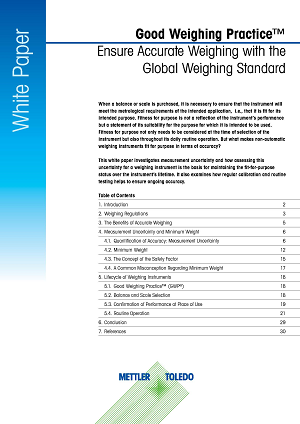
Trang trắng về Good Weighing Practice

Đảm bảo Cân Chính xác với Tiêu chuẩn Cân Toàn cầu Good Weighing Practice

Đọc trang trắng về cách đạt được các tiêu chuẩn cân dựa trên khoa học nhờ tuân theo quy trình quản l...

Good Weighing Practice™ - Thực hành cân tốt

Good Weighing Practice ꟷ Thực hành cân tốt

METTLER TOLEDO đã phát triển tiêu chuẩn Thực hành cân tốt Good Weighing Practice™ (GWP®) được công n...

Comply with ISO 9001, ISO/IEC 17025 and USP requirements: Regular accredited calibration, metrological traceability, and documented minimum weight.​

Comply with ISO 9001, ISO/IEC 17025, and GLP/GMP requirements: Regular calibration by an accredited calibration laboratory, metrological traceability, and documented fitness for intended use.​

Implement Good Weighing Practice™ (GWP®) for risk-based equipment management, routine testing, and documentation.

Implement Good Weighing Practice™ (GWP®) for risk-based equipment management, routine testing, and documentation.

Avoid common audit findings: Weighing outside validated performance parameters, non-compliant calibration schedules, and poor documentation

Avoid common audit findings: Weighing outside validated performance parameters, non-compliant calibration schedules, and poor documentation

Essential Guides: Balance Calibration, SOPs & Certificate

Laboratory Calibration article

10 Reasons Why It’s Crucial to Calibrate Laboratory Equipment

Normal wear and tear can damage instruments, creating errors that influence research results and pro...

Chất lượng, tuân thủ và cải thiện lợi nhuận với hiệu chuẩn cân

Tại sao hiệu chuẩn cân lại quan trọng?

Hiệu chuẩn cân là hoạt động bảo trì chính để đảm bảo kết quả cân chính xác. Độ không đảm bảo đo phải...

Tài liệu về Chứng nhận Hiệu chuẩn Cân

Tài liệu Tổng quan về Chứng nhận Hiệu chuẩn Cân

Tài liệu này cung cấp thông tin tổng quan về tất cả các chứng nhận hiệu chuẩn cân và dung sai cân củ...

Giấy chứng nhận hiệu chuẩn ISO 17025

Giấy chứng nhận hiệu chuẩn ISO 17025

METTLER TOLEDO cung cấp chứng chỉ hiệu chuẩn ISO 17025 cho cân và cân phòng thí nghiệm tại hơn 25 qu...

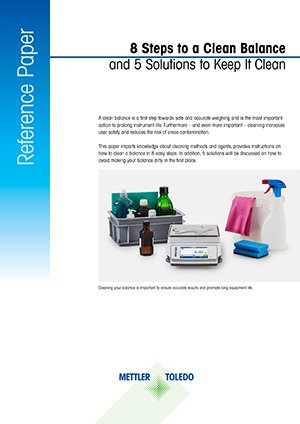
Hướng dẫn vệ sinh cân: 8 bước đơn giản để cân sạch

Hướng Dẫn Vệ Sinh Cân Phòng Thí Nghiệm: 8 Bước Đơn Giản

"8 bước để cân sạch" sẽ giúp bạn tìm hiểu tầm quan trọng của việc vệ sinh các thiết bị cân quan trọn...

Kiểm tra Cân theo Quy trình Thao tác Chuẩn (SOP)

Kiểm tra Cân theo Quy trình Thao tác Chuẩn (SOP)

Bộ 3 SOP để đảm bảo Good Weighing Practice™ (GWP) đưa ra khuyến nghị về việc kiểm tra (dựa trên nhu...

Advanced Reading: Routine Testing & Scale Verification

Hướng dẫn kiểm tra định kỳ cân và cân

Hướng dẫn kiểm tra định kỳ cân và cân

Hướng dẫn miễn phí về cách thực hiện kiểm tra định kỳ cân. Tìm hiểu tần suất kiểm tra, cách kiểm tra...

Kế hoạch Đảm bảo Chất lượng Cân cho Cân các loại

Kế hoạch Đảm bảo Chất lượng Cân Cụ thể của Bạn

Bạn có nắm rõ tần suất hiệu chuẩn và chi tiết kế hoạch kiểm tra định kỳ của mình không? Hãy kiểm tra...

Trang trắng về Good Weighing Practice

Đảm bảo Cân Chính xác với Tiêu chuẩn Cân Toàn cầu Good Weighing Practice

Đọc trang trắng về cách đạt được các tiêu chuẩn cân dựa trên khoa học nhờ tuân theo quy trình quản l...

Good Weighing Practice™ - Thực hành cân tốt

Good Weighing Practice ꟷ Thực hành cân tốt

METTLER TOLEDO đã phát triển tiêu chuẩn Thực hành cân tốt Good Weighing Practice™ (GWP®) được công n...

Achieving Continuous Compliance with METTLER TOLEDO Solutions

Why METTLER TOLEDO is The Right Choice?

Frequently Asked Questions

How do you prepare a weighing laboratory for an audit?

Start with the balance, because weighing usually sits at the front of the analytical chain, and an error there travels with the sample all the way to the final result. Make sure every balance carries a current calibration from a certified provider, one whose results state traceability to the SI (International System of Units) and measurement uncertainty rather than just a pass mark. Confirm that routine tests run at the frequency your quality system defines, that minimum weight has been determined for each balance in its actual location, and that the SOPs covering all of this are approved and genuinely in use. Then check the two things auditors follow most closely: that your weighing records meet data integrity expectations, and that the people operating the balances are trained and signed off.

What is minimum weight, and why is it such a common audit finding?

Minimum weight is the smallest net sample mass you can place on a balance while still meeting the required weighing accuracy. The concept of minimum weight applies to all industries and workplaces and is derived from the measurement uncertainty of the calibration certificate. Specifically for the quality control laboratories of Pharmaceutical companies, the Pharmacopoeias, such as USP <41> and the Ph. Eur. 2.1.7, define it through repeatability: twice the standard deviation of repeated weighings, divided by the smallest net weight, must stay within 0.10%. Weigh below that point and the relative measurement uncertainty grows too large for the result to be trusted, which is exactly why inspectors check it. To avoid the most common mistakes recurring: determine a minimum weight for each balance in its real operating spot, and don't weigh small samples that fall under it. Determine the value experimentally, remember that it is the net mass so the tare container does not count, and consider a safety factor (commonly a factor of two) so everyday work stays comfortably above the limit.

How often should you calibrate a laboratory balance?

There is no universal interval. The right frequency is the one you can defend. Good practice, in line with the life-cycle thinking behind the ISO standards and the Pharmacopeial balance requirements, is to justify the interval with a documented risk assessment rather than a habit to fix one specific interval. Weigh the decision toward how heavily the balance is used, how critical its measurements are, how stable the environment is, and what its service history shows. Between calibrations, your own staff should run routine tests far more often, and any balance that has been moved, repaired, or serviced should be recalibrated before it returns to use.

What is the difference between calibration and routine testing of a balance?

They answer different questions, and an auditor expects to see both. Calibration is carried out by a competent, usually accredited body. It establishes the balance's measurement uncertainty and its traceability to the SI (International System of Units), and the results are recorded on a calibration certificate. Routine testing, also called performance checks, is what your own staff do between calibrations to confirm the balance is still fit for purpose: typically a sensitivity check and a repeatability check, with eccentricity added where the application calls for it. In practice, calibration shows the performance of the instrument on the day when it was calibrated, while routine testing is the continuous evidence that it has stayed that way.

What makes a balance calibration certificate audit-ready?

A certificate is audit-ready when it shows more than a pass mark. It should document traceability to the SI (International System of Units), the measurement uncertainty of the results, the reference weights used and their class (for example, OIML or ASTM), the points tested across the working range, and the date and conditions of calibration. A certificate that records only "within limits" or "pass" is increasingly treated as too thin to prove the balance is fit for purpose. Calibration of ISO/IEC 17025 accredited calibration laboratories is the most direct way to get all of this in a single, defensible document.

Do you need to qualify (IQ/OQ/PQ) a balance before an audit?

For balances used in regulated workplace, yes. Qualification is the documented proof that a balance was installed correctly, operates as intended, and performs in your specific application. Installation and operational qualification (IQ/OQ) are usually done when the balance is commissioned, while performance qualification (PQ) continues through periodic calibration and routine testing across its working life. If a balance has been relocated, repaired, or had major service, plan to requalify it rather than assume the original paperwork still holds.

How should weighing records meet ALCOA++ data integrity expectations?

Treat every weighing result as regulated data from the moment it appears on the display. Capture it directly, automatically into a connected system or as a printout, because copying a number into a notebook by hand is one of the quickest ways to attract a data integrity observation. The record needs to be Attributable to a named user, Legible, Contemporaneous with the weighing, Original, and Accurate (the ALCOA core), then Complete, Consistent, Enduring, Available, and Traceable on top of that (the "++"). In day-to-day terms that means individual logins instead of shared accounts, a secure time-stamped audit trail for any change, and balances or software set up so a result cannot be quietly overwritten.

What do auditors typically check on a laboratory balance?

Auditors tend to follow the same trail each time, so it pays to walk it yourself first. Expect them to look for a current calibration certificate with traceability and uncertainty, evidence of routine performance checks at the stated frequency, a determined minimum weight that suits the smallest sample weighed in practice, approved SOPs that match what operators do day to day, and training records for those operators. Many will follow a single weighing from its raw record through to the reported result, testing both traceability and data integrity along the way. The findings that come up most often are unglamorous: an expired calibration, a certificate showing only pass or fail, no minimum weight on file, weighing below it, or simple gaps in the documentation.

What should you do if a balance fails a routine test or is found out of tolerance?

Take it out of service and label it, so no one weighs on it by mistake. Then assess the impact, because results produced since the last good check may be affected: you need to decide how far back the problem reaches and which work has to be reviewed or repeated. Record the event, investigate the root cause, and run it through your CAPA process before the balance returns to service after a successful re-check or recalibration. Having all of this written down in advance, including what triggers the response, who decides, and how impact is judged, is itself something auditors want to see.

Tôi muốn…
Bạn cần hỗ trợ?
Đội ngũ của Chúng tôi luôn sẵn sàng.