Hantera din onlineprofil och anpassa din upplevelse på mt.com
Bläddra i en anpassad produktportfölj, få tillgång till offerter och hantera dina installerade enheter på vår utökade digitala plattform.


The weighing cells in METTLER TOLEDO's microbalances are carefully selected for their high performance, having exceptional repeatability and low minimum weight. Samples as small as 30 µg can be weighed with extreme accuracy.

Smart quality assurance functions actively monitor the status of your microbalance to ensure your results are always valid. By setting up Tolerance Profiles, you can be sure your weighing results meet defined quality requirements and applicable regulations (e.g. USP 41).
Mettler Toledo
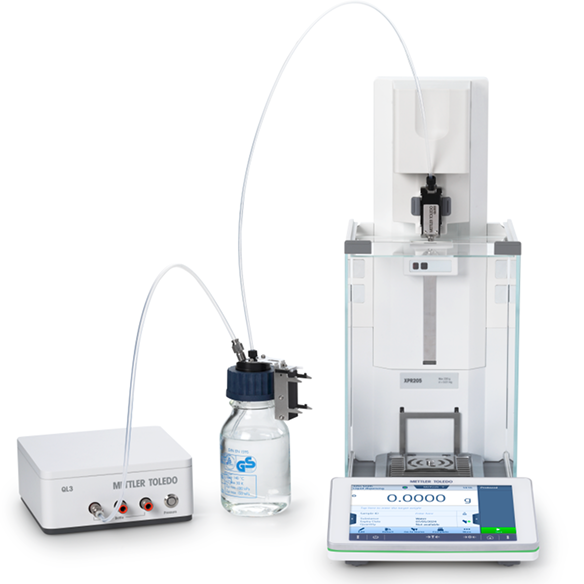
XPR microbalances have an exceptionally small footprint, saving valuable space on your workbench and in your safety cabinet. With the SmartView terminal, your results are easy to see during weighing and all essential functions are conveniently to hand.

Intuitive touchscreen operation and easy-access weighing methods help to simplify repetitive tasks and make your weighing processes faster. Superior weighing stability and automatic doors further enhance productivity.

The built-in results notepad automatically records all results and process parameters, eliminating manual transcription. Multiple connectivity options enable data to be transferred directly into an open application on a PC.

LabX™ provides onscreen user guidance and automatically takes care of all weighing results, calculations and metadata. Data is saved in a secure database to ensure traceability and data integrity. LabX assists in compliance with 21 CFR part 11.

The wide-access draft shield has all-round visibility and touch-free door operation that helps to simplify dosing, reduce spills, and minimize cross-contamination. The SmartView terminal allows the main terminal to be located away from potential contaminants.
boom
The draft shield, weighing pan and drip tray are easily removed, cleaned and reassembled in just a few simple steps without the need for any tools. All parts can be washed in an industrial dishwasher for even easier cleaning.
Electrostatic charges can cause unstable results and hidden weighing errors. Optional ionizers remove charges from samples and containers in seconds. StaticDetect™, on XPR micro analytical balances, provides a warning when detected charges exceed predefined levels.

Keep your microbalance performing at its best! Expert installation, regular maintenance, calibration, and routine testing ensure accurate, reliable, and consistent results, as well as compliance with regulations (e.g., USP 41) and quality standards throughout its lifecycle.
We are committed to lab weighing excellence, combining cutting-edge measurement science, deep regulatory expertise, and industry-specific insights. Our relentless focus on innovation and continuous improvement allows you to optimize processes, ensure compliance, and achieve outstanding performance every day.
Our commitment to lab weighing quality ensures that every solution you choose performs reliably and delivers lasting value. Swiss engineering excellence, premium materials, and rigorous testing mean that you can trust your analytical results for years to come.
Our culture of lab weighing innovation compels us to continuously redefine our performance standards. This translates into forward-thinking benefits such as the easy ability to integrate automated, high-precision weighing into comprehensive analytical workflows, eliminating manual errors, ensuring traceability, and shortening time-to-result.
Your partnership with lab weighing is built on a shared goal of producing the most accurate and efficient weighing experience possible over the whole lifecycle of your instrument. Our dedicated worldwide network of highly trained service technicians provides you with unparalleled service and support across your entire operation to optimize performance and ensure peace of mind.
In lab weighing, sustainability is an important part of our approach. We deliver durable, efficient analytical solutions designed to minimize waste, and reduce environmental impact throughout the equipment lifecycle.
For METTLER TOLEDO lab weighing, integrity means fostering a culture where the needs of both our employees and our customers are consistently respected and supported. This is demonstrated by our commitment to innovation, quality, performance, and service that spans the entire lifecycle of every piece of equipment we produce.
A microbalance is a highly precise weighing instrument used for determining the weight of extremely small samples in the microgram weighing range. Microbalances offer six decimal place readability (1 µg), and ultra-microbalances offer seven decimal place readability (0.1 µg). The weighing cell in a microbalance or ultra-microbalance is highly sensitive, enabling samples as small as 30 µg to be weighed with a high degree of accuracy. Microbalances are commonly used for emissions testing, filter weighing, and chemical and elemental analyses.
Watch our sample preparation video to see XPR microbalances in action:
An analytical balance is defined as having a readability of at least 4 decimal places (0.1 mg), with some having 5 or even 6 decimal place readability. A micro weighing balance has 6 (1 µg) or 7 (0.1 µg) decimal place readability; the name microbalance comes from the microgram readability. In general, micro balances offer better weighing performance and lower minimum weights, making them ideally suitable for weighing extremely small samples, from the microgram range up to just several milligrams. METTLER TOLEDO's balance portfolio includes three different types of micro weighing balance: micro-analytical balances, micro balances, and ultra-micro balances, in order of increasing weighing performance. The micro-analytical balance has the shape of an analytical balance but has a second inner draft shield and smaller hanging weighing pan. METTLER TOLEDO micro balances and ultra-micro balances have a protected design with a different shaped housing and a cylindrical draft shield. The table below summarizes the three METTLER TOLEDO micro weighing balance types:
| Type | Readability Scale division, d | Readability Decimal places* (digits) | Minimum weight (5% load, k=2 U=1%) | Draft shield type |
|---|
| Micro-analytical balance | 1 µg (0.001 mg) | 6 | Down to 120 µg (0.12 mg) | Rectangular outer + second rectangular inner |
|---|
| Microbalance | 1 µg (0.001 mg) | 6 | Down to 82 µg (0.082 mg) | Round |
|---|
| Ultra-microbalance | 0.5 µg - 0.1 µg (0.0005 mg) (0.0001 mg) | 7 | Down to 30 µg (0.03 mg) | Round |
|---|
*The number of decimal places refers to measurements in grams
Micro balances are used in a wide variety of applications that require very small samples to be weighed with a high degree of accuracy. Micro balances are ideal for weighing valuable, rare and potent substances as only very small quantities are required; this is safer, more economical and makes the most out of your precious samples. Micro balances are commonly used in product testing and quality assurance laboratories. In chemistry labs and mining applications, micro balances are perfectly suited for weighing small amount of powders and minerals. Common micro balance weighing applications include particulate matter weighing (filter weighing/emissions testing), pesticide analysis, pipette calibration, and stent weighing.
For more information on weighing with a microbalance, visit our applications library page.
See our microbalances in action here:
Är du säker på att tabletten du just svalde inte kommer att äventyra ditt liv? Hur verifierar forskare läkemedlets kemiska struktur? Och hur kan vi vara säkra på renheten och sammansättningen hos varje läkemedel? Svaret är enkelt. Elementaranalys. Mängden organiska grundämnen, CHNSO, som finns i ett prov anges som en procentandel av den ursprungliga provvikten. Det är därför avgörande att prover vägs noggrant innan de förs in i elementaranalysatorn. https://www.mt.com/global/en/home/products/Laboratory_Weighing_Solutions/Micro_Ultra_Balances/XPR_MicroBalance.html?cmp=smo_GLO_YT_LAB_OTH_Youtube_LAB_oeVhK06ySYE Mängden organiska grundämnen, CHNSO, som finns i ett prov anges som en procentandel av den ursprungliga provvikten. Det är därför avgörande att prover vägs noggrant innan de förs in i elementaranalysatorn. https://www.mt.com/global/en/home/products/Laboratory_Weighing_Solutions/Micro_Ultra_Balances/XPR_MicroBalance.html?cmp=smo_GLO_YT_LAB_OTH_Youtube_LAB_oeVhK06ySYE Mängden organiska grundämnen, CHNSO, som finns i ett prov anges som en procentandel av den ursprungliga provvikten. Det är därför avgörande att prover vägs noggrant innan de förs in i elementaranalysatorn. https://www.mt.com/global/en/home/products/Laboratory_Weighing_Solutions/Micro_Ultra_Balances/XPR_MicroBalance.html?cmp=smo_GLO_YT_LAB_OTH_Youtube_LAB_oeVhK06ySYE. Gör det snabbare och mer ergonomiskt att väga upp provet i de små deglarna. Den precisa hantering som krävs gör att förberedelsen av prover för elementaranalys blir en tids- och arbetsintensiv process. Mängden organiska grundämnen, CHNSO, som finns i ett prov anges som en procentandel av den ursprungliga provvikten. Det är därför avgörande att prover vägs noggrant innan de förs in i elementaranalysatorn. https://www.mt.com/global/en/home/products/Laboratory_Weighing_Solutions/Micro_Ultra_Balances/XPR_MicroBalance.html?cmp=smo_GLO_YT_LAB_OTH_Youtube_LAB_oeVhK06ySYE. Avancerad temperaturkontroll hjälper till att spara tid genom att ge viktresultat avsevärt snabbare än en standardmikrovåg. Varje resultat kan sparas direkt i den inbyggda resultatprotokollet. All relevant metadata såsom tid, datum, användar-ID och instrumentstatus ingår. Mängden organiska grundämnen, CHNSO, som finns i ett prov anges som en procentandel av den ursprungliga provvikten. Det är därför avgörande att prover vägs noggrant innan de förs in i elementaranalysatorn. https://www.mt.com/global/en/home/products/Laboratory_Weighing_Solutions/Micro_Ultra_Balances/XPR_MicroBalance.html?cmp=smo_GLO_YT_LAB_OTH_Youtube_LAB_oeVhK06ySYE Varje degel försluts noggrant med hjälp av fin pincett och placeras i en lämplig bricka för tydlig identifiering. När alla prover har förberetts kan viktresultaten skrivas ut eller exporteras till en dator eller ett USB-minne. Proverna kan därefter överföras till elementaranalysatorn. Mängden organiska grundämnen, CHNSO, som finns i ett prov anges som en procentandel av den ursprungliga provvikten. Det är därför avgörande att prover vägs noggrant innan de förs in i elementaranalysatorn. https://www.mt.com/global/en/home/products/Laboratory_Weighing_Solutions/Micro_Ultra_Balances/XPR_MicroBalance.html?cmp=smo_GLO_YT_LAB_OTH_Youtube_LAB_oeVhK06ySYE Att förbereda prover för elementaranalys med en mikrovåg i högsta kvalitet säkerställer korrekta prover, effektiva processer och tillförlitliga analytiska resultat. Kontakta oss idag om du har några frågor eller behöver råd om provberedning.
Har du någonsin undrat hur rent är rent? När du diskar bestick är de tillräckligt rena för att användas till mat, men det är inte samma nivå av renhet som du skulle förvänta dig av medicinska instrument. Hur skulle du känna om hårddisken i din dator inte fungerade som den skulle eftersom den förorenades med en rest under tillverkningen? Rent har olika betydelser i olika sammanhang. Även om smuts kan vara osynlig för det mänskliga ögat kan även den minsta mängd förorening vara farlig eller påverka kvaliteten hos många produkter. Så hur kan vi verifiera renheten? Svaret är enkelt, genom analys av icke-flyktig rest, NVR. Analys av icke-flyktig rest innebär att ett föremål sköljs med ett lämpligt organiskt lösningsmedel, följt av fullständig avdunstning för att isolera det icke-flyktiga innehållet. Framställning av NVR är en tidskrävande process som måste utföras med omsorg i en renrumsmiljö. Mettler Toledo-mikrovågar är perfekta för NVR-analys där mätning av extremt små mängder kräver användning av en mycket noggrann våg. I många fall krävs en läsbarhet på 10 eller 100 µg, 5 eller 6 decimaler. Se videon och lär dig vilka fördelar det finns med att använda Mettler Toledo-utrustning för NVR-analys. NVR-resultat på 0,1 till 100 ppm är typiska, så användning av en mycket noggrann mikrovåg för att väga resten rekommenderas. Med enastående repeterbarhet och minsta minimivikt är utmärkta mikrovågar perfekta för NVR-analys. Inbyggd användarvägledning säkerställer att alla steg i vägningen följs noggrant. Den inbyggda anteckningsfunktionen registrerar automatiskt alla uppgiftsparametrar och resultat, vilket eliminerar manuell avskrivning. SmartSense-sensorer gör att du kan öppna vindskyddsdörren med en enkel handrörelse för att undvika att röra vid vågen och minska risken för korskontaminering. Resultaten överförs enkelt till en dator för säker lagring och vidare utvärdering. Mettler Toledo-mikrovågar är den perfekta lösningen för att mäta små mängder NVR. Snabba stabiliseringstider och enastående repeterbarhet. Tillförlitlig och effektiv mätningsprocess. Säker användning och enkel rengöring. Kontakta oss för mer information eller om du behöver råd om NVR-testning.
Du vet hur skönt det känns att ta ett andetag av frisk, ren luft. Men tänk om vår luft blir för smutsig? Hur skulle det påverka vår och våra barns hälsa? Så hur kan vi säkerställa ren luft? Svaret är enkelt. Utsläppstester. Genom att filtrera utsläppsgaser kan vi väga mängden partiklar, PM, som samlats på filtret för att säkerställa att luftföroreningsföreskrifterna inte överskrids. Vikten av partiklarna är vanligtvis låg, så filtren måste vägas mycket noggrant. Utmärkta mikrovågar med ett särskilt filtervägningskit är perfekta för utsläppstester. Den enastående repeterbarheten och lägsta möjliga minimivikten ger den vägningsprestanda du behöver. Inbyggd användarvägledning säkerställer att filtervägningsprocessen följs exakt. SmartSense-sensorer gör att du kan öppna dragkåpans dörrar med en enkel handrörelse. Specialdesignade pincetter förenklar hanteringen av de ömtåliga filtren. Antistatikkitet neutraliserar eventuella elektrostatiska laddningar för att säkerställa att den verkliga PM-vikten mäts. Glaslocket hjälper dig att placera filtren i mitten av den specialdesignade vägningspannan. Vikten av partiklar som samlas på filter för utsläppstester kan vara extremt låg, därför måste vägningsproceduren utföras mycket noggrant. Se varför METTLER TOLEDO Excellence Microbalance, utrustad med särskilt utvecklade tillbehör för filtervägning, är det bästa valet för tillämpningar inom utsläppstester. Med METTLER TOLEDO:s filtervägningslösningar kan du vara säker på snabba stabiliseringstider, noggrann mätning av partiklar och rätt verktyg för att göra filtervägning effektiv och säker. Kontakta oss för mer information eller om du behöver råd om filtervägning.
METTLER TOLEDO XPR microbalances incorporate some unique design features in order to provide you the best weighing performance coupled with ergonomic operation.
Separation of the micro balance electronics from the weighing cell
METTLER TOLEDO XPR microbalances are cleverly designed so that the electronics are separate to the precise mechanical weighing cell. This separation helps prevent heat from the electronics influencing the sensitive weighing cell, which can lead to unstable and incorrect weighing results. Furthermore, METTLER TOLEDO XPR microbalances incorporate an Active Temperature Control system (ATC™). ATC ensures the temperature inside the weighing chamber is equivalent to that outside, which provides a highly stable weighing environment. The advantage is faster settling times, lower drifts, and an outstanding level of accuracy.
![]() |
Separation of the micro balance electronics from the weighing cell |
Main and second display
The main terminal on METTLER TOLEDO XPR microbalances offers the flexibility of being positioned away from the micro balance and placed wherever it is most convenient. For example, the micro weighing scale can be placed inside a fume hood and the terminal outside. The second SmartView terminal is positioned directly above the weighing chamber, which is extremely handy while weighing samples. The SmartView terminal also incorporates basic balance functions for even greater convenience and ergonomic operation.
![]() |
Main and second display |
Round draft shield with all-round visibility
XPR microbalances and ultra-microbalances have a cylindrical glass weighing chamber that offers all-round visibility, including from the top, so that you have the best view while handling small, delicate, and sometimes hazardous, samples. Furthermore, the draft shield doors can be operated automatically by simply waving your hand in front of one of the sensors. All parts can be quickly removed, cleaned and reassembled without the need for any tools.
![]() |
Round draft shield with all-round visibility |
Compact footprint
METTLER TOLEDO XPR microbalances have the smallest footprint of any micro balance on the market. Coupled with the ability to place the main terminal wherever it is convenient for you to access, this makes the most of your valuable workspace and is very useful in any safety cabinet where space is at a premium.
![]() |
Compact footprint |
To find the right METTLER TOLEDO micro balance for your needs, you first need to assess the smallest amount you need to weigh and, second, how accurately you need to weigh it (i.e. the acceptable tolerance). Other important considerations are the maximum amount you want to weigh, and your process risk (i.e. what are the negative consequences of an incorrect weighing result).
You should be aware that every measurement on any balance or micro balance is subject to uncertainty. Understanding this uncertainty is key to ensuring accurate results and avoiding errors. When weighing small samples on micro balances, uncertainty is almost entirely due to repeatability (i.e. at the low end of the weighing range of the micro balance). It is not the readability that determines the accuracy of a weighing instrument, but rather its repeatability. Readability defines the smallest difference in weight that can be displayed on your micro balance. The smallest amount that can be weighed on your micro balance is known as the balance minimum weight; in combination with your process tolerances, the minimum weight is at the accuracy limit of your measurements; below this value, the uncertainty is too large and the result cannot be trusted.
Ask your METTLER TOLEDO consultant about our free GWP® Recommendation, which helps you select the right weighing instrument according to your specific application and accuracy requirements.
When placing your microbalance, you should consider the three main external influences that can affect the accuracy of the micro balance:
Examples of measurement uncertainties depending on the placement of the microbalance in a laboratory:
![]() |
Where should I place the micro balance in my laboratory? |
Always wear gloves while working with micro balances – fingerprints and oil from hands affect results. To start a weighing operation, first zero the balance. Open the draft shield door, and then, using tweezers, place a container or weighing boat on the weighing pan. Close the door and allow the value to stabilize. Now tare the micro balance. Once you have dosed your sample, close the door and wait for the micro balance to stabilize. A micro balance is highly sensitive to movement so do not touch the bench while waiting for it to stabilize. Record the net weight or repeat the dosing procedure until the desired weight is reached. Clean the micro balance, tools and workspace after each use.
The general weighing process with a microbalance is explained in this video:
Runt dragskydd som är synligt från alla riktningar
XPR-mikrovågar och ultra-mikrovågar har en cylindrisk vägningskammare av glas som är synlig från alla riktningar, inklusive uppifrån, så att du har den bästa vyn när du hanterar små, känsliga och ibland farliga prover. Dessutom kan dragskyddets luckor manövreras automatiskt genom att man helt enkelt viftar med handen framför en av sensorerna. Alla delar kan snabbt tas bort, rengöras och monteras igen, utan att du behöver använda några verktyg.
Micro balances are extremely sensitive instruments – the slightest disturbance from the environment or any user interaction can significantly affect measurement stability and hence all possible sources of vibrations should be avoided. Micro balances are highly susceptible to air currents, dust, and fluctuations in temperature, and therefore are best installed where the ambient temperature and humidity are maintained at a stable level. In particular, they should be sited away from vents, windows, and doors.
Your micro balance should be set-up on a solid workbench in a low traffic area, free from drafts. Ideally, this should be a dedicated weighing table optimized for micro balance use.
When a micro balance is first connected to the power supply or switched on after a period of inactivity, it is recommended to allocate a warm-up time of at least a few hours to allow for temperature stabilization.
When using your micro balance, be sure to minimize convection flows inside the weighing chamber caused by temperature differentials, which can negatively impact results. To avoid this, only handle samples with tweezers, and allow samples, containers and tools to acclimatize to room temperature.
For more tips and tricks on how to get the most out of your micro balance, download our free guide: 10 Steps to Successful Micro-Weighing.
Many of the substances processed in a laboratory or in a production environment are toxic and pose a risk to user safety, particularly in microbiological and pharmaceutical settings. To ensure purity and avoid dangerous cross-contamination, appropriate personal protection equipment for the user as well as the proper handling of weighed substances is essential.
In this video we showcase a safe way to handle hazardous materials and how METTLER TOLEDO's micro balances support safe weighing:
Download our white paper to learn more about how to stay safe when weighing hazardous materials.
The microbalance should be switched off during cleaning. Coarse cleaning of non-toxic samples on the inner parts of the draft shield of the micro balance can be done with a brush and tissues. For thorough cleaning of the micro balance, the drip tray and the weighing pan can easily be disassembled and, if necessary, cleaned in an ultrasonic water bath. Detergents and suitable solvents such as 70% alcohol or isopropanol can also be used. Acetone should not be used on the micro balance, even for sticky substances, as it can dissolve plastics and attack the adhesive surfaces of the draft shield. Keep acetone away from the plastic handles and the micro balance terminal screen. Cleaning is recommended after each use of your micro balance.
To clean your micro balance correctly, please always refer to the cleaning instructions in the reference manual.
![]() |
How to clean a microbalance? |
Explore our calibration services, tailored to perfectly match your precise needs:On XPR micro balances, automatic adjustment using the microbalance's internal test weights is carried out via the built-in proFACT function. ProFACT ensures ongoing accuracy by automatically adjusting the microbalance whenever there is a change in ambient temperature.
Calibration is an assessment of the performance of your micro balance. As a highly precise micro weighing scale, microbalance calibration should only be carried out by a certified calibration service provider. The calibration process generally includes an assessment of the microbalance minimum weight as well as any necessary adjustment. You will be provided with a calibration certificate, which is your assurance that your microbalance is functioning as expected and is required for proving traceability.
Routine testing by the user is also essential in the intervals between calibrations. Routine testing provides an early indication of a drift in performance that could potentially lead to out of specification results.
METTLER TOLEDO has developed a global scientific standard for the secure selection, calibration, and operation of weighing equipment, known as Good Weighing Practice™ (GWP™).
Explore our calibration services, tailored to perfectly match your precise needs.
On METTLER TOLEDO XPR micro balances, all data and process information is automatically saved to the built-in results notepad. Via a simple cable connection, results can be transferred directly to PC; transfer via a USB storage device is also possible. For comprehensive data management, LabX™ laboratory software automatically takes care of all your results, metadata and calculations. LabX offers central control of instruments, tasks and users, SOP guidance directly on your microbalance display, ensures full data integrity, and supports compliance with CFR 21 part 11.
Snabb och pålitlig, kontaktlös datadistribution från ditt labb är avgörande, särskilt i dessa tider. Så föreställ dig att i samma ögonblick som jag trycker på den här knappen, finns mina data hos de personer som behöver dem. Och tack vare de omfattande metadatan vet du exakt vem som gjorde vad, varför och när. Ser du, detta är datakvalitet, spårbarhet och stöd för dataintegritet på högsta nivå. Så hör av dig till oss nu så tar vi itu med dina utmaningar. För du får giltiga resultat varje gång med våra excellensvågar. Och är inte det vad du behöver?
With your XPR micro balance, you can transfer weighing data to a computer program, e.g. directly to an Excel spreadsheet, using the HID balance functionality (drop-to-cursor). The following video shows how to connect the micro balance to the computer using a USB cable and how to set up your microbalance:
METTLER TOLEDO is committed to sustainability. Our Environmental, Social, and Governance (ESG) program, Green MT, was established in 2012, and in 2020, we achieved our goal of net carbon neutrality regarding Scopes 1 and 2. Furthermore, all our global facilities are powered by 100% renewable electricity.
Our microbalances are manufactured in Switzerland, with the majority of our suppliers located close to our facilities. Our microbalances are the smallest and lightest on the market, which minimizes the amount of raw materials that we use. This efficient use of resources is reflected in the performance of our microbalances: The superior load cell provides a uniquely low minimum weight, minimizing the amount of sample required, reducing waste, and making considerable cost savings.
At METTLER TOLEDO, we understand that microbalances are used in a variety of applications, which is why we offer a range of weighing pans and accessories designed specifically for different micro-weighing needs.
Our offering of micro balance weighing pans includes:
Our range of microbalance accessories includes:
In addition, we offer adjustment weights, micro spatulas, cables, printers, and external draft shields to further enhance your micro-weighing experience. You can also use our LabX software with XPR microbalances for even more advanced capabilities.
With our range of weighing pans and accessories, you can be confident that your XPR microbalance is equipped for your micro-weighing needs.
The accuracy of the weighing device is determined by calibration. The calibration certificate is the basis to prove that your microbalance is working correctly in accordance to your weighing requirements. Manufacturer’s specifications (or tolerances) are measured under standardized and stable conditions. As microbalances can be influenced by several external factors, it is important to understand how a specific balance performs in its actual working environment. Balance calibration by a qualified service provider determines the measurement uncertainty over the whole weighing range at the actual weighing location.
The calibration certificate includes the reported measurement uncertainty. Since the external conditions and the balance performance can change over time, the calibration should be carried out periodically. The XPR microbalance stores the parameters of the measurement uncertainty for full traceability. GWP® Verification gives you clear advice how often you should calibrate your equipment. This advice is based on your specific risk and process requirements: www.mt.com/gwp-verification. A qualified calibration certificate is provided by METTLER TOLEDO (e.g. Accuracy Calibration Certificate). For more information go to www.mt.com/service or contact your local METTLER TOLEDO service office.
While TGA instruments already contain a built-in, high-precision microbalance, an additional, external microbalance is perfect for the initial weighing of samples. Samples can be easily prepared in advance and weighed on an external microbalance while other measurements are running. This saves valuable time, boosting the number of samples that can be measured per day.
Yes, the XPR Microbalances and Ultra-Microbalances both are available with specialized kits for filter weighing. This page gives a great overview of our microbalance filter weighing solutions for filters sizes 20 – 70mm, or analytical balance options for larger filters.
Yes, METTLER TOLEDO microbalances have an accessory kit designed specifically for the weighing of stents and other small, tubular samples.
A draft shield is essential for microbalances as it minimizes the impact of air currents and environmental fluctuations on the measurement process. It helps to ensure stability and accuracy in readings by providing a controlled environment around the weighing pan, reducing measurement noise caused by drafts.
When not in use, a microbalance should be covered to protect it from dust and contaminants. It is also advisable to keep it in a stable environment, away from direct sunlight, temperature fluctuations, and vibrations. Some models may also have specific storage recommendations provided by the manufacturer.
USP Chapter 1251 introduced concrete safety factor values for the first time in 2025: a safety factor of 2 is recommended for stable laboratory conditions with trained operators. Monitoring the safety factor throughout the micro balance's lifecycle helps identify critical performance changes.
Microbalances provide significant advantages when complying with USP Chapter 41 and Ph. Eur. Chapter 2.1.7requirements, especially regarding the safety factor. Because microbalances can accurately measure very small sample weights with exceptional repeatability, they enable laboratories to work with lower smallest net weights. This directly impacts the safety factor, which is defined as the ratio of the smallest net weight to the minimum weight. With the ability to reliably weigh smaller amounts, microbalances can achieve a lower minimum weight, which improves the safety factor value and helps to meet or exceed USP Chapter 1251 and Ph. Eur. Chapter 2.1.7recommendations. Microbalances support tighter control over weighing accuracy and safety, ensuring compliance with USP Chapter 41 and Ph. Eur. Chapter 2.1.7and reducing the risk of critical performance deviations over the balance’s lifecycle.
Balances must be calibrated with the inclusion of measurement uncertainty and on a risk-based periodic schedule. Calibration is required before and after any operation that could significantly affect measurement performance, known as “as found” and “as left” calibration, ensuring accurate and compliant weighing results. The MT GWP® Verification service and the ACC calibration certificate help you determine and ensure that all your balances are reliable during routine operation.
Ph. Eur. General Chapter 2.1.7 recommends a safety margin for the first time in 2027. While no specific value is mentioned, METTLER TOLEDO recommends a safety factor of 2 for stable laboratory conditions with trained operators. Monitoring the safety factor throughout the micro balance's lifecycle helps identify critical performance changes.