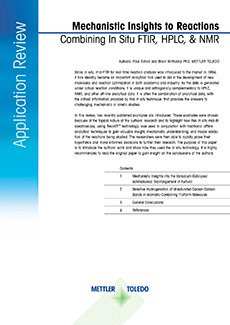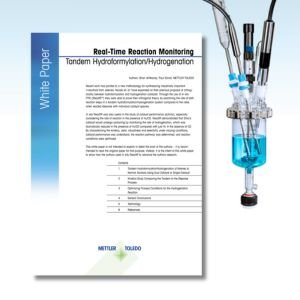
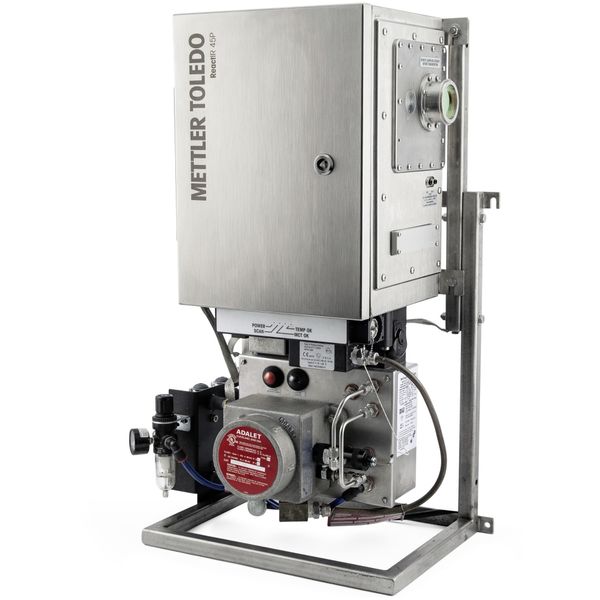

In-situ FTIR has become one of the most powerful process analytical technology (PAT) tools for real-time reaction monitoring, mechanistic understanding, process optimization, and automated process control. Unlike offline sampling and analysis, which provide only discrete snapshots of a reaction at predetermined time points, in-situ FTIR continuously captures spectral data as the chemistry evolves. This time-resolved approach enables direct observation of reagent consumption, intermediate formation, product growth, reaction kinetics, induction periods, and transient species that are often difficult or impossible to detect using traditional analytical methods.
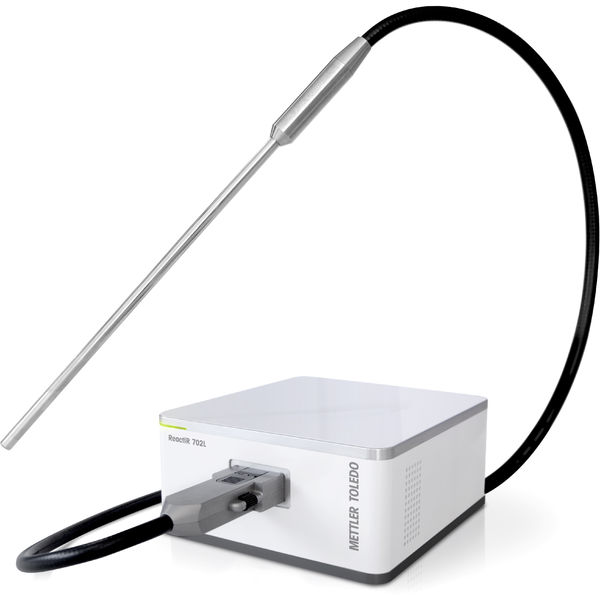
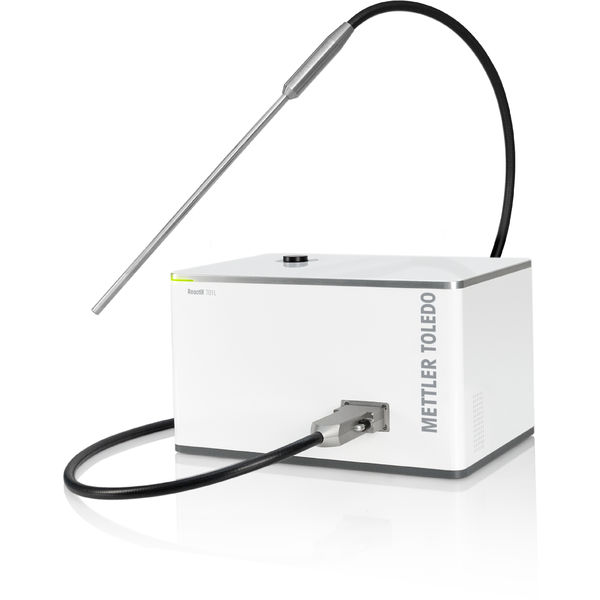
Real-time FTIR systems, such as ReactIR, monitor chemistry directly inside batch reactors using inserted fiber-optic ATR probes or within continuous flow systems via inline flow cells. ATR-based sensors are designed to operate across a wide range of reaction conditions, including broad temperature, pressure, and pH ranges, and can withstand aggressive solvents and reactants. As a result, in-situ FTIR is widely applied to catalytic reactions, polymerizations, crystallizations, reaction optimization studies, and continuous manufacturing processes.
Continuous acquisition of mid-infrared spectra provides rich kinetic and mechanistic information that supports reaction development and scale-up. Data-rich experiments (DREs) generated through real-time FTIR measurements accelerate Design of Experiments (DoE) studies, kinetic modeling, and statistical analysis by reducing reliance on time-consuming offline sampling and sample preparation. Rather than conducting many experiments to understand reaction dependencies, a smaller set of well-designed studies can often provide the information needed to identify reaction-driving factors, determine kinetic parameters, and establish critical process parameters (CPPs).
Advanced chemometric methods can further deconvolute overlapping spectral bands, extract component concentration profiles, and generate robust multivariate models suitable for batch, semi-batch, and continuous manufacturing. When integrated with automated reactors or flow platforms, FTIR functions as a live process sensor, enabling adaptive process control, predictive modeling, recipe refinement, and autonomous closed-loop operation. By transforming reactions into continuous sources of kinetic and mechanistic data, in-situ FTIR enables more efficient, data-driven process development and accelerated optimization workflows.