Peptide Therapeutics

Enabling Precise, Scalable Manufacturing of Life-Changing Peptides

peptides molecule

Peptide therapeutics are rapidly reshaping the pharmaceutical landscape, offering exceptional target specificity, low toxicity profiles, and the ability to modulate complex biological pathways. From metabolic diseases to oncology, peptides such as insulin, GLP-1 agonists, interferons, or enzyme therapies are enabling precision medicine across a wide spectrum of diseases and healthcare challenges.  

While the therapeutic potential of peptides is well-established, manufacturing them at a commercial scale introduces significant process and infrastructure challenges. Whether chemically synthesized or biotechnologically expressed, peptide manufacturing faces including low-yield, multi-step complex syntheses, batch inconsistencies, scale-up difficulties from lab to GMP production, and strict quality control requirements, all while striving to meet stricter regulatory and sustainability standards. These constraints can delay product availability, strain supply chains, and ultimately impact patient access to critical therapies.

To support the growing demand for efficient and scalable peptide synthesis, METTLER TOLEDO offers a comprehensive suite of advanced precision instrumentation, machinery, and software solutions to ensure quality and precision at every stage of the production process.

1. A peptide is built step-by-step by adding amino acids in a precise sequence on a solid resin.

2. After each addition, excess chemicals are washed away and protective groups are removed to prepare for the next step.

3. The finished peptide is cleaved from the resin and purified, typically using HPLC.

4. The purified peptide is turned into a solid or liquid product. Quality control tests are run throughout to ensure purity, safety, and effectiveness.

protection and coupling icon

1. Protection and Coupling

deprotection and peptide elongation icon

2. Deprotection and Peptide Elongation

peptide icon

3. Cleavage and Purification

formulation and QC icon

4. Formulation and QC

1. Peptide-producing bacteria or yeast are grown in a nutrient-rich medium optimized for high yield.

2. Peptides are separated from the culture using centrifugation and filtration. If inside cells, the cells are broken open first.

3. Peptides are purified using techniques like chromatography and tangential flow filtration, followed by any necessary cleavage or modifications.

4. Excipients are added, and the product is tableted or filled into vials, under sterile conditions. Quality control tests ensure purity, safety, and functionality.

icon representing a cell

1. Cell Culture

Harvesting icon

2. Harvesting

purification and processing icon

3. Purification and Processing

formulation and QC icon

4. Formulation and QC

Biochemical Synthesis

Biochemical synthesis is a widely adopted method for peptide production, especially for short peptide production, and offers advantages over recombinant biological methods, in certain use cases: 

  • Cost: Manufacturing short peptides is less expensive at small to medium scale production, given simpler infrastructure requirements, fast turnaround time, and standardized resources. However, recombinant methods may be more cost-efficient at larger scales, longer or more complex peptides.

Whether produced through biochemical synthesis or recombinant biological methods, peptide manufacturing remains inherently expensive. Each approach comes with its cost drivers, from reagent and solvent use in chemical synthesis to complex infrastructure and long production cycles in biological expression. As a result, there is a strong drive across the industry to maximize process efficiency, minimize variability, and ensure consistent product quality at every scale.

  • Flexibility: It allows the incorporation of non-coding amino acids and diverse backbone modifications to improve stability.

  • Purity: Chemical synthesis avoids the risk of host-cell contaminants and enables precise control of the product. However, recombinant methods also achieve high purity with proper downstream processing.

Biological Methods

Recombinant biological approaches are common for larger proteins requiring complex post-translational modifications, and are advantageous for peptide production in circumstances such as:

  • Complexity: Biological methods enable complex peptide folding and specific post-translational modifications compared to chemical methods.

  • Sustainability: Chemical methods use an excess of high-purity, expensive reagents and solvents to ensure reaction completion, leading to greater chemical waste, and could affect global supply chains for essential solvents.

  • Peptide Length: Biological methods are better suited for producing longer peptides (>50 amino acids).

Balancing Science and Process in Peptide Synthesis

Many peptide APIs are developed through solid-phase peptide synthesis (SPPS), a stepwise process that allows precise control over sequence and modification. Others, particularly more complex or longer-chain peptides, are expressed in biological systems using microbial or mammalian cells.

While these methods differ in scale and platform, they share a need for rigorous process control and accurate material handling at every stage.

Whether weighing amino acids, solvents, or reagents in the R&D lab or handling kilogram-scale batches in production, accuracy in every measurement matters. Minute variations can affect:

  • Coupling efficiency.
  • Final yield and purity.
  • Reproducibility across batches.

METTLER TOLEDO provides robust weighing solutions for both laboratory and industrial applications. From microbalances that support formulation development to floor scales used in production suites, our equipment delivers the precision and compliance pharma manufacturers require. Integration with software systems also helps ensure full traceability and minimizes manual documentation errors.

Chemical Peptide Synthesis: Enhancing Yield and Purity

Solid-phase peptide synthesis (SPPS) remains the gold standard for producing short to medium-length peptides, including therapeutic APIs like GLP-1 analogues or calcitonin. However, SPPS workflows can be complex, involving:

  • Precise addition of protected amino acids.
  • Efficient removal of protecting groups.
  • Solvent management and reaction control.

Understanding the progress of peptide coupling reactions is critical. In-situ FTIR and Raman spectroscopy tools by METTLER TOLEDO provide real-time insight into each step of synthesis, allowing scientists to monitor deprotection and coupling reactions, identify incomplete reactions early, and reduce overuse of costly reagents.

Controlling temperature, stirring, and reagent addition precisely across different synthetic steps using Automated Reactors such as EasyMax™ and OptiMax™ helps with the optimization of reaction conditions, the development of a safe scale-up from milligrams to kilograms, and the achievement of high reproducibility for tech transfer.

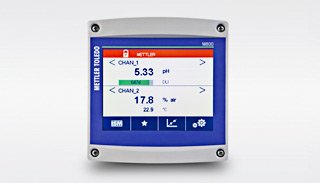
pH control is critical for peptide cleavage and purification. METTLER TOLEDO provides InPro series sensors that are tailored for use in harsh solvents, ensuring robustness and regulatory compliance during acidic cleavage or basic wash steps.

Biotechnological Peptide Production: Scale with Control

Many peptides, especially interferons, enzymes, or fusion peptides, are produced using recombinant technologies in microbial or mammalian systems. These processes require strict environmental control and real-time monitoring to maintain cell viability, protein expression, and product quality.

pH, dissolved oxygen (DO), CO₂, and conductivity must be precisely controlled during fermentation. ISM sensors from METTLER TOLEDO provide reliable real-time measurements, predictive diagnostics, sensor lifecycle management, and integration with PAT (Process Analytical Technology) strategies.

Buffer preparation, Purification, Formulation, and Final Quality

Once synthesized or expressed, peptides undergo multiple steps of buffer preparation, purification and formulation before reaching their final drug form. Reverse-phase HPLC, ultrafiltration, and lyophilization are common techniques used to achieve the purity and stability required for therapeutic use.

Accurate preparation of buffers, solvents, and excipients is critical at this stage. Inconsistent concentrations or pH deviations can reduce recovery or compromise product stability. Whether during ultrafiltration prep, final formulation blending, or freeze-drying optimization, precision and reproducibility are non-negotiable.

Normal flow filtration and tangential flow filtration play vital roles in downstream bioprocessing, with normal flow filtration mainly used for preparing large volumes of buffer, and tangential flow filtration primarily employed for clarification steps. The in-line monitoring of pH, conductivity, temperature, and UV absorbance enables real-time control of the bioprocess, ensuring optimal conditions that uphold product quality and consistency. This continuous measurement allows for the rapid identification of any deviations, facilitating timely adjustments that enhance process efficiency, increase yield, and maintain product purity throughout downstream processing.

Weighing equipmentpH meters, and UV/Vis spectrophotometers integrated into lab or production environments enable reliable downstream execution and QC in peptide manufacturing. Importantly, when the generated data is centrally collected and managed, it strengthens traceability and supports regulatory documentation.

Additionally, high-precision moisture analysis and water content determination by KF titration support final formulation and stability testing, key in freeze-dried peptide products. Whether during development or commercial QC, laboratory software solutions ensure consistent analytical data for required regulatory compliance and product quality.

Product Inspection: A Final Check for Patient Safety

From initial amino acid weighing to final vial inspection, each step in the peptide production journey demands precision. As products near release, automated product inspection systems serve as a critical safeguard before products leave the facility. For peptide therapeutics, this includes:

  • Fill level control: Checkweighing, vision inspection and X-ray inspection monitor, measure and regulate fill levels to meet strict dosage and regulatory specifications.

  • Quality and integrity checks: Checkweighing, vision inspection and X-ray inspection perform integrity checks to help ensure pharmaceutical packages meet regulations and deliver safe, complete products to consumers.

  • Label quality inspection: Vision inspection for label quality control to detect label-related defects and mitigate the risk of product recalls.


Product Inspection solutions from METTLER TOLEDO are designed for high-efficiency pharmaceutical environments, offering:

  • GMP-compliant systems that integrate easily into existing lines.

  • Traceable performance verification for audit-readiness.

  • Support during the specification and qualification process, from evaluating the right application, selecting suitable product testing equipment and professional installation through to dedicated Equipment Qualification packs (EQpack) for efficient validation processes.

These systems not only protect product quality but also strengthen brand integrity and support regulatory compliance with agencies like the FDA, EMA, and global health authorities.

Procesna analitika

Procesna analitika

Analitične meritve v realnem času za nadzor proizvodnih procesov

Analitični senzorji za bioreaktorje

Analitični senzorji za bioreaktorje

Natančen nadzor procesov v fermentaciji in celični kulturi

AutoChem

AutoChem

Kemična sinteza, razvoj procesa & dimenzioniranje delcev

dynochem biologics

Dynochem Biologics

Bioprocess Simulation Software

CytoDirect avtomatizirano štetje celic, uporabljeno v biološkem laboratoriju v ozadju

Instrumenti in porabni material za štetje celic

Avtomatiziran števec celic brez barvanja

Analitične tehtnice - Laboratorijske tehtnice

Analitske tehtnice

Neprimerljivi rezultati tehtanja v vašem laboratoriju

Natančne tehtnice METTLER TOLEDO

Precizne tehtnice

Precizna in natančna oprema za tehtanje v laboratoriju in proizvodnji

UV Vis spektrofotometrija podjetja METTLER TOLEDO

UV Vis spektrofotometrija

Instrumenti, dodatki, storitve in programska oprema za UV Vis spektrofotometrijo

laboratorijski instrumenti za merjenje pH-vrednosti

Laboratorijski instrumenti za merjenje pH-vrednosti

Rešitve za merjenje pH-vrednosti in prevodnosti v laboratoriju in na terenu

Industrijske tehtnice in tehtnice

Industrijske tehtnice in sistemi

Zanesljive tehtnice za proizvodna okolja

Sistemi za pregledovanje izdelkov | METTLER TOLEDO

Preverjene rešitve za pregledovanje produktov

Preglejte. Zaščitite. Uskladite s predpisi.

Ravnanje s tekočinami

Ravnanje s tekočinami

Raininove pipete, konice, razpršilniki in polavtomatizirani sistemi za znanosti o življenju

Balancing the future podcast with Ben Locwin

​​The Rise of GLP-1 Drugs: Transforming Weight Loss Treatment​

Explore how GLP-1 drugs revolutionize weight loss, impact treatment capacity, tackle sustainability,...

Biopharmaceutical Manufacturing Guide

Biopharmaceutical Manufacturing Guide

This guide covers the role of analytics and weighing in understanding these parameters in upstream a...

Developing Robust and Scale-able Peptide Isolation Processes

Developing Robust and Scale-able Peptide Isolation Processes

Emily Guinn and Kyle Blakely, Eli Lily present "Developing Robust and Scale-able Peptide Precipitati...

protein kristalizacija

Kristalizacija beljakovin

Kristalizacija beljakovin je dejanje in metoda ustvarjanja strukturiranih, urejenih mrež za pogosto...

Zbirka orodij za znanost o življenju

Zbirka orodij za znanost o življenju

Nova zbirka orodij Life Science Toolbox ponuja znanje, prilagojeno uporabi, ter nasvete in trike na...

Ravnanje s tekočinami za celične kulture

Ravnanje s tekočinami za celične kulture

V beli knjigi Ravnanje s tekočinami za celične kulture so pojasnjene različne vrste celic, ki jih je...

 Integracija PAS-X MES v farmacevtsko proizvodnjo

Integracija PAS-X MES v farmacevtsko proizvodnjo

Integracija tehtne opreme je bistvenega pomena za skladnost s predpisi, partnerstvo podjetja Körber...

Naslovnica e-knjige

E-knjiga o tehtanju v farmaciji

V tej e-knjigi so opisani izdelki v celotni vrednostni verigi za zagotavljanje kakovosti, učinkovito...

Formulacija zdravil

Formulacija zdravil

Učinkovita in varna proizvodnja zdravil je odvisna od zanesljivih podatkov iz naprednih analitičnih...

Vodnik po orodjih za napovedno diagnostiko inteligentnega upravljanja senzorjev (ISM) v farmacevtski industriji

Prediktivna diagnostika v farmacevtski industriji

Vodnik po napovednih diagnostičnih orodjih za inteligentno upravljanje senzorjev (ISM) v farmacevtsk...

Štirje stebri kakovosti farmacevtske vode

Štirje stebri kakovosti farmacevtske vode

V svetu farmacevtske proizvodnje je ohranjanje čistosti vode neomajna zaveza. Poglobite se v spremlj...

Zagotavljanje skladnosti farmacevtske vode

Zagotavljanje skladnosti farmacevtske vode

Napredni in-line merilni sistemi za vodo zagotavljajo varnost in kakovost farmacevtskih izdelkov, hk...

Želim...
Need assistance?
Our team is here to achieve your goals. Speak with our experts.