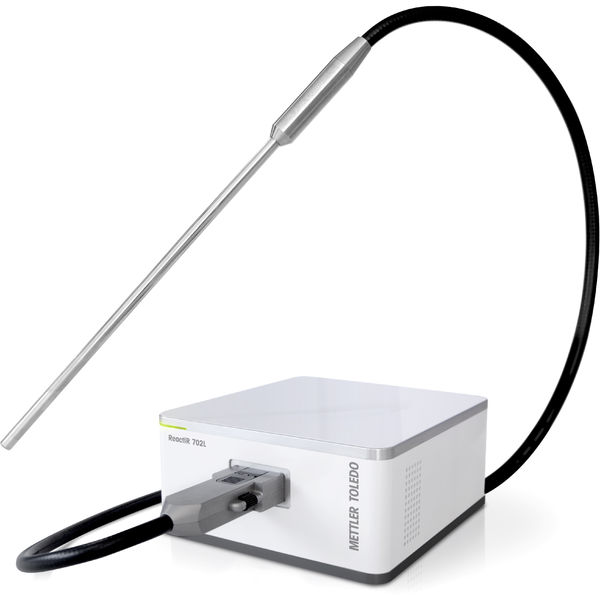
System ReactIR 702L, TEMCT

System ReactIR 702L, TEMCT

用於
實驗室
軟體
iC IR
偵測器
TE MCT
光學範圍(基本單元)
4000 - 800 cm-1
淨化要求
否
顯示更多功能
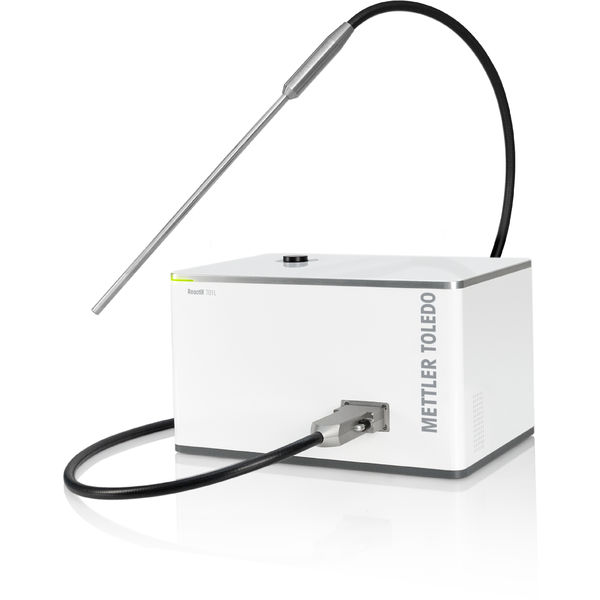
System ReactIR 701L, LN2

System ReactIR 701L, LN2

用於
實驗室
軟體
iC IR
偵測器
LN2 MCT
光學範圍(基本單元)
4000 – 650 cm-1
淨化要求
否
顯示更多功能
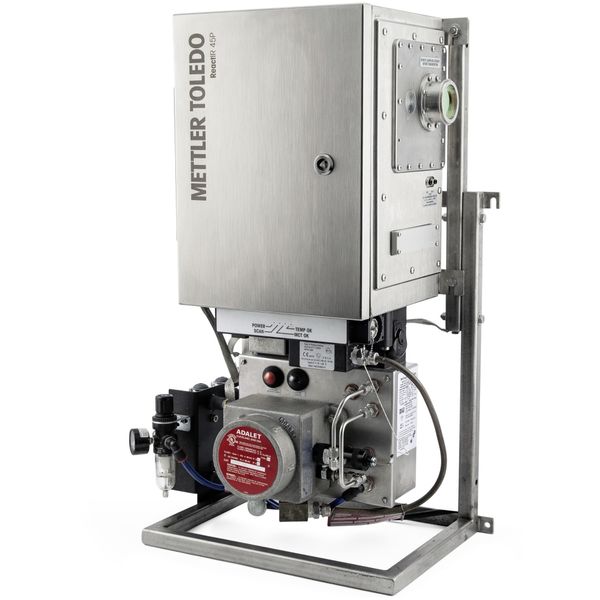
Base Unit HL ReactIR 45P

Base Unit HL ReactIR 45P

用於
軟體
iC IR;
偵測器
;
光學範圍(基本單元)
4000 – 650 cm-1
淨化要求
是
顯示更多功能

How FTIR Works: The Michelson Interferometer and Fourier Transform

FTIR Sampling Techniques: Transmission, ATR, and In‑Situ Analysis

Advantages of FTIR: Speed, Sensitivity, and Spectral Resolution

In-Situ FTIR for Chemical Reaction Monitoring and Process Control

Pharmaceuticals

Chemicals

Polymers

In-Situ FTIR Analysis White Papers
In-Situ FTIR Spectroscopy Webinars

Pharmaceuticals

Chemicals

Polymers

What is the difference between IR and FTIR?

Traditional IR spectroscopy is dispersive, measuring one wavelength at a time, whereas FTIR (Fourier Transform Infrared) measures all frequencies simultaneously using an interferometer. This results in significantly faster data collection, higher resolution, and a much better signal-to-noise ratio. 

What does an FTIR spectrum tell you?

An FTIR spectrum acts as a molecular fingerprint, showing peaks that correspond to specific chemical bond vibrations (stretching, bending) at characteristic wavenumbers. It allows researchers to identify functional groups, determine chemical structures, and quantify components within a mixture. 

Why is FTIR used for in-situ reaction monitoring?

FTIR is ideal for in-situ reaction monitoring because it provides real-time data on reactant consumption, intermediate formation, and product generation as chemistry progresses. Using probe-based FTIR technology, scientists can track reaction kinetics, reaction mechanisms, and endpoint determination under actual process conditions without disturbing the sample.

What are the main advantages of FTIR over dispersive IR spectroscopy?

FTIR offers three primary advantages: the Felgett (multiplex) advantage, where all frequencies are measured simultaneously for faster results; the Jacquinot (throughput) advantage, which allows more energy to reach the detector for higher sensitivity; and the Connes (frequency precision) advantage, utilizing internal laser calibration for high wavelength accuracy.

What is ATR-FTIR and when should it be used? 

Attenuated Total Reflectance (ATR) is a sampling technique where IR light reflects off the internal surface of a high-refractive-index crystal in contact with the sample. It is ideal for analyzing solids, liquids, and pastes without extensive sample preparation, making it the standard for rapid material identification.

Can FTIR be used for quantitative analysis? 

Yes, FTIR is highly effective for quantitative analysis by applying the Beer-Lambert Law. By measuring the absorbance intensity of specific functional group peaks, scientists can determine the concentration of components in a mixture with high precision. 

What are the some core applications of FTIR?

我想要…
Need assistance?
Our team is here to achieve your goals. Speak with our experts.