 |
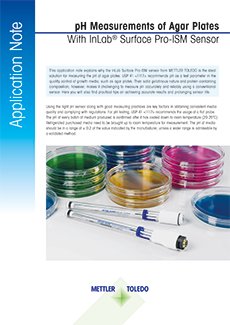
To learn more about measuring the pH in agar media download this free application note. |
Every step, in agar media preparation is vital for creating an optimal environment for culture growth. One of the most important aspects is accurately measuring pH, as it can significantly affect the media. Despite its importance, measuring the pH of agar media is challenging when using routine pH sensors. When a sensor with a spherical pH sensing membrane is used, the flat surface and solid gelatinous nature of agar plates result in inadequate contact between the sample and the sensor, leading to improper interaction with the reference electrolyte. Consequently, this and some other factors represent major limitations of traditional sensors, leading to fluctuating readings and unwanted downtime. Such challenges could be overcome by using a specialized sensor and meticulous care during measurement.
METTLER TOLEDO's InLab™ Surface Pro-ISM is especially designed with a low resistance glass membrane that ensures improved accuracy and accelerates response times. It has a flat pH sensing membrane, which enables the junction to maintain full contact with the samples like agar media. Additionally, the sensor includes an open ceramic ring junction that facilitates a faster outflow of the reference electrolyte, thus reducing the measurement delay.
This application note delves into detailed aspects of measuring the pH of agar, addressing the challenges you may face along the way. It recommends the perfect sensor for your measurements and provides helpful tips to ensure you achieve consistent and accurate results. Download it now and enhance your agar plates’ performance.
Watch our video to learn how METTLER TOLEDO sensors ensure accurate pH measurements for optimal culture growth!
The following sections highlight more details about agar as a nutrient media and discuss the importance of measuring its pH.
Why is it important to measure the pH of agar media?
Stable pH is vital for optimum microbial development and growth in culture media. The ideal pH of a culture medium provides a favorable H+ ion concentration suitable for the growth of microorganisms.
pH significantly affects the enzymes present within these microorganisms. When the pH is altered, it can lead to the denaturation of enzymes, changing their structure and disrupting their catalytic properties. This alteration also affects the ionic charges on the enzyme molecules, impeding their ability to bind with substrates and facilitate essential biochemical reactions. The disruption of metabolic processes can lead to reduced cell division, slower growth rates, or even cell death, highlighting the importance of maintaining an appropriate pH for optimal bacterial activity on agar media plates.
When should the pH of agar media be adjusted during preparation?
The pH of the media should be adjusted during preparation if it falls outside the desired range for the specific application. Adjustments should be made by adding diluted acid or base before sterilization to ensure accurate pH levels are maintained during the entire experimental process. Regular monitoring of pH may also be necessary during long-term use to ensure it remains within the optimal range.
What is the optimum pH for growing the microorganisms?
Most bacteria grow at a pH range of 6.5 to 7.0, which is near neutral. However, some bacteria are capable of surviving in highly acidic environments with pH levels as low as 1.0, while others prefer alkaline conditions, growing optimally at pH values between 8 and 10.5. Each microorganism has a specific optimum growth pH at which it flourishes best. If the pH falls below the minimum growth threshold or exceeds the maximum growth threshold, microbial growth can occur very slowly or may not happen at all.
Which factors can influence the pH of agar media?
The pH of agar plates can be influenced by a variety of factors that can lead to unstable readings. Key contributors include the type and concentration of agar, as well as the medium's composition and the presence of buffering agents. Water quality is essential, as inadequate or unsuitable water can affect pH. Contamination from containers, excessive sterilization, improper mixing, repeated re-melting, and unsuitable storage conditions can also result in pH variations. Additionally, agar plates are temperature-sensitive; they should be measured at room temperature. Finally, the age of the plates and the quality and calibration of the pH electrode can significantly impact measurement accuracy, highlighting the importance of proper handling and monitoring techniques in laboratory environments.
To learn more about the importance of pH measurements in agar media, the advantages of using the right sensor, and good measuring practices, download our application note by clicking on the button above