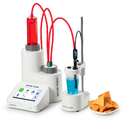
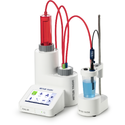
This page provides information to determine acid content in vinegar samples by potentiometric titration using an EasyPlus titrator.
By clicking on the link below, you will receive a PDF of the application note.
Why use Easy pH titration system to analyze acid content in vinegar?
The Easy pH Titration system is perfect for measuring acid levels in vinegar as it streamlines and speeds up the titration process to determine acid/base endpoints or equivalence points. Its user-friendly design reduces the need for extensive training, making the system easier to use and more efficient in quality control settings. Additionally, the system offers guided setup features that help establish consistent testing protocols, ensuring reliable and repeatable results regardless of the operator, which is crucial for maintaining vinegar quality standards.
Why measure acidity in vinegar?
Vinegar is commonly used to enhance the aroma and taste of foods like dressings and marinades. It also serves as a preservative in items such as pickles and sauces and inhibits harmful bacteria like E. coli. Although it offers health benefits like aiding digestion, excessive acetic acid can be harmful. Therefore, accurately measuring vinegar's acidity is vital for ensuring product quality, safety, and regulatory compliance.
How is acid content in vinegar determined?
Acid content in vinegar is one of the crucial quality control parameter in Vinegar. Acetic acid level in vinegar is determined by performing a potentiometric titration with sodium hydroxide (NaOH). The titration is monitored with a pH sensor and terminated at an endpoint (EP) of pH 8.2.