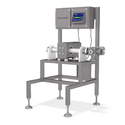
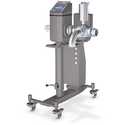
Sådan vælger du det rigtige metalsøgesystem til rørledning. Anvendelser i rørledninger er mange og varierede. Ved at vælge den rigtige metaldetektionsløsning sikrer du maksimal brandbeskyttelse og hjælper med at øge din OEE. At vælge den rigtige løsning indebærer fire trin. Trin 1: Bestem metaldetektorens størrelse. Rørdiameteren bestemmes af produktets gennemstrømningshastighed. Gennemstrømningsrørets diameter bestemmer åbningens størrelse. Der kræves et ikke-metallisk gennemstrømningsrør til at transportere det pumpede produkt gennem metaldetektorens åbning. Trin 2. Overvej produktets temperatur, tryk og eventuelle særlige krav til produkthåndtering. Opvarmede produkter, såsom varm marmelade, kræver et gennemstrømningsrør, der kan håndtere høje temperaturer. Metal of Toledo leverer typisk et ikke-metallisk gennemstrømningstrør til høj temperatur og højt tryk. Systemtrykket skal være kendt for at sikre, at gennemstrømningsrøret kan håndtere det forventede tryk. Visse produkter, såsom smeltet chokolade, kræver særlige vandkapper omkring gennemstrømningstrøret for at opretholde produktets temperatur under inspektionsprocessen. Trin 3. Bekræft, hvilke fittings der kræves. Bestem derefter, hvilken type fitting der kræves for at forbinde rørene, og hvilken forbindelsestype der er. Mettler Toledo kan levere enhver nødvendig fitting. Bemærk, at forbindelsestypen kan påvirke åbningens størrelse. Trin 4. Vælg den rigtige frasorteringsmekanisme. Den rigtige frasorteringsmekanisme afhænger af produktets egenskaber. Trevejsomskiftningsventiler, inklusive muligheder der kan pigges, er tilgængelige til de fleste anvendelser med væske eller blød slurry. Hvis der imidlertid er faste elementer i produktstrømmen, kan der være behov for en specialiseret frasorteringsmekanisme. Yderligere overvejelser: integration, adgang, forbedret OEE og øget følsomhed. Nemmere integration i produktionslinjer. Der kan leveres skræddersyede støtterammer for nem integration med andet produktionsudstyr. Vi kan levere gulvmonterede og ophængte løsninger. Nemmere adgang til metaldetektorens HMI Metalotolitos innovative emuleringsfunktion er tilgængelig og giver fjernadgang til og styring af metaldetektoren fra en praktisk placering øget OEE og øget følsomhed Pumpeprocessen kan skabe bobler eller hulrum i produktstrømmen, hvilket potentielt kan føre til flere falske udløsninger og spildt produkt samt til en reduktion i følsomheden. Profile Advantage-teknologien ignorerer effekten af disse bobler eller hulrum, så den kan registrere mindre metalliske forureninger for bedre brandbeskyttelse og praktisk talt eliminere falske frasorteringer for at øge produktiviteten.
Pipeline applications are wide and varied – choosing the right Pipeline metal detection system is critical to achieve maximum performance and brand protection. Pipeline metal detectors can inspect pumped liquids, pastes, slurries, high viscosity and vacuum-filled products for metal contamination. Having the correct throughput pipe, fittings and reject device will help you efficiently remove metal contaminated product from the production flow, and minimize waste of good product.
Our Pipeline metal detection system brochure highlights the different systems available for standard pumped product applications, specialized sausage systems and solutions for challenging applications. It also offers step-by-step guidance to help you determine the best Pipeline metal detection system for your application.
Key Considerations in Choosing the Right Pipeline Metal Detection System
Step 1: Determine the size of the metal detector
- A non-metallic throughput pipe is required to transport the pumped product through the Pipeline metal detection system aperture. The aperture size/diameter of the pipe will be determined by the product throughput rate.
Step 2: Consider the temperature of the product
- The temperature of the product inspected will determine the type of throughput pipe required. For example, heated products such as hot jam requires a throughput pipe that can handle extremely high temperatures. Molten chocolate requires special water jackets around the throughput pipe to maintain the product's temperature during the inspection process.
Step 3: Determine if there is any pressure in the system
- METTLER TOLEDO can supply a high temperature, high-pressure non-metallic throughput pipe for specific applications. The maximum system pressure must be known to ensure the throughput pipe can handle the expected pressure.
Step 4: Confirm what fittings are required
- Having the correct fixtures to connect the throughput pipe to the rest of your production line is essential. METTLER TOLEDO supplies a range of fittings, custom support frames and floor-mounted and suspended options for easy integration with other production equipment.
Step 5: Choose the right reject mechanism
- The right reject mechanism will depend on the product characteristics. Three-way diverter valves are available for most liquid or soft slurry applications, however if there are any solid elements within the product flow, a specialized reject mechanism may be required.
- METTLER TOLEDO offers a range of Pipeline metal detection systems to help ensure maximum performance of your product inspection program.
METTLER TOLEDO offers a range of Pipeline metal detection systems to help ensure maximum performance of your product inspection program.
Pipeline Inspection in Challenging Applications
In pumped product applications that are subject to bubbles or voids in the product flow, there is a risk of false rejects due to variation in the active product signal. However, by using Profile Advantage Pipeline metal detection systems, you can overcome this issue, and virtually eliminate false rejects. Profile Advantage technology uses a unique combination of multi-simultaneous frequency and product signal suppression technology to minimize the active product signal. This not only minimizes your risk of false rejects but also eliminates unnecessary product waste and the associated admin burden. Profile Advantage Pipeline systems can have a positive impact on productivity, product quality and your bottom line.