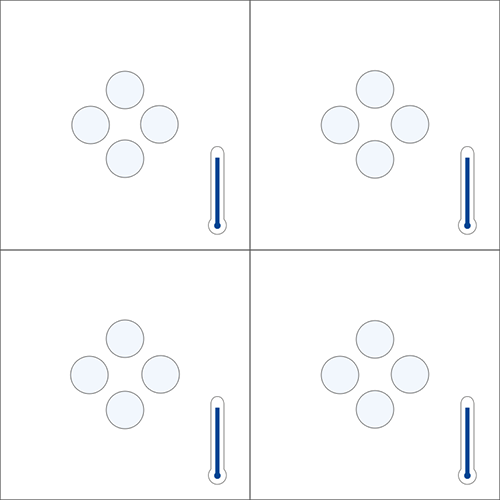
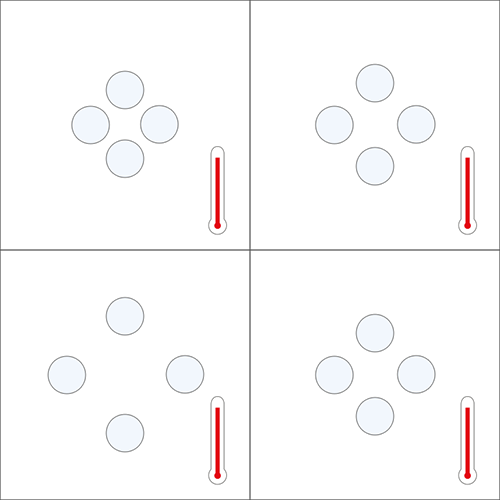
What is density and how can it be measured?
The density of a solution can be measured manually or digitally. For more detailed information on how to measure density with pycnometers, hydrometers and digital density meters please see our 3 Ways to Measure Density guide.
Manual methods like pycnometers and hydrometers are widely used for the determination of density and related values, e.g. specific gravity, alcohol%, BRIX°, API degrees, Baumé, Plato, etc. Although these methods are easy to use and quite inexpensive, they require expertise in every step of the manual operation protocols, which often affects the accuracy and reliability of the results.
A Pycnometer is a glass beaker of defined volume. It is weighed without the sample (M1), then filled with the sample and weighed again (M2). The difference between M1 and M2 divided by the volume of the beaker is the density of a sample.
A Hydrometer is a glass body which is dipped into the sample. After a short equilibration time it will float a certain level. The higher the density of the sample, the less the hydrometer will float. The level of equilibration reads the density.
A Density Kit is used together with a balance. A glass body of defined volume is weighed in air (M1), dipped into the sample and weighed again in the sample (M2). The difference between M1 and M2 (buoyancy) divided by the volume of the glass body is the density of the sample. A special holder can also be used to measure density of solids, using a reference liquid (water, ethanol or user defined).