Ready to master density measurement for precise quality control?

Note: Unless if extremely high pressure is applied, this is not the case for analytical density measurement purposes.

Mass in vacuum True density
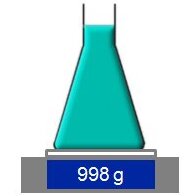
Mass in vacuum. True density
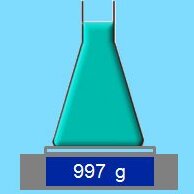
Mass in air. Apparent density

See the answers for these questions and much more detailed information in our Density Measurement Guide

Brix Measurement

Alcohol Measurement

Applications in Beer Production

Applications in Wine production

Oils and Paraffins

Flavors and Fragrances

Battery Acid

Fertilizers

For applications, methods, and instructions in density measurement, visit our Applications Library.

Densitometer

Excellence Density Meters

The All-Rounder Benchtop Density Meter for a Variety of Applications

EasyPlus Density Meters

Standard EasyPlus Density Meters

Affordable Density Meters for Daily Applications

portable density meter

Portable Density Meter

Fully Automatic Portable Density Meter for the Lab or the Field

What is density?

Density is the mass of a substance per unit of volume. It is used to measure the compactness of a substance, and is commonly expressed in g/cm³, or lb/ft³.

The density of a sample is expressed with the Greek letter "ρ" (the Latin letter D can also be used) and is calculated as:

ρ = m / v

For example, if you fill 500cm³ of a sample into a glass beaker, and the mass weighs 1000g, then the density would be:

ρ = 1000g/500cm³ = 2g/cm³

What is the difference between density and mass?

Mass is a measure of how much matter there is within an object or liquid while density expresses how much mass there is per a certain amount of volume.

For example, 10kg of steel and 10kg of feathers have the same mass, but different volumes therefore they have different densities.

What are some everyday examples of density?

Helium filled balloons fly because the density of helium is lower than the density of air.

Oil floats in water because it has a lower density. This property is helpful if an oil spill happens in seawater. The fact that the oil floats makes it easier to clean up.

What is the relationship between density and temperature?

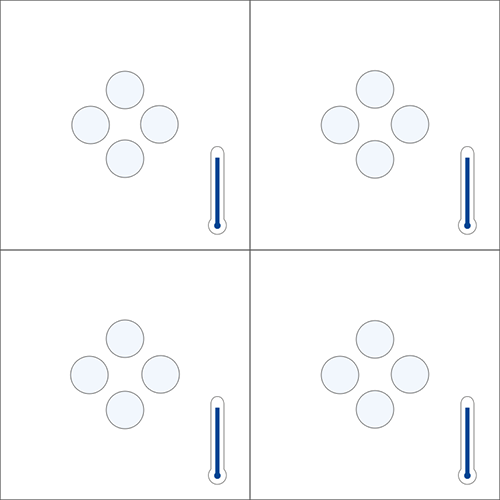
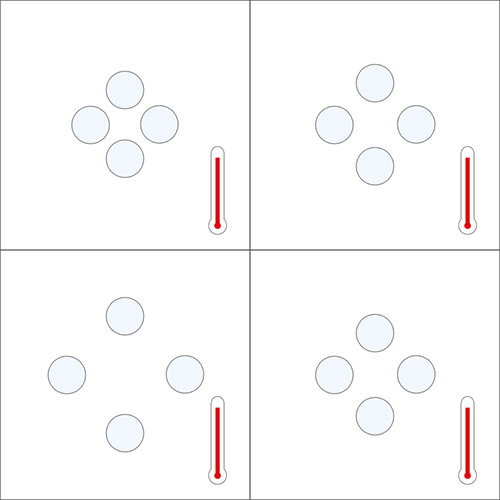
The density of a sample is very much dependent on the temperature, therefore the temperature must be recorded and controlled very precisely.

The graph below shows changes in the density of water based on the temperature it is measured at.

Usually, density is measured at a reference temperature of 20°C.

The density of water at 20°C is:

Water ρ 20= 0.99821 g/cm

What is specific gravity?

Density and specific gravity are not the same. Specific gravity, or relative density, is the density of a sample divided by the density of a reference substance. The reference substance for liquids and solids is usually water at its densest (4°C), and for gasses, it is air at 25°C.

The density of water at 4°C is 1g/cm3 so for example, if a liquid sample has a specific gravity less than 1, which means that it is less dense than water and it will float.  If the sample has a specific gravity greater than 1 it is denser than water and it will sink in it.

Why can density be used to identify a sample?

What is density? Why can it be used to identify  sample?

Density can easily be used to identify a pure sample because each element has a unique density. After a measurement, the density of the sample in question can be looked up to see what it corresponds to.

How is the density of solutions measured?

What is viscosity?

What is density? Are density and viscosity related?

Density and viscosity are not related. Viscosity is simply a measure of a fluids resistance to flow.

For example, honey is more viscous than saline water, but it is less dense.

The SI unit for viscosity is the pascal second (Pa·s)

Which instruments are used to measure density?

أريد أن...
Need assistance?
Our team is here to achieve your goals. Speak with our experts.