Peptide Therapeutics

Precision and Control from Lab to Packaged Product

peptides molecule

Peptide development, either through chemical synthesis or as recombinant molecules from cell based platforms present unique scientific and operational challenges. From research and process development to large-scale bioprocessing, scientists and engineers face low yields, productivity, batch variability, complex purification workflows, limited scalability, stringent Good Measuring Practice (GMP) standards requirements and sustainability targets. 

METTLER TOLEDO partners with peptide development teams, offering an integrated ecosystem of laboratory instruments and software solutions. This enables seamless process modeling, analytical data acquisition, cross platform data integration, bioprocess monitoring and control, manufacturing weighing and material control, packaging inspection and lifecycle services. Our solutions streamline processes, reduce variability, and support data-driven decisions across the entire peptide value chain.

Research Labs

Expand Analytical Coverage Without Expanding Complexity

Reduce Preparation Variability From the First Weigh-In

Pipette Like Your Data Depends on It

Standardize Execution, Not Just SOPs

Boost R&D throughput without losing comparability

Route Development

Scale Route Development Throughput With Automation

Standardize Route Execution and Data Management

Ensure Resin Performance and Efficient Linker Chemistry

Optimize Coupling and Cleavage Strategies

Optimize Cell Line Development for Recombinant Protein Production

Process Development 

Standardize Multi-Parameter Routines as Engineering Work Scales

Monitor Process Parameters With In-Line Sensors

Scale-up

See Process Changes in Real Time to Support Endpoint Decisions

In‑Lab QC

Make Routine QC Weighing Repeatable and Review-Ready

Meet Compendial UV/Vis Requirements With Traceable, Qualification-Ready Instruments

Reduce Transcription Risk With Connected, Standardized Workflows

Standardize Multiparameter QC Checks in One Workflow

Bioprocessing Monitoring & Control

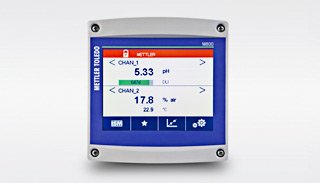
Maintain pH Measurement Performance in Harsh Peptide Conditions

Stabilize Dissolved Oxygen Control During Dynamic Operation

Monitor Dissolved CO2 Frequently Enough for Control Decisions

Off-Line Process Checks

Standardize Key Unit Operations and Critical Parameters in Therapeutic Peptides Downstream Workflow

Optimize Formulation Development to Maintain Product Quality and Stability

Fast, in Situ Oxygen Safety Measurements in Small Spaces

From Raw Material to Final Fill: Weighing as the Critical GMP Control Point

Safe and Compliant Weighing in Hazardous and Hygienic Peptide Manufacturing Environments

The Critical Role of Gravimetric Control in Regulatory-Compliant Yield Management

Modular and Adaptable Weighing Solutions for Agile Biopharmaceutical Manufacturing

Scalable Weighing Solutions to Support Agile Production

Enhancing Peptide Production with Fully Integrated Weighing and Manufacturing Systems

Supporting the End-To-End Manufacturing Process

Packaging & Product Inspection

Detect Missing Parts in Multi-Component Peptide Packages

Handle Lightweight and Delicate Products at High Throughput Without Compromising Checks

Meet Stringent Compliance Requirements and Protect Product Integrity

Strengthen GLP‑1 Tablet Inspection From Infeed to Ship

Service: Lifecycle Support (Qualification, Training, Uptime)

Measure with Confidence and Accuracy

Calibration and Certificates

Achieve and maintain compliance through consistent procedures and adhere to local and global regulations and standards, such as:

1
ISO 17025
2
EURAMET
3
USP, GLP and GMP
4
NIST Handbook 44 and OIML
5
Measuring Instruments Directive (MID)
In Compliance with Your Quality System and Regulatory Standards

Equipment Qualification

Ensure a perfect start and ongoing, worry-free use with immediate and long-term benefits:

1
Assurance that the equipment is fit for use
2
Cost-savings through manufacturer's qualification services
3
Confidence that the equipment meets process requirements
4
Identification of needed calibration and maintenance
Boost Your Performance with Equipment Maintenance

Preventive Maintenance

Pre-plan your periodic maintenance that provides you with complete trust that your equipment achieves:

1
Consistent, accurate results
2
Safe and reliable operation
3
Optimal performance possible
4
A longer equipment lifespan, resulting in a higher ROI

Related Solutions for Peptide Therapeutics

Balancing Science and Process in Peptide Synthesis

Chemical Peptide Synthesis: Enhancing Yield and Purity

Biotechnological Peptide Production: Scale with Control

Buffer Preparation, Purification, Formulation, and Final Quality

Product Inspection: A Final Check for Patient Safety

What are the main steps in the peptide manufacturing process?

Peptide production relies on advanced biochemical synthesis using solid-phase peptide synthesis (SPPS) for short peptides, while for larger, more complex molecules requiring post-translational modification, bioprocesses using recombinant protein expression systems, or a combination of bioprocesses and biochemical synthesis are the system of choice to ensure purity, potency, and consistency.

How does solid-phase peptide synthesis (SPPS) build peptides step-by-step?​

1. A peptide is built step-by-step by adding amino acids in a precise sequence on a solid resin.

2. After each addition, excess chemicals are washed away and protective groups are removed to prepare for the next step.

3. The finished peptide is cleaved from the resin and purified, typically using HPLC.

4. The purified peptide is turned into a solid or liquid product. Quality control tests are run throughout to ensure purity, safety, and effectiveness.

What steps are involved in recombinant biological production of peptides?

1. Peptide-producing bacteria or yeast are grown in a nutrient-rich medium optimized for high yield.

2. Peptides are separated from the culture using centrifugation and filtration. If inside cells, the cells are broken open first.

3. Peptides are purified using techniques like chromatography and tangential flow filtration, followed by any necessary cleavage or modifications.

4. Excipients are added, and the product is tableted or filled into vials, under sterile conditions. Quality control tests ensure purity, safety, and functionality.

What are the key challenges in peptide synthesis?​

Chemical and solid phase peptide synthesis is a widely adopted method for peptide production, especially for short peptide production, and offers advantages over recombinant biological methods, in certain use cases: 

  • Cost: Manufacturing short peptides is less expensive at small to medium scale production, given simpler infrastructure requirements, fast turnaround time, and standardized resources. However, recombinant methods may be more cost-efficient at larger scales, longer or more complex peptides.

Whether produced through biochemical synthesis or recombinant biological methods, peptide manufacturing remains inherently expensive. Each approach comes with its cost drivers, from reagent and solvent use in chemical and solid-phase synthesis to complex infrastructure and long production cycles in biological expression. As a result, there is a strong drive across the industry to maximize process efficiency, minimize variability, and ensure consistent product quality at every scale.

  • Flexibility: It allows the incorporation of non-coding amino acids and diverse backbone modifications to improve stability.

  • Purity: Chemical and solid-phase synthesis methods avoid the risk of host-cell contaminants and enable precise control of the product. However, recombinant methods also achieve high purity with proper downstream processing.

What difficulties arise in biological peptide production methods?​

Recombinant biological approaches are common for larger proteins requiring complex post-translational modifications, and are advantageous for peptide production in circumstances such as:

  • Complexity: Biological methods enable complex peptide folding and specific post-translational modifications compared to chemical methods.

  • Sustainability: Chemical methods use an excess of high-purity, expensive reagents and solvents to ensure reaction completion, leading to greater chemical waste, and could affect global supply chains for essential solvents.

  • Peptide Length: Biological methods are better suited for producing longer peptides (>50 amino acids).

Process Instrumentation

Process Analytics

Process Instrumentation for measuring pH, Dissolved Oxygen, Conductivity, Turbidity, TOC, Sodium, Silica, Gas Analyzer

Analytical Sensors for Bioreactors

Analytical Sensors for Bioreactors

Accurate Process Control in Fermentation & Cell Culture

مفاعلات أتوماتيكية وتحاليل في الموقع

مفاعلات أتوماتيكية وتحاليل في الموقع

Chemical Synthesis, Process Development & Particle Sizing

dynochem biologics

Dynochem Biologics

Bioprocess Simulation Software

الموازنات التحليلية - موازنا مختبرية

الموازنات التحليلية

نتائج الوزن غير المماثلة في مختبرك

METTLER TOLEDO Precision Balances

Precision Balances and Scales

Accurate Weighing for the Laboratory and Manufacturing

UV Vis Spectrophotometry by METTLER TOLEDO

UV/Vis Spectrophotometry

Instruments, Accessories, Services, and Software for UV/Vis Spectrophotometry

أجهزة قياس الأس الهيدروجيني المخبرية

أجهزة قياس الأس الهيدروجيني المخبرية

حلول قياس الأس الهيدروجيني والتوصيلية الكهربية للتطبيقات المخبرية والميدانية.

Industrial Scales and Weighing Scales

Industrial Weighing Scales and Systems

Reliable Weight Scales for Manufacturing Environments

Liquid Handling

Liquid Handling

Rainin Pipettes, Tips, Dispensers, and Semi-automated Systems for Life Sciences

Balancing the future podcast with Ben Locwin

​​The Rise of GLP-1 Drugs: Transforming Weight Loss Treatment​

Explore how GLP-1 drugs revolutionize weight loss, impact treatment capacity, tackle sustainability,...

Biopharmaceutical Manufacturing Guide

Biopharmaceutical Manufacturing Guide

This guide covers the role of analytics and weighing in understanding these parameters in upstream a...

Developing Robust and Scale-able Peptide Isolation Processes

Developing Robust and Scale-able Peptide Isolation Processes

Emily Guinn and Kyle Blakely, Eli Lily present "Developing Robust and Scale-able Peptide Precipitati...

تبلور البروتين

تبلور البروتين

تبلور البروتين هو الفعل والطريقة لإنشاء شبكات منظمة ومرتبة للجزيئات الكبيرة المعقدة في كثير من الأحي...

مجموعة أدوات علوم الحياة

مجموعة أدوات علوم الحياة

توفر مجموعة أدوات علوم الحياة الجديدة معرفة محددة التطبيق ونصائح وتلميحات في 3 مجالات رئيسية: السحب...

معالجة السوائل لزراعة الخلايا

معالجة السوائل لزراعة الخلايا

يشرح الدليل التعريفي المسمى "معالجة السوائل لزراعة الخلايا" الأنواع المختلفة من الخلايا التي يمكن زر...

 PAS-X MES Integration in Pharmaceutical Manufacturing

PAS-X MES Integration in Pharmaceutical Manufacturing

Integration of weighing equipment is essential for compliance and Körber's partnership with METTLER...

eBook Cover

Weighing in Pharma eBook

This eBook details products throughout the value chain to ensure quality, efficiency and safety in P...

صياغة الدواء

صياغة الدواء

يعتمد إنتاج الأدوية بكفاءة وأمان على بيانات موثوقة من التقنيات التحليلية المتقدمة. يعد تحسين الصياغة...

Guide to Intelligent Sensor Management (ISM) predictive diagnostic tools in the pharmaceutical industry

Predictive Diagnostics in the Pharma Industry

Guide to Intelligent Sensor Management (ISM) predictive diagnostic tools in the pharmaceutical indus...

Four Pillars of Pharmaceutical Water Quality

The Four Pillars of Pharmaceutical Water Quality

In the world of pharmaceutical manufacturing, maintaining water purity is an unwavering commitment....

ضمان الامتثال للمياه الصيدلانية

ضمان الامتثال للمياه الصيدلانية

تضمن أنظمة القياس المتقدمة في خط الإنتاج للمياه سلامة وجودة المستحضرات الصيدلانية مع تلبية متطلبات P...

أريد أن...
Need assistance?
Our team is here to achieve your goals. Speak with our experts.