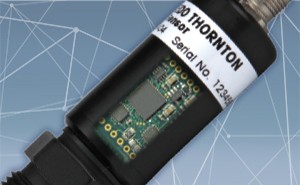
Do you want to be truly certain only the purest water is reaching points of use? Mettler Toledo Thornton has the answer. As the number of chips per wafer increases and line widths get narrower, the ability to catch trace ionic impurities will greatly improve your wafer yield and quality. But the big question is, can your resistivity sensors keep up? Resistivity measurement provides a cumulative measurement of ions and is often used as the primary means of detecting impurity trends, so this measurement is critical to ensuring water purity. Through close collaboration with industry partners, Mettler Toledo Thornton has developed the UPW Unicont. Cutting edge advancements in accuracy, signal stability and environmental isolation make the UPW Unicont the only resistivity sensor are capable of meeting the evolving challenges of the semiconductor industry. With UPW Unicon, you can be sure that your water is pure enough to achieve yield targets. And because UPW Unicon's signal stability makes it possible to differentiate actual changes in your water from noise, you can avoid taking unnecessary action when water is still in spec. Now you can eliminate cyclical changes in resistivity readings due to daily or seasonal changes in environmental and process temperatures. Be prepared for the future with the unparalleled accuracy of the Mettler Toledo UPW Unicont. To learn more, visit www.mt.com forward slash UPW Unicont.
Pure Water Conductivity Sensors for Better Water Quality
The UPW UniCond 2-electrode conductivity and resistivity sensor brings a new level of performance to UPW applications. The UPW UniCond sensor was developed collaboratively with semiconductor industry partners to provide stability, best-in-class accuracy, and environmental isolation in ultrapure water applications.