Our laboratory solutions for life sciences support accurate measurements and robust workflows from cloning and cell culture to formulation, stability testing, and batch release. METTLER TOLEDO brings together high‑precision instruments, method and application expertise, software, and global service to reduce variability and data risk across research, development, and QC.
Whether you work on peptides, proteins, nucleic acids, or complex biologics, our solutions help you streamline routine tasks, document every result, and stay compliant in regulated environments such as GLP/GMP labs.
Related Solutions


Related Know-How





FAQs
What types of METTLER TOLEDO products can support my life science lab?
You can equip your lab with a complete set of precision instruments for weighing, liquid handling, analytical measurements, and cell analysis, from basic tasks to advanced methods.
We provide analytical balances, microbalances, pH and conductivity meters, titrators, liquid handling, moisture analyzers, density and refractometers, UV/Vis spectrophotometers, automated cell counters, and microplate readers that are standard in life science R&D and QC labs.
Where in life science R&D and drug development do these instruments add the most value?
Our lab instruments help you generate reliable, reproducible data so you can trust results and move projects forward with speed. Accurate sample preparation, precise weighing, reliable pH and conductivity measurements, reproducible titrations, and consistent cell counting and ELISA or other plate‑based readouts are critical for experiments in cell culture, biochemistry, molecular biology, and pharmaceutical formulation.
METTLER TOLEDO devices help unlock the potential in furthering academic research, peptide therapeutics, and biologic and biosimilars development, vaccine formulation, and the advancement of safe and quality cell and gene therapy.
How can I simplify GMP/GLP compliance and strengthen data integrity in regulated labs?
Our lab devices and software solutions, such as LabX™, are designed to make it easier for you to work in regulated environments and prepare for audits. We support compliance with Good Manufacturing Practice (GMP), Good Laboratory Practice (GLP), and data‑integrity requirements with features such as electronic records, audit trails, and user management. Learn more in our comprehensive guide on laboratory data integrity.
How do I connect your instruments to LIMS/ELN and reduce manual data entry?
We offer solutions to connect to your LIMS, ELN, or other data systems to reduce manual transcription and centralize results. Instruments can be connected via Ethernet, USB, or RS232, and LabX™ and iC software suites help automate data capture, review, and reporting for audits and trending. PipetteX™ extends this connectivity to your liquid handling assets by tracking pipette usage, location, and calibration status and organizing calibration certificates electronically, so your pipette fleet is fully documented and audit‑ready.
Does METTLER TOLEDO offer support and training for life science laboratories?
Yes, you get access to application know‑how, guides, and training materials to help your team work efficiently and consistently. We provide application guides, best‑practice materials, and training covering weighing, pipetting, pH and conductivity measurement, moisture determination, titration, UV/Vis analysis, and cell counting.
Are METTLER TOLEDO instruments suitable for both routine QC and advanced research?
You can perform standardized routine QC tasks and conduct demanding research and development projects with the same devices. Our portfolio includes robust, easy‑to‑use solutions for routine quality control as well as high‑performance instruments, automation options, and software tailored to advanced research and complex life science workflows.
Where does lab automation make the biggest impact, and how do I get started?
We provide scalable lab automation solutions to streamline routine tasks such as weighing, sample preparation, titration, pipetting, and plate‑based assays. Automated instruments and integrated software help standardize workflows, improve reproducibility and data integrity, and reduce hands‑on time for operators in R&D and QC labs.
Can I standardize multiple routine measurements in one workflow (e.g., OneClick™ methods)?
We offer multiparameter solutions that let you perform several measurements with a single OneClick™ method, such as pH, conductivity, ion, and other parameters, in a single workflow. This helps life science labs reduce manual steps, save time, and improve data consistency by capturing all results together in a standardized, documented procedure.
What service options help keep my lab running and minimize downtime?
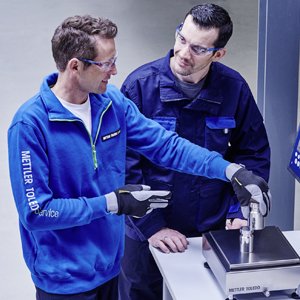
We have a wide range of service and support options, including on‑site and depot repair, preventive maintenance, and remote support to keep your instruments running reliably. You can request service or speak with a local representative to tailor service to your lab’s specific needs.
Which calibration, certification, and validation/qualification packages does METTLER TOLEDO offer?
We provide calibration, verification, and certification services, as well as equipment qualification packages (IQ/OQ/PQ) to support regulated life science environments. Globally harmonized test methods, audit‑ready certificates, and risk‑based testing concepts help you demonstrate instrument performance, maintain compliance, and document validation activities efficiently.
How can METTLER TOLEDO help my lab work be more sustainable?
METTLER TOLEDO’s GreenMT program and product design focus on reducing environmental impact across instruments, consumables, and services. Examples include energy‑efficient balances and plate readers, sustainable Rainin tip systems that reduce plastic waste, and ACT‑labelled products that provide transparent environmental impact scores to support greener purchasing decisions.
How can I find the right solution for my specific life science application?
A short discussion of your samples, workflows, and regulatory needs usually reveals the best fit quickly. Selection typically depends on sample type, required accuracy, throughput, regulatory needs, and integration requirements; discussing your workflows with a specialist helps identify the most suitable instruments and software configuration. Contact your local support here.