What is external dissolution technique?
The external dissolution technique is a procedure for measuring the water content in lyophilized samples. In this method, dried Karl Fischer reagent is introduced into a sealed vial containing the lyophilized sample through the vial's septum. This allows the sample to dissolve without exposure to external moisture, thereby maintaining its original condition. After thorough shaking to ensure the sample completely dissolves, the solution is extracted using a syringe and then transferred to the Karl Fischer coulometric cell for an accurate water content analysis.
How does the external dissolution method work ?
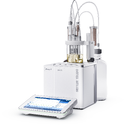
External dissolution method works by adding a precisely measured amount of dried Karl Fischer reagent to dissolve the sample within the sealed vial, and then transferring the resulting solution into the coulometric cell for titration. This approach minimizes exposure to ambient humidity and avoids errors from moisture contamination. The EVA C3 titrator automatically calculates water content based on titration data, ensuring accurate results with repeatability suitable for stringent pharmaceutical quality control.
What benefits does EVA C3 deliver to pharma-biotech?
The external dissolution method paired with the EVA C3 coulometric Karl Fischer titrator offers precise and reliable water content analysis of lyophilized samples while preventing moisture exposure. This approach maintains sample integrity, ensures accurate measurement even at trace levels, and helps meet regulatory requirements. The EVA C3 automates the titration and calculation steps, boosting lab efficiency and result consistency. Together, they enhance quality control, minimize variability, and protect product safety and effectiveness crucial for pharmaceutical and biotech industries.