解锁更安全、更可预测的格氏反应
格氏反应是合成化学中最强大的工具之一,但其高反应活性、对工艺条件的敏感性以及显著的放热会给开发和放大带来重大挑战。清晰了解反应动力学、热力学和放热情况,对于降低风险并确保工艺性能稳健至关重要。
了解领先研究人员如何利用先进的 PAT 和量热工具开发更安全、更高效的格氏工艺。立即下载研究合集,获取实用见解,以加深对反应的理解、提升安全性并加速工艺开发。

格氏反应是一种形成碳—碳键的反应,其中有机镁卤化物试剂(称为格林纳试剂,RMgX)与醛、酮、酯、腈或二氧化碳等亲电化合物发生反应。
格林纳合成依赖这些高反应性的有机镁化合物高效构建碳—碳键,使这类化学反应成为现代有机合成中最重要的工具之一。
这些有机镁卤化物化合物是亲核试剂,会攻击亲电性碳原子。例如,有机镁卤化物会加成到酮或醛的羰基键上,形成加成物,随后经水解生成醇。借助这种方式,已通过格林纳试剂合成了多种醇类。格氏反应之所以也非常重要,还在于其能够形成碳—碳键并实现烷基链的偶联。
格氏反应是合成化学中最强大的工具之一,但其高反应活性、对工艺条件的敏感性以及显著的放热会给开发和放大带来重大挑战。清晰了解反应动力学、热力学和放热情况,对于降低风险并确保工艺性能稳健至关重要。
了解领先研究人员如何利用先进的 PAT 和量热工具开发更安全、更高效的格氏工艺。立即下载研究合集,获取实用见解,以加深对反应的理解、提升安全性并加速工艺开发。
格林纳试剂是一种有机镁卤化物,通常写作 RMgX,由镁金属对烷基、芳基、乙烯基或烯丙基卤化物进行氧化插入而形成。

这种转化形成了高度极化的碳–镁键,其中碳原子具有明显的亲核性并表现为强碱,而镁中心则具有很强的路易斯酸性。这种极性直接决定了该试剂的反应性。碳会攻击羰基等亲电中心,而镁则配位于杂原子,从而稳定反应中间体。在溶液中,格林纳试剂并不是以单一、明确的物种存在;RMgX 会与二烷基镁(R₂Mg)和卤化镁(MgX₂)持续达到平衡。这种平衡(Schlenk 平衡)取决于溶剂、温度、浓度和卤素类型等因素,并且强烈影响反应性、选择性和聚集行为。由于其极化的 C–Mg 键、具有路易斯酸性的镁中心以及动态的溶液行为,格林纳试剂仍然是现代化学合成中用于构建碳–碳键的多功能且广泛使用的试剂。其反应性涵盖经典的羰基加成反应,在不同底物上可生成一级、二级或三级醇,以及通过镁配位过渡态进行的亲核取代反应,如环氧化物开环。格林纳试剂还参与卤素–镁交换和定向金属化,尤其适用于芳基和杂芳基溴化物,从而生成官能化的有机镁中间体。它们也作为铜、锌、铁和镍转金属化过程中的关键亲核试剂,为众多催化交叉偶联反应奠定基础。
当有机卤化物在无水条件下与金属镁接触时,会形成格林纳试剂,启动一个由表面介导的电子转移(SET)过程。卤化物吸附到镁表面的活化位点上,随后形成一个短寿命的自由基阴离子,并迅速裂解为碳中心自由基和卤离子。第二次电子转移生成一个碳负离子,该碳负离子会立即与镁配位,生成有机镁卤化物 RMgX。在整个过程中,反应通过涉及自由基物种、溶剂化离子和镁表面活化的非均相界面进行,并且强烈受氧化层去除、溶剂配位以及引发剂存在等因素影响。生成的 RMgX 并不是以单一分子实体存在,而是处于平衡之中,形成不同比例的二烷基镁和卤化镁,这些物种会影响该试剂的反应特征。

| 底物 | 产物 | 机理说明 |
| 醛 | 仲醇 | 单次加成;化学选择性高。 |
| 酮 | 叔醇 | 受位阻影响较大;反应速度慢于醛。 |
| 酯 / 酸氯 | 叔醇 | 两当量格林纳试剂依次加成。 |
| 腈 | 酮(经水解后) | 先对 C≡N 发生亲核加成,随后酸性后处理。 |
| 二氧化碳(CO₂) | 羧酸 | 直接羧化。 |
Grignard化学通过形成关键的C-C连接,被用于多种重要药物的大规模生产。
此外,过渡金属催化的有机卤化物与Grignard试剂的交叉偶联反应,也是药物化学中通过C-C成键构建复杂分子的另一种重要方式。Kumada-Corriu反应就是一个例子,其中芳基或乙烯基卤化物亲电体在镍或钯催化剂作用下与Grignard试剂偶联。
此外,Grignard试剂还可作为Brønsted碱(质子受体),与O−H、N−H和CH2基团反应,可用于合成重要的API和天然产物。
Grignard试剂的制备:用于安全放大生产的FTIR和量热学研究
通过IR监测和反应量热法研究Grignard试剂的合成,可为这些重要试剂的安全制备提供重要见解。在最早的案例之一中,Pfizer的David am Ende及其同事证明了这些技术在降低Grignard试剂合成放大生产风险方面的价值。
Ende, D. J. A., Clifford, P. J., DeAntonis, D. M., SantaMaria, C., & Brenek, S. J. (1999). Preparation of grignard reagents: FTIR and calorimetric investigation for safe Scale-Up. Organic Process Research & Development, 3(5), 319–329. https://doi.org/10.1021/op9901801
Palbociclib商业化制造工艺开发。第一部分:Grignard介导的SNAr偶联中区域选择性的控制
原位FTIR测量为LiHMDS和i-PrMgCl(Grignard)偶联反应的动力学和机理提供了见解。LiHMDS偶联反应中的ReactIR测量显示形成了一种亚胺中间体,推测其会发生内部重排并生成产物分子。在Grignard偶联反应中,通过原位FTIR未观察到该亚胺化合物。
Duan, S., Place, D., Perfect, H. H., Ide, N. D., Maloney, M., Sutherland, K., Wiglesworth, K. E. P., Wang, K., Olivier, M., Kong, F., Leeman, K., Blunt, J., Draper, J., McAuliffe, M., O’Sullivan, M., & Lynch, D. (2016b). Palbociclib Commercial Manufacturing Process Development. Part I: Control of regioselectivity in a Grignard-Mediated SNAR coupling. Organic Process Research & Development, 20(7), 1191–1202. https://doi.org/10.1021/acs.oprd.6b00070
格氏反应带来多项操作和机理上的挑战,这些挑战源于 RMgX 物种对环境的极端敏感性以及其形成过程的非均相特性。

Grignard反应对水分、温度、试剂加入速率、混合以及镁的活化都非常敏感。启动延迟和快速放热会带来显著的安全和放大挑战,因此对工艺的理解对于成功开发和生产至关重要。
现代过程分析技术(PAT)、自动化反应器、反应量热法和预测建模有助于将Grignard化学转变为更安全、更可控且可放大的工艺。这些工具结合起来,可实时洞察反应启动、试剂生成、热量产生和反应完成情况。
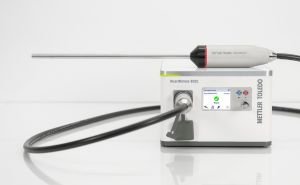
诸如ReactIR和ReactRaman这样的原位分析工具可直接在反应器内持续监测反应,无需离线取样。这些技术使化学家能够在保持惰性条件的同时,实时跟踪试剂生成、反应进程、副反应和终点。
反应量热法通过测量整个过程中的热流,与光谱监测形成互补。两种技术结合起来,能全面呈现反应化学和热行为,从而实现更安全的工艺开发,并加深对反应动力学的理解。
利用 Dynochem 进行反应建模,通过将实验热量和光谱数据转化为预测性工艺知识,进一步加强放大工作。通过将动力学模型与传热和传质数据相结合,工程师可以模拟制造条件下的反应行为,评估进料速率、反应器几何形状、混合效率和冷却能力的影响,并在工艺转移到更大设备之前预测潜在危险。建模有助于定义安全操作窗口,优化半批式加料策略,并评估延迟起始、冷却失效或试剂积聚等最坏情况。因此,开发团队可以减少所需的放大实验次数,同时更有信心地确保该工艺从中试到全面生产都能保持安全、稳健和可重复。反应建模对于格林纳化学尤为重要,因为反应动力学、放热和传质之间的相互作用仅靠实验来界定和优化往往既困难、耗时,又会增加化学品用量。

利用连续流格氏反应生产伊帕他赛的关键中间体的开发
本文介绍了用于生产伊帕他赛关键中间体的连续流格氏反应的开发与放大。采用级联连续搅拌釜式反应器后,该工艺提高了收率(80% 对 61%)、稳健性和产品质量,从而通过增强过程控制实现了高效、可放大的制药生产。
“为了更深入地了解工艺,我们在 CSTR2 和 CSTR3 中使用 Mettler Toledo EasySampler 设备每 30 分钟采集一次在线分析样品,并在每次 DoE 运行中、蒸馏前采集粗有机层的离线样品用于 HPLC 分析。”
Kaldre, D., Stocker, S., Linder, D., Reymond, H., Schuster, A., Lamerz, J., Hildbrand, S., Püntener, K., Berry, M., & Sedelmeier, J. (2024). Development of a continuous flow Grignard reaction to manufacture a key intermediate of Ipatasertib. Organic Process Research & Development, 28(7), 1576–1586. https://doi.org/10.1021/acs.oprd.4c00123
通过连续流化学实现面向 KRAS G12C 抑制剂 Divarasib(GDC-6036)的高功能化喹唑啉有机锌合成
本文介绍了一种用于合成喹唑啉有机锌中间体的连续流工艺的开发与放大,该中间体是 KRAS G12C 抑制剂 divarasib(GDC-6036)的关键前体。该合成涉及使用格氏试剂 i-PrMgCl·LiCl(异丙基氯化镁-氯化锂络合物)进行卤素-金属交换。该格氏试剂与溴代喹唑啉反应,形成喹唑啉有机镁中间体。通过使用塞流反应器(PFR)精确控制温度和停留时间,并随后使用连续搅拌釜式反应器(CSTR)处理沉淀物,解决了有机镁中间体在较高温度下不稳定的问题。
“在 −20 °C 下进行的批式反应中采集的原位傅立叶变换红外线光谱分析和 RC1 量热数据表明,Br−Mg 交换反应几乎是瞬时发生的,且没有明显的 i-PrMgCl·LiCl 积累证据。这表明,对于该金属化步骤而言,传质效率对反应速率的影响可能大于其本征动力学,因此选择了合理的最短停留时间 15 秒,以确保试剂流的充分且可靠混合,并保证完全转化为 2。”
Kelly, S. M., Lebl, R., Malig, T. C., Bass, T. M., Kummli, D., Kaldre, D., Orcel, U., Tröndlin, L., Linder, D., Sedelmeier, J., Bachmann, S., Han, C., Zhang, H., & Gosselin, F. (2023). Synthesis of a Highly Functionalized Quinazoline Organozinc toward KRAS G12C Inhibitor Divarasib (GDC-6036), Enabled through Continuous Flow Chemistry. Organic Process Research & Development, 28(5), 1546–1555. https://doi.org/10.1021/acs.oprd.3c00164
通过向二甲基氨基甲酰氯进行双重有机金属加成制备 LSN647712 的连续流工艺
本研究提出了一种高效的连续流工艺,用于合成 LSN647712,这是一种拉司米坦生产中的关键中间体。该方法利用 Turbo 格氏试剂和锂化的 2,6-二溴吡啶,按顺序向二甲基氨基甲酰氯进行有机金属加成。在格氏试剂形成过程中,ReactIR 监测了 C–Cl 峰的衰减,证实了起始物料的快速转化。在流动工艺中,采用在线 ReactIR 池定量测定产物和未反应试剂的浓度,确保反应高效且受控进行。
“基于批式 PAT 数据,我们将夹套反应釜改造成单级 CSTR,按照实验室和生产秤上已经成熟的做法制备更大量的格氏试剂……连续 ReactIR 监测表明,反应在运行期间处于良好受控状态。该按需系统在 0.5 L 夹套反应中,在整个开发期间生产了数十升 Turbo 格氏试剂”。
Li, H., Sheeran, J. W., Kouvchinov, D., Clausen, A. M., Crouch, I. T., Bio, M. M., Fang, Y., Frank, S. A., Johnson, M. D., & Kerr, M. S. (2021). A continuous flow process for LSN647712 via double organometallic additions to dimethylcarbamyl chloride. The Journal of Organic Chemistry, 87(4), 2045–2054. https://doi.org/10.1021/acs.joc.1c01354
通过氧肟-烯烃环加成并结合工艺风险缓解策略合成 BACE1 抑制剂 E2609/E2071
E2609/E2071 的生产工艺经过重新设计,以消除低温步骤、不稳定中间体、危险氟化以及不安全的自催化三氟甲基化反应。关键改进包括利用 ReactIR 进行原位红外控制的 Turbo-格氏芳基化。这使得能够实时监测 Turbo-格氏芳基化中关键有机金属物种,取代低温锂化,并确保在 0 °C 下安全、完全的金属化。它还通过跟踪丙烯醛、CF₃TMS 和产物的生成来控制自催化三氟甲基化流动工艺,避免热失控。
“芳基格氏试剂 29 和四面体加成物 30 的形成无法通过常规过程控制(IPC)方法(例如 HPLC、GC)直接监测。因此,采用原位红外光谱直接监测这些物种……”
Kim, D.-S., Yoshizawa, K., Mitasev, B., Schnaderbeck, M., Zhang, H., Omori, M., Kayano, A., Nagai, M., Wakasugi, K., Watanabe, Y., Benayoud, F., Suzuki, Y., Motoki, T., Kaneko, T., Takaishi, M., Ishida, T., Takeda, K., Kita, Y., Yamamoto, N., Khan, A., Dimopoulos, P., Farthing, C. N., Hall, A., Chanda, A., Lu, L., Bracke, M., & Fang, F. G. (2022). Synthesis of BACE1 inhibitors E2609/E2071 via oxime–olefin cycloaddition following a process risk mitigation strategy. Organic Process Research & Development, 26(3), 804–816. https://doi.org/10.1021/acs.oprd.1c00223
利用拉曼光谱对格氏试剂与氯化锰(II)转金属化的实时和原位监测
原位拉曼光谱与 EasyMax 自动化反应器联用,用于监测格氏试剂与氯化锰(II)(MnCl₂)在茴香醚和 2-甲基四氢呋喃(2-MeTHF)中的转金属化反应。拉曼分析能够实时跟踪 MnCl₂ 的消耗以及甲基氯化锰的生成,表明经过研磨的 MnCl₂ 反应迅速,而未研磨的 MnCl₂ 会显著减缓该过程。该方法可提供动力学认识,支持工艺优化,并且非常适合对空气和水分敏感的反应体系。
“对该反应而言,采用原位拉曼光谱进行反应监测对于理解 Mg/Mn 转金属化的动力学和机理至关重要;因此,这对于实现高化学选择性是必要的。对于这种含有怕潮和怕空气组分的封闭反应体系,这种分析技术也非常理想,因为它可以避免采用标准分析技术时所面临的取样困难。”
Tong, W., Zhou, G., & Waldman, J. H. (2022). Real-time and in situ monitoring of transmetalation of Grignard with manganese(II) chloride by Raman spectroscopy. Organic Process Research & Development, 26(5), 1184–1190. https://doi.org/10.1021/acs.oprd.1c00446
不同溶剂中溴化正丁基镁格氏试剂合成的工艺危害评估与放热机理
本研究考察了在多种醚类溶剂中形成溴化正丁基镁(n-BuMgBr)时的热危险与放热途径。作者结合反应量热法、原位红外光谱和量子化学计算表明,与传统乙醚和 THF 相比,2-MeTHF、CPME 和 DGBE 等替代溶剂可显著降低热失控风险。这些溶剂能抑制自催化放热、减少与引发相关的放热,并在镁插入过程中稳定反应环境。风险评估证实,这些介质提供了本质上更安全的操作窗口,因此是大规模格氏试剂生产的更优选择。
“……通过以下两方面研究了反应特征:(1) 等温和等温量热实验,它们提供有关反应放热性的资料;(2) 红外光谱,它能够监测反应过程中物种的变化,并可结合不同溶剂中的等温实验帮助解释放热机理……”
Cheng, Z., Ni, L., Wang, J., Jiang, J., Yao, H., Chen, Q., Cui, F., Jiang, W., & Ye, S. (2021). Process hazard evaluation and exothermic mechanism for the synthesis of n‑butylmagnesium bromide Grignard reagent in different solvents. Process Safety and Environmental Protection, 147, 654–673. https://doi.org/10.1016/j.psep.2020.12.041
羧化反应中的 CO2(去)活化:以格氏试剂和亲核碱为例
本研究考察了亲核碱,尤其是 DBU(1,8-二氮杂双环[5.4.0]十一碳-7-烯),如何影响格氏试剂与 CO2 的羧化反应。与其他碱相比,DBU 能独特地提高产率和 CO2 溶解度。然而,动力学分析表明,由于该步骤本身的活化能垒已经较低,DBU 对限速步骤的催化作用可以忽略不计。研究结果强调了 DBU 在改善 CO2 吸收方面的作用,但并未显著加快羧化反应本身。
“……我们进行了竞争动力学分析——由于格氏羧化反应的早期为限速步骤——以阐明 CO2 与亲核碱形成的加合物在有机金属羧化反应中的作用……除 DBU 外,大多数碱都表现出负面影响,这凸显了 DBU 在促进格氏羧化反应中的独特性质……我们还希望通过原位红外光谱来明确 DBU 在羧化中的作用。”
Lauridsen, J. M. V., Cho, S. Y., Bae, H. Y., & Lee, J.-W. (2020). CO2 (De)Activation in Carboxylation Reactions: A Case Study Using Grignard Reagents and Nucleophilic Bases. Organometallics, 39(9), 1652–1657. https://doi.org/10.1021/acs.organomet.9b00838



格氏试剂是一类有机镁化合物,通式为 RMgX,其中 R 为烷基、芳基或乙烯基,X 为卤素。此类试剂是强亲核试剂和强碱,用于碳—碳键形成、金属化和转金属化反应。它们反应性高,在合成中不可或缺,但也对水分、氧气和温度敏感。格氏试剂可参与对羰基的加成、卤素—金属交换以及偶联反应,是制药、农用化学品和精细化学品中的关键中间体。
它们通常通过在无水醚类溶剂中让有机卤化物与金属镁反应来制备,通过镁插入生成 RMgX。该生成过程是非均相且放热的,因此需要受控引发、温度管理和谨慎的试剂加入。THF 等配位溶剂可稳定生成的有机镁物种并防止其分解或聚集。
格氏试剂会与水、醇和其他质子型物质剧烈反应,迅速质子化生成烃和镁盐。即使微量水分也会破坏 RMgX,消除其亲核性并放出热量,从而可能引发分解或失控。氧气和二氧化碳也会与格氏试剂反应,形成不需要的副产物。严格保持干燥条件——干燥玻璃器皿、惰性气氛和无水溶剂——对于保持试剂完整性、确保反应性可预测以及防止危险放热至关重要。
乙醚和 THF 等醚类溶剂之所以被优先采用,是因为它们能强烈配位镁,稳定 RMgX 物种并提高溶解度。THF 因其较高沸点和较强路易斯碱性,广泛用于卤素—镁交换和 Turbo Grignard 化学。2‑MeTHF 和乙二醇基醚等替代溶剂则具有更好的环境表现或溶剂化特性。由于会破坏格氏试剂,不能使用质子型或配位能力较弱的溶剂。
格氏反应放热很强、体系非均相且容易出现延迟起始,因此热控制颇具挑战。诱导期可能导致镁插入突然且剧烈地开始,造成快速放热并带来失控风险。RMgX 物种对水分、氧气和杂质敏感,可能引发分解、气体逸出或剧烈反应。由于散热能力有限和混合效率不足,放大到大规模时这些风险会进一步加剧。
Turbo‑Grignard 试剂是一类高反应性的有机镁络合物,通常为 i‑PrMgCl·LiCl,可实现快速、温和的卤素—镁交换。加入 LiCl 显著提高了溶解度,降低了聚集程度,并增强了官能团耐受性。Turbo‑Grignard 可在低温下对敏感杂环进行金属化,因此非常适合流动化学和药物中间体合成。
诱导期的特征是在放热反应开始时存在延迟。利用原位工具——反应量热法和傅立叶变换红外线光谱仪——可以通过追踪热流或有机卤化物的消失来帮助化学家检测反应启动的确切时刻。
可以通过机械搅拌、超声处理,或加入少量碘或1,2-二溴乙烷等化学手段去除氧化层,从而活化镁。这些方法会使新鲜的镁表面暴露出来,与有机卤化物接触,以确保稳定的引发。
对于高放热反应,通常采用连续流方法来降低热危险。由于在任何给定时刻只有少量高能材料被生成或使用,发生火灾或爆炸的风险更低。此外,由于流动装置具有较高的表面积,因此能够更好地控制温度,尤其是放热。基于这些原因,连续流方法常用于格林纳化学。

For six decades, Dr. Rein has been involved in the development, application and/or marketing of scientific instrumentation in the chemical, pharmaceutical, defense, and aerospace industries. His focus has been in the use of FTIR and Raman spectroscopy in real-time measurements and out-of-lab applications. His early collaborations with METTLER TOLEDO personnel and customers led to the eventual formation of the AutoChem group.