实验室药物质量控制指南
《实验室药物质量控制指南》向您展示了如何在开发和制造过程中保持肽药物的质量。下载该指南,开始提高质量和效率的旅程。

肽类药物正在迅速重塑制药行业,它具有出色的靶向特异性、低毒性特征以及调节复杂生物途径的能力。从代谢性疾病到肿瘤,胰岛素、GLP-1激动剂、干扰素或酶疗法等肽类正在为应对各种疾病和医疗保健挑战提供精准医药。
虽然肽类的治疗潜力已得到证实,但其商业规模生产会带来重大的过程和基础设施挑战。无论化学合成还是生物技术表达,肽生产都面临着诸多挑战,如低产量、多步骤复杂合成、批次不一致、从实验室到GMP生产的放大困难以及严格的质量控制要求,同时还要努力满足更严格的监管和可持续性标准。这些限制可能会延误产品上市,给供应链带来压力,并最终影响患者获得关键治疗。
为了满足对高效和可扩展肽合成不断增长的需求,METTLER TOLEDO提供了一整套先进的精密仪器、机械和软件解决方案,以确保生产过程每个阶段的质量和精密度。


《实验室药物质量控制指南》向您展示了如何在开发和制造过程中保持肽药物的质量。下载该指南,开始提高质量和效率的旅程。

Explore curated resources to advance peptide development from R&D to scale-up and quality control. Build robust, scalable, sustainable, and compliant processes with practical guides and tools.
Peptide production relies on advanced biochemical synthesis using solid-phase peptide synthesis (SPPS) for short peptides, while for larger, more complex molecules requiring post-translational modification, bioprocesses using recombinant protein expression systems, or a combination of bioprocesses and biochemical synthesis are the system of choice to ensure purity, potency, and consistency.

1. 通过在固体树脂上以精确顺序添加氨基酸来逐步构建肽。
2. 每次添加后,将多余的化学品冲洗掉,去除保护基团,为下一步做好准备。
3. 将成品肽从树脂上裂解并纯化(通常使用HPLC)。
4. 将纯化肽转化为固体或液体产品。质量控制测试贯穿始终,用以确保纯度、安全性和有效性。


1. 产肽细菌或酵母在经过优化的富养培养基中生长,以实现高产量。
2. 通过离心和过滤将肽从培养物中分离出来。如果在细胞内部,首先将细胞破开。
3. 使用色谱法和切向流过滤等技术纯化肽,然后进行必要的裂解或修饰。
4. 添加赋形剂,然后在无菌条件下将产品压片或装入药瓶。质量控制测试确保纯度、安全性与功能性。


生化合成是一种广泛采用的肽生产方法,尤其更广泛用于短肽生产,在某些用例中比重组生物方法更具优势:
无论生化合成还是重组生物方法,肽生产都非常昂贵。从在化学合成中使用试剂和溶剂,到生物表达中复杂的基础设施和较长的生产周期,每种方法都有其成本驱动因素。因此,整个行业都在努力提高过程效率,尽量减少波动性,确保各种规模下产品质量的一致性。
灵活性:它允许结合非编码氨基酸和各种骨架修饰,以提高稳定性。
纯度:化学合成可避免宿主细胞污染的风险,并实现对产品的精确控制。然而,重组方法还可以通过适当的下游加工实现高纯度。
重组发酵法常用于需要复杂的翻译后修饰的较大蛋白质,在以下情况下有利于肽生产:
复杂性:与化学合成法相比,生物发酵法可实现复杂的肽折叠和具体的翻译后修饰。
可持续性:化学合成法使用过量的高纯度、昂贵的试剂和溶剂来确保反应完成,从而导致更大的化学浪费,并可能影响基本溶剂的全球供应链。
肽长度:生物发酵法更适合生产长肽链(>50个氨基酸)。
许多肽API是通过固相肽合成(SPPS)开发的,这是一个允许精确控制序列和修饰的分步过程。其他肽,尤其更复杂或更长链的肽,则使用微生物或哺乳动物细胞在生物系统中表达。
尽管这些方法的规模和平台各不相同,但它们都需要在每个阶段进行严格的过程控制和准确的原料控制。
无论在研发实验室中称量氨基酸、溶剂或试剂,还是在生产中处理千克级批次,每次测量的准确性都很重要。微小波动会影响:
METTLER TOLEDO为实验室和工业应用提供可靠的称量解决方案。从支持配方开发的微量天平到生产套件中使用的平台秤,我们的设备可提供制药商所需的精密度与合规性。与软件系统集成还有助于确保完全可追溯性,减少手动记录错误。
固相肽合成(SPPS)仍然是生产中短肽的黄金标准,包括GLP-1类似物或降钙素等治疗性API。然而,SPPS工作流程可能很复杂,涉及:
了解肽偶联反应的进度至关重要。METTLER TOLEDO的原位FTIR和拉曼光谱工具可实时洞察合成的每个步骤,使科学家能够监控去保护和偶联反应,及早识别不完全反应,减少昂贵试剂的过度使用。
使用EasyMax™和OptiMax™等自动化反应器在不同的合成步骤中精确控制温度、搅拌和试剂添加,有助于优化反应条件,开发从毫克到千克的安全规模放大,实现技术转让的高复现性。
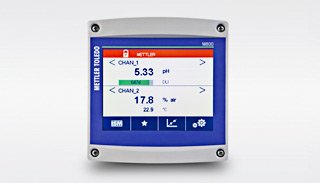
pH值控制对于肽裂解和纯化至关重要。METTLER TOLEDO提供专为在腐蚀性溶剂中使用而量身定制的InPro系列电极,可确保在酸性裂解或碱性清洗步骤中的稳定性和合规性。
许多肽,尤其是干扰素、酶或融合肽,是在微生物或哺乳动物系统中使用重组技术生产的。这些过程需要严格的环境控制和实时监控,以保持细胞活力、蛋白质表达和产品质量。
在发酵过程中,必须精确控制pH值、溶解氧(DO)、CO₂和电导率。METTLER TOLEDO的ISM电极提供可靠的实时测量、预测性诊断、电极生命周期管理以及与PAT(过程分析技术)策略的集成。
Once synthesized or expressed, peptides undergo multiple steps of buffer preparation, purification and formulation before reaching their final drug form. Reverse-phase HPLC, ultrafiltration, and lyophilization are common techniques used to achieve the purity and stability required for therapeutic use.
Accurate preparation of buffers, solvents, and excipients is critical at this stage. Inconsistent concentrations or pH deviations can reduce recovery or compromise product stability. Whether during ultrafiltration prep, final formulation blending, or freeze-drying optimization, precision and reproducibility are non-negotiable.
Normal flow filtration and tangential flow filtration play vital roles in downstream bioprocessing, with normal flow filtration mainly used for preparing large volumes of buffer, and tangential flow filtration primarily employed for clarification steps. The in-line monitoring of pH, conductivity, temperature, and UV absorbance enables real-time control of the bioprocess, ensuring optimal conditions that uphold product quality and consistency. This continuous measurement allows for the rapid identification of any deviations, facilitating timely adjustments that enhance process efficiency, increase yield, and maintain product purity throughout downstream processing.
Weighing equipment, pH meters, and UV/Vis spectrophotometers integrated into lab or production environments enable reliable downstream execution and QC in peptide manufacturing. Importantly, when the generated data is centrally collected and managed, it strengthens traceability and supports regulatory documentation.
Additionally, high-precision moisture analysis and water content determination by KF titration support final formulation and stability testing, key in freeze-dried peptide products. Whether during development or commercial QC, laboratory software solutions ensure consistent analytical data for required regulatory compliance and product quality.
从最初的氨基酸称量到最终的药瓶检测,肽生产过程中的每个步骤都需要精密度。产品即将放行时,自动化产品检测系统将成为产品离开工厂之前的关键保障措施。对于肽类药物,这包括:
异物污染检测:X射线检测、金属检测或两者兼用,用于在产品进入市场之前识别并剔除异物污染的产品。
灌装量控制:检重、视觉检测和X射线检测监控、测量和调节灌装量,以满足严格的剂量和监管规范。
质量和完整性检查:检重、视觉检测和X射线检测执行完整性检查,帮助确保药品包装符合法规要求,并向消费者提供安全、完整的产品。
标签质量检测:用于标签质量控制的视觉检测,以检测标签相关缺陷,降低产品召回风险。
METTLER TOLEDO的产品检测解决方案适用于高效的制药环境,提供:
符合GMP要求的系统,可轻松集成到现有生产线中。
可追溯的性能验证,确保审计就绪。
在规范和认证过程中提供支持,从评估正确的应用、选择合适的产品测试设备和专业安装,到实现高效验证过程的专用设备认证包(EQpack)。
这些系统不仅可以保护产品质量,还可以增强品牌诚信度,并支持FDA、EMA和全球卫生当局等机构的监管合规性。

METTLER TOLEDO提供一系列仪器、软件和全球服务网络 ,帮助应对治疗性肽生产中的关键挑战,用于生化和生物过程,简化复杂的工作流程,减少波动性,并支持开发和制造所有阶段的数据推动决策。这有助于提高产量、减少浪费、加快放大生产以及提高合规性,使高成本的治疗性肽生产更具可持续性,并且更容易为患者所用。
| Application or Parameter | What is to be measured? | Why is it measured? | METTLER TOLEDO Solution | Measurement Mode | |
| Liquid handling | Volume of transferred liquid | To ensure precision and reproducibility in reagent dispensing and sample transfer | Rainin Pos-D™ Positive-Displacement Pipettes | Offline Atline | |
Concentration and purity | Absorbance or transmittance | To determine the concentration and purity of peptides in both chemical (monitoring synthesis and purity) and biological (purification stage) production | Offline | ||
Inline | |||||
Cell count, biomass, morphology, and viability | Cell count and viability | Relevant in biological production to monitor microbial culture health and biomass, ensuring optimal conditions for expression | Atline | ||
Biomass and morphology | Inline (SIP or CIP) | ||||
Characterizing cellular and biochemical parameters | Absorbance or transmittance | Used primarily in biological systems to assess metabolic activity, protein expression, and toxicity | Offline | ||
Inline | |||||
pH | pH | Critical for microbial cell growth and optimal enzyme function during fermentation in biological production. pH must also be carefully monitored and optimized to ensure efficient coupling reactions for chemical synthesis | pH meter and | Atline Inline | |
Residual moisture content | Water content determination | Residual moisture must be tightly controlled to ensure stability and shelf life, especially post-lyophilization | Offline | ||
Dissolved oxygen | Dissolved oxygen level | Ensures sufficient oxygen for microbial respiration during fermentation in biological production. Moreover, it helps mitigate hazardous levels of oxygen in contact with combustible gas phases and organic solvents. Also ensures oxygen mitigation through nitrogen blanketing in fill & finish | Inline | ||
Conductivity | Conductivity | Helps assess medium composition and ionic strength along with dissolution, relevant in both biological media and chemical synthesis buffers | Inline | ||
CO2 accumulation | Dissolved CO2 level | Monitors CO2 buildup during biological fermentation, guiding aeration and feed strategies | Inline | ||
Turbidity | Turbidity (NTU) or image-based turbidity | Provides information on microbial culture expansion and potential contamination in biological systems | Turbidity sensor EasyViewerTM | Inline | |
Optical density | OD 600 | Used in biological production to track microbial growth phase and expression levels. Crucial for determining optimal timings for induction and harvesting | Offline | ||
Glucose | Enzymatic determination with UV/Vis | Monitors nutrient levels (e.g., glucose) in biological fermentation to optimize cell growth and peptide yield | Offline | ||
Absorbance or transmittance | Inline | ||||
Weight | Mass | Accurate and precise sample preparation | Offline | ||
Weight | Mass | Statistical Quality Control (SQC) to ensure accurate filling, weight and process compliance | Offline | ||
Weight or Volume | Mass | Ensures accurate component addition during both chemical synthesis (reagents) and biological media preparation | Atline Inline | ||
Weight or Volume | Mass | Ensure accurate addition of alkaline solution for pH control of the bioprocess Ensure accurate feed addition in fed batch and continuous culture Accurate monitoring of media removal in continuous culture Accurate monitoring of bioreactor volume to avoid overflow Accurate Fill & Finish | Weighing Controllers and Transmitters Ultra-Low-Profile Hygienic Floor Scales | Inline | |
Temperature | Temperature | Maintains optimal reaction or fermentation temperatures, critical for both synthesis and microbial expression | Single-Use Temperature Sensor-PendoTech | ||
Pressure | Pressure | Controls fluid flow and reaction pressure in reactors used in both synthesis and bioprocessing | Inline | ||
Process optimization and scale-up | Biochemical | Synthesis reactor | To control and optimize all critical process parameters, reduce variability | ||
Process modelling | To model reaction kinetics, product isolation, and more to enable robust scale-up | ||||
Precipitation optimization | To assess particle size and control temperature | ||||
Reaction sampling | To assess reaction progress and enable optimizations | ||||
System monitoring | System monitoring | System monitoring | |||
Process development | To integrate design space and reactor parameters with PAT information for scalable process design | ||||
Reaction analysis | To assess real-time reaction dynamics for process optimization | ||||
Biological | Harvesting or particle size or precipitation | To assess the progress and completion of reactions | |||
Process modelling | To model reaction kinetics, product isolation, and more to enable robust scale-up | ||||
Product quality inspection | Physical contamination detection, fill level and weight control, package integrity, and completeness checks | To support a safe and complete product for the end customer, avoid product recalls and litigation, and achieve vital packaging compliance for the manufacturers | |||