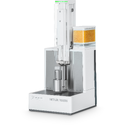
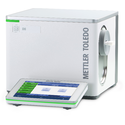
Viscosity Determination
What is the flow behavior of liquids and how is viscosity measurement involved?
Liquids exhibit different flow behaviors, often described as thick or thin, soft or semi-solid, based on their movement when subjected to unbalanced forces. This motion continues as long as these forces act on the liquid. The flow can be classified into various types such as steady or unsteady, compressible or incompressible, viscous or non-viscous, rotational or irrotational, and Newtonian or Non-Newtonian liquids. Viscosity measurement plays a crucial role in understanding this flow behavior, as it quantifies a liquid's resistance to flow. Instruments like viscometers and rheometers are used to perform viscosity measurement, which helps determine the force needed to move the liquid at a specific rate, indicating its thickness or thinness.
What Are Newtonian and Non-Newtonian liquids?
When the liquid obeys Newton’s law of viscosity, it is known as a Newtonian liquid; on the other hand, when the fluid doesn’t obey Newton’s law of viscosity, it is known as a non-Newtonian liquid.
How are Newtonian Liquids Characterised?
Viscosity is one of the properties used to define any Newtonian liquid, and they are determined by measuring the density of the liquids. Viscosity values are obtained via a calibration curve determined with the CRMs (Certified Reference Materials).
Do you study the properties of Newtonian liquids? To learn more, download the application note.