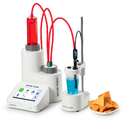
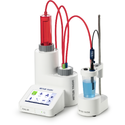
This page provides the information to determine the acid content in ketchup through potentiometric titration with sodium hydroxide (NaOH), utilizing a pH sensor for monitoring and defining the endpoint at a pH of 8.2
By clicking on the link below, you will receive a PDF of the application note.
Why use automated titration for ketchup analysis?
Automated titration devices improve the consistency and precision of titration outcomes by reducing manual errors. These systems are designed for easy use, allow customization of titration procedures, and provide effective sample stirring and endpoint detection, thereby optimizing quality control processes in laboratories.
Why is acidity measurement important in ketchup?
Measuring the acidity of ketchup is crucial because its pH and acid content play a vital role in preserving the food by inhibiting microorganism growth. Moreover, the acidic properties of ketchup can influence consumer health, as excessive intake may lead to gastrointestinal issues.Therefore, monitoring acidity helps ensure both product quality and consumer safety.
How is acid content in ketchup determined?
The acetic acid concentration in ketchup is measured through potentiometric titration with sodium hydroxide (NaOH). The ketchup sample is diluted and stirred prior to titration, and the titration is monitored using a pH sensor and terminated at an endpoint (EP) of pH 8.2. This process enables an accurate determination of the acidity, expressed as the amount of acetic acid present.