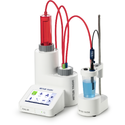
This page describes the potentiometric titration method to determine the total titratable acid value using sodium hydroxide as the titrant.
By downloading this application package, you will receive a PDF of the application note.
Achieving the preferred quality and flavor in baked items involves accurately assessing total titratable acidity (TTA), a crucial indicator of the food's acid content.
What is the total titratable value (TTA)?
Total titratable value, often referred to as total titratable acidity (TTA), is a measure of the total amount of acid present in a food or beverage sample. It is determined by titrating the sample with a base of known concentration until the acids are neutralized, and it reflects the overall acid content contributing to the product's taste, quality, and preservation characteristics. TTA serves as a dependable indicator for monitoring the degree of fermentation and the acidity produced in preferments. Elevated TTA values correspond to more pronounced fermentation flavors.
How to determine TTA by titration?
Total titratable acidity (TTA) in bakery products, expressed as a percentage of lactic acid, represents the sum of both naturally occurring and produced acids. This application note outlines a method to measure TTA in bakery products by performing potentiometric acid-base titration with EasyPlus titrators, using sodium hydroxide as the titrating agent.