Bekijk uw persoonlijke productaanbod en/of uw offertes en beheer uw geïnstalleerde apparaten via ons uitgebreide online platform. Meer informatie over het klantenportaal vindt u hier .
Safe Reaction Monitoring at Elevated Temperature and Pressure
Beschrijf hier uw project. /content/be/nl/home/applications/L1_AutoChem_Applications/L2_ReactionAnalysis/Reaction_Analysis_Hydrogenation.fb.1.c.11.html
Hydrogenations are among the most important reaction class in the production of both bulk and fine chemicals. By adding hydrogen atoms to an organic compound, double or triple bond functionality is reduced, forming single bonds. In a single step, a hydrogenation reaction allows the formation of C-C simple bonds from alkenes and alkynes, C-O bonds from ketones, and aldehyde or esters, and C-N (amines) from imines or nitriles, etc.
Metal catalysts are often used in hydrogenation reactions to reduce the high energy barrier to the transformation. For example, in the case of transforming alkenes and alkynes into alkanes, nickel, palladium or platinum catalysts are required. Hydrogenations can either be homogenous or heterogenous, using metals adsorbed on various substrates. In the former case, for example, rhodium and iridium metal catalysts that are coordinated with specific ligands are used to achieve asymmetric synthesis hydrogenation. In the latter case, alkanes are formed from double or triple bond carbon moieties. In all cases the choice of the catalyst greatly influences a hydrogenation reaction, as well as the catalyst concentration, solvent, substrate purity, temperature, and pressure.
Example of Hydrogenation Reactions
Industrial and Commercial Applications
The use of hydrogenation reactions in industrial and commercial applications are numerous and well known. In food products, liquid food oils are hydrogenated to form solid edible fats. In the petroleum industry, various hydrocarbons are hydrogenated using catalysts to form alkanes in gasoline, and hydrogenation of coal provides an alternative source of fuel. Hydrogenation of carbon monoxide is used to form bulk methanol and the Haber-Bosch process uses metal catalysts to synthesize ammonia from nitrogen and hydrogen.
In fine chemicals used or produced in the pharmaceutical chemistry, hydrogenation reactions are equally important. A classic example is the use of chlorotris(triphenylphosphine)rhodium, Wilkinson’s catalyst, to reduce alkenes and alkynes without affecting other functional groups in a molecule. Another family of catalysts with Josiphos diphosphine ligands, are used for enantioselective hydrogenation reactions. There are many specifically tailored catalysts for hydrogenations that use transition metals with chiral ligands that transfer chirality to the target compound.
Hydrogenation Reaction Challenges
Elevated Pressure and Temperature
Hydrogenations reactions are often performed under potentially challenging conditions including elevated pressure and temperature in the presence of catalysts. This makes monitoring critical for two closely linked reasons: 1. Optimized Yield; and, 2. Safe Operation. Safe reactions are well controlled reactions, which produce intended products and minimize unwanted and potentially hazardous side products. As in so many reactions, understanding reaction initiation, mechanism, conversion, and endpoint, as well as impurity or byproduct profile, enables faster decisions about what changes to chemical conditions or process parameters need to be made.
The use of in situ FTIR reaction monitoring and reaction calorimetry reduces the number of experiments and time to scale-up a process, increase safety, selectivity and yield, reduces cycle time and minimize byproduct formation. Furthermore, for accurate quantitative measurement of reaction species and impurity profiles by off-line HPLC, EasySampler allows automated, unattended sampling of hydrogenation reactions at pressure and temperature as well as automated quench and dilution of the removed samples, to support offline HPLC measurements
Real-time tracking of reaction progress; follow reactants, reagents, intermediates, products and by-products
Measure reaction species in the presence of solid particles and bubbles
Obtain key kinetic and mechanistic information
Eliminate difficulty of off-line measurements of reactions at pressure and temperature – minimize sample extraction and interference of reaction equilibria
Inline Automated Sampling
Sample and quench hydrogenation reactions under process conditions at pre-selected times
Provide samples for offline HPLC analysis of impurity profiles, kinetics and to meet regulatory requirements
Support quantitative HPLC measurement of reaction species in order to calibrate IR trend plots
Tracking Hydrogenation Reactions
With In Situ FTIR Spectroscopy
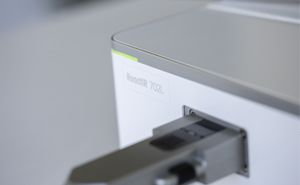
ReactIR FTIR spectroscopy is an in situ technique that provides instantaneous information and enables actionable decisions to be made in real-time. Since ReactIR probe technology is impervious to damage by most reaction conditions, solid particles, and gases, it offers advantages over alternative analytical methods:
Investigate homogeneous and heterogeneous hydrogenations under actual reaction conditions, including at elevated pressure and temperature
Identify, track and measure reactants, reagents, products, reaction intermediates and by-products produced in hydrogenations
Rapidly acquire data-rich information for determining reaction kinetics, understanding reaction mechanism and pathway
Test and develop ideal reaction conditions for optimizing end-product yield and minimize side products
Quickly screen catalysts and conditions for specific hydrogenation reactions
Eliminate the introduction of air, moisture or disturbing reaction equilibria resulting from sample extraction
Learn how scientists at the University of Tokyo were able to leverage In Situ Spectroscopy to perform a Tandem Hydroformylation/Hydrogenation.
Reactieoplosmiddel vult de vloeistofleidingen en de monsterkamer en EasySampler is klaar om een monster te nemen. Om een monster te nemen, beweegt de EasySampler-kamer naar buiten in de reactie en vult het reactie mengsel de kamer. Ondertussen worden de vloeistofleidingen van de probe gevuld met blusoplossing, klaar om het monster te blussen. Terwijl het reactiemonster terug de probe in wordt gezogen, wordt het direct binnen in de punt van de probe onder reactieomstandigheden geblust. Op en neer pompen zorgt voor een efficiënte menging van de blusoplossing met het monster. Het gebluste monster wordt vervolgens verdund tot een gewenste concentratie met een oplosmiddel naar keuze en afgeleverd in een vial, klaar voor analyse buiten de lijn. De probe maakt zich klaar om het volgende monster te nemen door de vloeistofleidingen en de kamer door te spoelen met reactieoplosmiddel.
Automated Sampling for Hydrogenation Reactions
Probe-based automated, unattended sampling provides representative reaction samples over extended periods of time – even under pressure.
At Novartis, researchers were able to gain a better mechanistic understanding of the factors affecting hydrogenation reactions and by-products. By adding quantitative HPLC measurements throughout the course of the hydrogenation reaction, where sampling had previously been impossible, assumptions were quickly corrected and a realistic mechanistic model drawn resulting in improved productivity and shortened timelines.
Hallo, mijn naam is Dom Hebrault en ik ben hier om u te helpen zoveel mogelijk kennis te halen uit de informatie, de gegevens die u krijgt van metaal- tot LIDAR-instrumenten. Eh, vandaag wil ik u laten zien dat er een groot verschil is tussen het bewaken van de temperatuur in het reactievat en calorimetrie doen als het gaat om het begrijpen van hoe exotherm een chemische reactie is. Ik wil dat u erkent dat temperatuur niet de beste indicator is van hoe exotherm een chemische reactie is. Door u dit voorbeeld te geven, kunt u de hoeveelheid energie die uit een proces vrijkomt zelfs onderschatten, en dat kan ertoe leiden dat u de koelcapaciteit van uw geplande vat overschat en als gevolg daarvan een runaway-reactie op grotere schaal. Ik ga u laten zien dat delta T, wat algemeen wordt gebruikt, de zogenaamde delta T, dat wil zeggen het temperatuurverschil tussen het reactiemengsel en het bad of de mantel, eigenlijk een betere indicator is van de reactie-energie. voor wat betreft het meten van de omvang van de reactie, maar het is niet perfect, vooral wanneer de temperatuur in het vat verandert doordat de reactie pre-exotherm wordt, dus het vertelt niet het hele verhaal. En in dit geval is reactie-energie eigenlijk de beste, de absolute indicator die u kunt vinden om een veilig en betrouwbaar proces te ontwikkelen. Om te beginnen wil ik dat u zich voorstelt dat u deze Deze glazen kolf gebruikt en dat u de temperatuur meet en een exotherme reactie hebt. Ik schakel nu over naar het oogcontrolevenster. Dus u kunt zien of zich voorstellen wat u in een reële situatie zou kunnen waarnemen. We voeren een oxidatiereactie uit. Die staan bekend als exotherm. En op dit tijdstip hier dat ik laat zien, voeren we zuurstof in in het vat, oké. En u ziet dat er een lichte temperatuurstijging is gedurende een paar minuten, een paar graden, waarna deze teruggaat naar het basisniveau. Ik ben er zeker van dat de meeste mensen dit fenomeen, ikzelf trouwens ook, zouden zouden negeren, omdat het maar een paar minuten duurt en heel beperkt is. U zou dus kunnen aannemen dat er geen veiligheidsrisico of iets dergelijks is. En als u de temperatuur op een bepaald moment bewaakt, ongeveer 15 minuten na de toevoeging van zuurstof aan het vat, hebt u een sterke temperatuurstijging in het vat. Dat, ik bedoel, tenzij u niet voor het systeem staat, wat trouwens kan gebeuren, kunt u niet missen. Het is een stijging van 20 graden, u zult... ...concluderen dat het een pre-exotherme reactie is, oké. Wat u misschien niet kunt zien, is het feit dat bij de introductie van zuurstof u eigenlijk een behoorlijk significant TMR0Tg-verschil hebt. Dat is wat ik nu plot, eh, in een gestippelde rode lijn; u kunt zien dat u tot ongeveer drie à vier graden komt, dat is niet heel groot, maar wel significant; het is een behoorlijke hoeveelheid energie en u kunt zien dat de warmtepiek eigenlijk beter zichtbaar is door T_ARM minus T_GA uit te zetten tegen T_R; dat geeft u een idee wanneer de maximale temperatuurstijging optreedt, oké, dat is wanneer het lijkt alsof de maximale warmte optreedt, en we zullen zien dat dat niet het geval is En het geeft u een eh, weet u, het laatste detail van het reactiemechanisme dat u niet zult kunnen zien door de temperatuur te bewaken. Maar als u naar het warmteprofiel kijkt, is dat een iets ander verhaal. Ik wil u laten zien dat U vangt de maximale warmteafgifte feitelijk een paar minuten eerder op dan het moment waarop de temperatuur in het vat een maximum bereikt of voordat TMR en TGA een maximum bereiken. De reden is dat een deel van de warmte die door het reactiemengsel wordt vrijgegeven de reactietemperatuur doet stijgen, en dat verbergt eigenlijk het maximale punt van warmteafgifte, dat iets eerder ligt. Dan u anders zou denken, oké. Dus een reactiecalorimetrie op de EasyMax vangt het maximum ...al op vóór de temperatuur in het vat echt een maximum bereikt. Maar het geeft u ook een kwantitatieve indicatie van hoeveel warmte er vrijkomt. U hebt hier om te beginnen drie, vier Watt. Eh, dat is ongeveer dertig, veertig Watt per liter, opnieuw niet enorm, maar wel significant. En het loopt op tot ongeveer zestig Watt op honderd milliliter-schaal, wat overeenkomt met ongeveer zeshonderd Watt per liter. Ik bedoel, niets zoals u zich zou kunnen voorstellen bij opschalen voorbij ...gedaan op laboratoriumschaal, dus echt iets wat u moet oppikken voordat u naar een grotere schaal gaat, anders zou u echt een runaway-reactie veroorzaken, iets waarmee u als chemicus of ingenieur niet geconfronteerd wilt worden in uw leven Hiermee wil ik afsluiten en u een paar webkoppelingen geven naar de lege webpagina waar u informatie vindt over EasyMax, OptiMax en RC1 en calorimetrische mogelijkheden in het algemeen. Ook nodig ik u uit om mijn Twitter te bezoeken. een kanaal waar u de nieuwste informatie plaatst op basis van wat ik lees in de literatuur over procesveiligheid en procesontwikkeling, en voel u ook vrij om mijn LinkedIn-pagina en -account te bezoeken, waar u dezelfde links en dezelfde informatie plus een paar blogs vindt. Dank u.
Heat Flow Calorimetry for Hydrogenation Reactions
Hydrogenation processes are typically strongly exothermic, which is why a comprehensive safety and kinetic investigation, based on heat flow calorimetry, hydrogen uptake measurements, and online spectroscopy (mid-IR) are conducted before scale up. Predicting large scale process behavior, such as temperature or reaction time, and its impact on residual intermediate and impurity levels can be performed in the laboratory using a Reaction Calorimeter. Process scenarios based on mass and heat transfer, as well as full kinetic characterization, can lead to enhanced catalyst stability, optimum process temperature profile and reaction time.
Hydrogenation Reaction Monitoring in Industry-Related Publications
Zhang, Y-M., Yuan, M-L., Liu, W-P., Xie, J-H., Zhou, Q-L., “Iridium-Catalyzed Asymmetric Transfer Hydrogenation of Alkynyl Ketones Using Sodium Formate and Ethanol as Hydrogen Sources”, Org. Lett. 2018, 20, 4486−4489
Ehnes , C., Lucas, M., Claus, P., “Effects of Various Solvents and Amines on the CO2 Hydrogenation to Formic Acid”, Chem. Ingen. Tech., 2017, 89(3), 303-309.
Ehnes , C., Lucas, M., Claus, P., “In‐situ ATR‐IR Spectroscopy: Monitoring Hydrogenation of CO2 and Formation of Formic Acid”, Chem. Ingen. Tech., 2016, 88(10), 1474-1479.
Liu, W-P., Yuan, M-L., Yang, X-H., Li, K., Xie, J-H., Zhou, Q-L., “Efficient Asymmetric Transfer Hydrogenation of Ketones in Ethanol with Chiral Iridium Complexes of SpiroPAP Ligands as Catalysts” ChemComm, 2015, 51, 6123-6125
Hamilton, P., Sanganee, M., Graham, J., Hartwig,T., Ironmonger,A., Priestley, C., Senior, L., Thompson, D., Webb, M., “Using PAT To Understand, Control, and Rapidly Scale Up the Production of a Hydrogenation Reaction and Isolation of Pharmaceutical Intermediate”, Org. Proc. Res. Dev., 2015, 19 (1), pp 236–243
Mitchell, C., Strawser, J., Gottlieb, A., Millonig, M., Hicks, F., Papageorgiou, C., “Development of a Modeling-Based Strategy for the Safe and Effective Scale-up of Highly Energetic Hydrogenation Reactions” Org. Process Res. Dev. 2014, 18, 1828−1835
Crump, B., Goss, C., Lovelace, T., Lewis, R., Peterson, J., “Influence of Reaction Parameters on the First Principles Reaction Rate Modeling of a Platinum and Vanadium Catalyzed Nitro Reduction”, Org. Process Res. Dev. 2013, 17, 1277−1286
Richner, G., van Bokhoven, J., Neuhold, Y-M., Makoscha M.,Hungerbuhler,K., “In situ infrared monitoring of the solid/liquid catalyst interface during the three-phase hydrogenation of nitrobenzene over nanosized Au on TiO2”, Phys. Chem. Chem. Phys., 2011,13, 12463-12471
Littler, B., Looker, A., Blythe, T.,“Optimization of a Hydrogenation Process using Real-Time Mid-IR, Heat Flow and Gas Uptake Measurements”, Org. Process Res. Dev., 2010, 14, 1512–1517
Casey, C., Beetner, S., Johnson, J., “Spectroscopic Determination of Hydrogenation Rates and Intermediates during Carbonyl Hydrogenation Catalyzed by Shvo's Hydroxycyclopentadienyl Diruthenium Hydride Agrees with Kinetic Modeling Based on Independently Measured Rates of Elementary Reactions”, J. Am. Chem. Soc., 2008, 130 (7), pp 2285–2295
Blackmond, D., Ropic, M., Stefinovic, M., “Kinetic Studies of the Asymmetric Transfer Hydrogenation of Imines with Formic Acid Catalyzed by Rh−Diamine Catalysts”, Org. Process Res. Dev., 2006, 10 (3), pp 457–463
Featured Article: Asymmetric Transfer Hydrogenation
Track the Conversion of Alkynyl Ketones to Propargyl Alcohols
The authors report the use of a chiral spiro iridium catalyst for the asymmetric transfer hydrogenation of various alkynyl ketones to chiral propargyl alcohols with high yield and enantioselectivity. They found that when using HCO2Na as the hydrogen donor, the alkynyl ketone converted to propargylic alcohol with 97% e.e. To improve the speed of the hydrogenation they used HCO2Cs, since the cesium compound has higher solubility in ethanol than the equivalent sodium compound.
In situ FTIR spectroscopy was used to track the asymmetric transfer hydrogenation and provide insight into the reaction mechanism. The results show that HCO2Cs was converted to cesium ethyl carbonate (EtOCO2Cs) after providing hydrogen, and that the spectral peak for the ketone disappeared over time. Information provided by the spectra indicate that the formate salt and EtOH serve as the hydride and proton sources, respectively.
Zhang, Y-M., Yuan, M-L., Liu, W-P., Xie, J-H., Zhou, Q-L., “Iridium-Catalyzed Asymmetric Transfer Hydrogenation of Alkynyl Ketones Using Sodium Formate and Ethanol as Hydrogen Sources”, Org. Lett. 2018, 20, 4486−4489. DOI:10.1021/acs.orglett.8b01787
Asymmetric organocatalytic hydrogenation of benzoxazines in continuous-flow microreactors as a metal-free alternative were studied. Coupling inline mi...
Automated sampling of a hydrogenation at 5 bar pressure improved product quality by enabling the study of the mechanism formation of an undesired by-p...
Real-time in situ mid-FTIR reaction monitoring leidt tot een beter inzicht in katalysatoractiviteiten en robuustheid. Onderzoekers van de Universiteit...
This presentation discusses the implementation of Fourier Transform Infrared (FTIR) reaction monitoring technology to provide knowledge and understand...
In-situ FTIR-spectrometers stellen wetenschappers in staat om inzicht te krijgen in hun reacties en processen in een breed scala aan toepassingen. Optimaliseer reactievariabelen me...
Reactiecalorimeters meten de hoeveelheid energie die vrijkomt of wordt geabsorbeerd door een chemische of fysische reactie in de chemische en farmaceutische ontwikkeling.
Neem betrouwbare analytische monsters inline, blus ze ter plaatse en verdun ze voor reproduceerbare analytische monsters van bijna elke chemische reactie.
Offerte of informatie aanvragenOntvang een offerteDirecte offerteIk evalueer een oplossingRequest Online Demo
Ik wil...
Hulp nodig? Wij willen u helpen bij het bereiken van uw doelen. Praat met onze experts.