Live Webinar: HP DSC – Material Characterization at Elevated Pressures
Investigating the Influence of Pressure and Atmosphere
活动概述
- What is HP DSC and how does it work?
- Instrument configuration options
- Why use HP DSC?
- Useful application examples
- Interactive Q&A with our experts
Materials can behave very differently under elevated pressure, affecting phase transitions, vaporization, and chemical reactions. High-pressure DSC (HP DSC) lets you investigate these changes under defined pressure, temperature, and atmospheric conditions—providing valuable insights for material testing, process development, and quality control.
This technique allows materials to be studied in defined atmospheres at pressures of up to 10 MPa. It is widely used in the chemical, pharmaceutical, petrochemical, plastics, coatings, electronics, and food industries, as well as in academia and research.
Register for the live webinar to learn how HP DSC is used to characterize materials in both industry and research. Explore practical applications, discover the benefits of testing under pressure, and put your questions to our experts during the interactive Q&A.
Why Use HP DSC?
The most important reasons for using high-pressure DSC include:
- Reaction environments can be simulated so that measurements can be performed under real process conditions.
- High pressures and temperatures can accelerate the rate of chemical reactions, potentially reducing analysis times.
- Increased pressure suppresses vaporization and can help to separate overlapping effects because the effect due to vaporization moves to a higher temperature. This makes result curves easier to interpret.
Key Takeaways from the Webinar
See how HP DSC can provide deeper insights into material behavior, with case studies and practical examples.
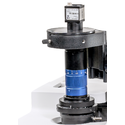
We also present the HP DSC microscopy option for visual observation as the sample is heated or cooled. This helps to identify solid-solid transitions, differentiate between overlapping effects, observe the shrinkage of fibers or films, or simply identify the cause of an artifact in the measurement curve.
Register for the live webinar now to explore how HP DSC can enhance material characterization!
Expert

Dr. Ahmet Faik Demirörs
Dr. Ahmet Faik Demirörs obtained his PhD in Physical Chemistry in 2010 and completed a postdoctoral fellowship at Northwestern University, USA. He has more than 14 years of experience in the characterization of polymers, composites, and functional materials. Before joining METTLER TOLEDO, he worked as a senior scientist and lecturer at ETH Zürich and as a senior scientist at the University of Fribourg. In 2026, he joined METTLER TOLEDO as an application specialist for Thermal Analysis. In his current position, he uses, teaches, and supports DSC, TGA, TMA, and DMA instruments at the METTLER TOLEDO head office in Switzerland.