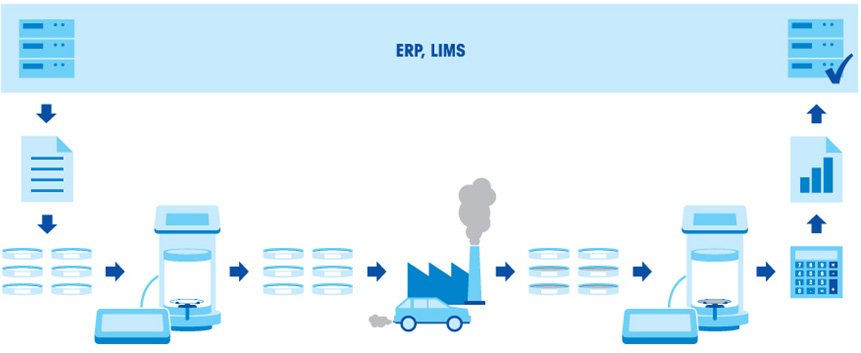
Clean air is recognised by the World Health Organization (WHO) as a fundamental requirement for human health and wellbeing. Around the world, increasingly stringent emissions legislation is driving the need for more sensitive, accurate, and reproducible particulate matter (PM) measurement techniques. Regulatory bodies now require emissions testing not only for traditional exhaust pollutants, but increasingly for non-exhaust emissions such as brake wear particles. This has elevated the importance of gravimetric filter weighing methods, high-performance microbalances, and accredited laboratory processes.
In the United States, emissions testing for engines and vehicles is primarily governed by US EPA 40 CFR Part 1065 – Engine-Testing Procedures, which specifies detailed requirements for particulate sampling systems, filter conditioning, weighing environments, instrument performance, calibration, and gravimetric PM analysis. In addition, 40 CFR Part 50 establishes the National Ambient Air Quality Standards (NAAQS), including the EPA PM2.5 Federal Reference Method (FRM) used for ambient air monitoring.
Within Europe, emissions and air quality monitoring are governed by a combination of legislation and standards. The recently adopted Regulation (EU) 2024/1257 (Euro 7) introduces new requirements for vehicle emissions, including brake particle emissions and tyre abrasion, while EN 12341 (published nationally as BS EN 12341 and DIN EN 12341) defines the reference gravimetric method for measuring ambient PM10 and PM2.5 concentrations.
The automotive industry remains a significant source of air pollutants including carbon monoxide (CO), hydrocarbons (HC), nitrogen oxides (NOx), particulate matter (PM), and greenhouse gases (GHGs). To demonstrate compliance, manufacturers must conduct emissions testing according to recognised international standards and regulatory procedures. These increasingly reference precise gravimetric measurement techniques (see table below) and laboratory quality systems such as ISO/IEC 17025 and ISO 14065, ensuring results are traceable, repeatable, and suitable for regulatory certification.
Gravimetric filter weighing remains the most widely accepted method for determining particulate mass. These standards define requirements for filter materials, conditioning periods, weighing-room environmental control, electrostatic neutralisation, balance performance, traceability, and quality assurance. As emissions limits continue to fall and after-treatment technologies become increasingly effective, laboratories must measure ever-smaller quantities of particulate matter with confidence and repeatability.