This application note describes the titer determination of benzethonium chloride (Hyamine® 1622) with Epton's classic two-phase titration method using sodium dodecyl sulfate (SDS) as a primary standard. The endpoint of the titration is indicated photometrically.
By downloading this application package, you will receive a PDF of the application note as well as the required data for the LabX™ titration software method.
What Is the Importance of Determining Hyamine in Industrial Production?
It is important to determine Hyamine® 1622, which is a cationic surfactant, in industrial production because it is used to titrate and determine the content of anionic surfactant in liquid detergent. Anionic surfactants are potential environmental contaminants, and their analysis is a crucial quality criterion for ensuring that industrial production adheres to industry standards. Therefore, determining Hyamine is an essential step in maintaining quality control measures in industrial production.
How to Determine the Titer Value of Hyamine?
To determine the titer value of Hyamine, one can use the classic Epton's method, where it is titrated with cationic surfactant in the presence of a colored indicator such as methylene blue. For this process, sodium dodecyl sulfate (SDS) is used as a primary standard to determine the titer of benzethonium chloride (Hyamine®1622).
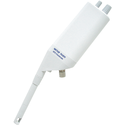
The DP5 Phototrode is utilized to monitor the precise color changes at the equivalence point and endpoint of the titration.
 |