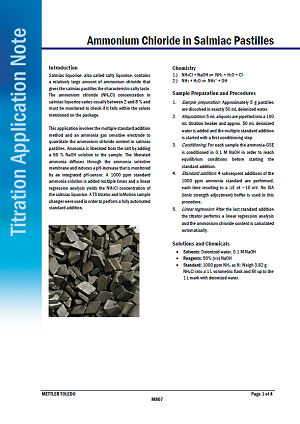
This application describes the determination of ammonium chloride content in salmiac pastilles by titration using the multiple standard addition method and an ammonia gas-sensitive electrode.
By downloading this application package, you will receive a PDF of the application note as well as the required data for the LabX™ titration software method.
What Are Salmiac Pastilles?
Salmiac pastilles, also known as salty liquorice, are a type of candy that contain ammonium chloride. This ingredient gives the candy a salty taste and is commonly found in Nordic countries, where it is a popular treat. Health hazards of consuming excess ammonium chloride include nausea, vomiting, kidney/liver damage, and respiratory irritation. Safety precautions are necessary.
What Is Multiple Standard Addition Method?
The multiple standard addition method involves adding known amounts of a standard solution to a sample and measuring the response to determine the concentration of an unknown substance. This method helps reduce errors in sample preparation and is commonly used in titration applications.
How to Quantify Ammonium Chloride in Salmiac Pastilles?
To quantify ammonium chloride in salmiac pastilles, dissolve the sample in water and titrate aliquots with a 1000 ppm standard ammonia solution using multiple standard additions and an ammonia gas-sensitive electrode. The liberated ammonia induces a pH increase that is monitored by an integrated pH sensor, and a linear regression analysis yields the ammonium chloride concentration.
 |


