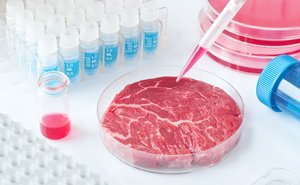
Product Development and Formulation

Incoming Goods and Quality Checks

Mixing, Batching, and Dosing

Fermentation and Bioprocessing

Extrusion and Texturization

Final Processing and Quality Control

Packaging, Labeling, and Inspection

Enhanced Precision for Superior Consistency and Reduced Waste

 Our solutions deliver the precision you need for accurate formulation, optimal texture, and consistency in meat alternatives testing.

Increased Efficiency Through Digital Integration

Our digital instruments and software solutions integrate seamlessly, optimizing automation and elevating OEE across your plant-based food manufacturing process.

Maximized Reliability and Uptime

Engineered for reliability, our instruments help you minimize downtime. This is further optimized by our global service team and software to support your maximum uptime and increased profitability.

Accurate Nutritional

Accurate Nutritional Claims and Lab Quality Control

Our solutions support precise ingredient dispensing and rigorous lab analysis to achieve accurate declared values, manage formulation costs, and meet FDA and EU labeling standards.

Foreign Body

Foreign Body Detection and Removal

Implement advanced inspection systems to proactively identify physical contaminants (e.g., metal, stones, plastics) often introduced via field-sourced raw materials, supporting HACCP critical control point requirements. 

Hygienic Design

Hygienic Design

Adhering to hygienic design standards is crucial for processing systems. The hygienic design of our instruments facilitates effective cleaning processes and helps prevent microbial contamination. 

Correct Labeling

Correct Labeling and Regulatory Navigation

Vision inspection systems support compliance with FDA, EU, and local ingredient and allergen labeling regulations, assisting in navigating the complex and evolving rules for labeling meat alternatives. 

Seamless Traceability

Seamless Traceability and Robust Data Management

Automated data capture facilitates seamless plant-based product traceability, simplifies audits, and enables rapid recall management in accordance with GFSI standards (BRCGS, IFS).

Expertise

Industry Expertise

We understand the unique complexities of plant-based food production and the need for specialized meat alternatives testing. 

Truly Collaborative

Truly Collaborative Approach

We work closely to develop tailored solutions that fit your specific needs in alternative protein production.

Built for Seamless

Integrated and Future-Ready Solutions

§Invest in a scalable suite of systems built for seamless integration across your entire product line.

How can you prevent cross-contamination with allergens during the production of plant-based foods? 

Preventing allergen cross-contamination during the production of plant-based foods requires a robust, multi-faceted strategy that emphasizes process separation, thorough validation, and swift cleanup verification. 

  • Process Separation: Where possible, separate production lines for allergen-containing and allergen-free products. 
  • Hygienic Design and CIP Validation: Processing equipment (e.g., mixers, extruders, and bioreactors) should adhere to hygienic design standards to facilitate complete cleaning. Employ in-line process analytics (e.g., conductivity sensors) to verify the effective concentration of detergents and the thoroughness of rinse cycles during CIP procedures. 
  • Quality Control Checks: Use analytical balances and pipettes to prepare samples accurately for allergen testing. 
  • Packaging Inspection: Employ vision inspection systems at the packaging stage to automatically verify that the correct label, complete with accurate allergen declarations, is applied to the final product. 

How do you maintain consistent nutritional profiles batch to batch? 

Maintaining nutritional consistency across every batch requires precision in formulation and unwavering quality control. 

  • Precise Dosing: Use high-resolution bench and platform scales and weighing terminals to accurately dose all ingredients, eliminating batching errors. 
  • Real-Time Control: Implement in-line process analytics, such as pH and conductivity sensors, during processing (like extrusion or fermentation) to enable optimal chemical conditions that affect final composition. 
  • Compositional Analysis: Use analytical balances, titrators, and spectrophotometers in the lab for accurate analysis of ingredients and finished products (e.g., protein, salt, fat content) to verify nutritional claims. 
  • Moisture Management: Use moisture analyzers to rapidly determine and control water content, which is critical for texture, stability, and final product weight. 

How do you comply with international and local food regulations? 

  • Compliance is achieved by establishing transparent control systems and accurately measuring all stages of production. The foundation of strong compliance lies in effective traceability and proactive data management. By automating data capture from your instruments, manufacturers build a comprehensive and auditable history for each batch, streamlining audits and efficiently managing recalls across various regions. 
  • Manufacturers depend on precise inspections to adhere to safety and labeling regulations. To support net content compliance, two methods are available: random sampling with bench scales or 100% check with inline checkweighers. When it comes to eliminating the risk of foreign bodies reaching consumers, X-ray inspection and metal detectors serve as a last line of defense. 
  • Additionally, vision inspection systems verify label accuracy, helping manufacturers navigate the complex international requirements regarding ingredient and allergen declarations.
  • METTLER TOLEDO offers these integrated solutions to efficiently meet your strict compliance requirements. 

What are the essential quality control measures for plant-based food products? 

Essential quality control measures for plant-based food products are focused on safety, consistency, and compliance with nutritional claims across four key areas: 

  • Safety and Purity: Inspecting incoming raw materials for physical contaminants through metal detection and X-ray inspection. Additionally, the purity of key ingredients can be verified using analytical balances and laboratory checks. 
  • Process Consistency: Enabling accurate ingredient dosing with bench scales and maintaining product consistency during manufacturing by using in-line pH and conductivity sensors. 
  • Compositional Verification: Employing titrators and spectrophotometers in the laboratory to confirm that the final product's nutritional profile (e.g., protein, salt, fat) matches the claims listed on the label. 
  • Final Product Integrity: Checking packaging weight with bench scales (random sampling) and inline checkweighers (100% check), detecting physical contaminants with X-ray inspection, and confirming label accuracy with vision inspection systems. 

How is traceability implemented in the plant-based food products supply chain? 

  • Traceability in the plant-based food supply chain relies on automatically capturing and centralizing data from instruments at every production stage - from incoming raw materials through to final product inspection. 
  • Data collected at each stage creates a continuous, auditable record for every batch, enabling seamless backward and forward traceability. METTLER TOLEDO offers software solutions to manage and integrate critical traceability data throughout the supply chain. 

What labeling requirements exist for plant-based food products?

AuthorityFocusKey Area for Plant-Based Foods
U.S. Food and Drug Administration (FDA) Regulates the vast majority of U.S. food labeling, safety, and nutritional claims.Publishes guidance on the acceptable naming and labeling of plant-based alternatives (e.g., milk, meat, and dairy substitutes) to prevent consumer confusion.
European Food Safety Authority (EFSA) / European Commission (EC) Sets the scientific foundation and legal framework for food safety, nutrition, and labeling across all EU member states.Defines rules for nutrition and health claims and often restricts the use of traditional animal-product names (like "yogurt" or "cheese") for alternatives.
Codex Alimentarius CommissionThe international standard-setting body (under the FAO and WHO) used as a baseline reference by many countries worldwide.Publishes the General Standard for the Labelling of Prepackaged Foods, which covers mandatory requirements like ingredient lists and allergen declarations internationally.
  • All plant-based foods must adhere to standard food labeling laws, including accurate ingredient lists, clear allergen declarations, nutrition facts panel, and the net quantity of contents. 
  • The most complex requirement is the naming convention, where regulations vary by country regarding the use of traditional animal-product terms, such as 'milk' or 'sausage', for plant-based alternatives. 
  • Because the rules are constantly changing and highly specific to where a product is sold, manufacturers must consult the leading regulatory body for their key markets. 

How is volume and weight control managed in plant-based food processing?

The management of volume and weight control occurs in two essential stages: 

  • Dosing and Batching: Using industrial scales, you can meticulously weigh and dose both raw and minor ingredients in alignment with the recipe. This practice not only supports batch consistency but also helps you achieve the desired texture and flavor. 
  • Final Inspection: At the end of the production line, bench scales for random sampling and inline checkweighers for 100% checks verify the weight of the finished packages. This keeps underfilled packages within compliance while minimizing overfill, reducing costly product giveaway. 

What quality assurance practices are critical for plant-based food production?

Implementing robust quality assurance practices throughout plant-based food production is important to achieve the highest standards of safety, consistency, and compliance. Key practices follow Hazard Analysis Critical Control Points (HACCP) and Good Manufacturing Practices (GMPs) frameworks. 

  • Purity and Safety: Inspecting incoming raw materials for physical contaminants using metal detection and X-ray inspection. Lab checks with precision balances verify the purity and compositional integrity of ingredients. 
  • Consistency and Control: Achieving consistent texture and flavor by utilizing accurate bench scales for ingredient dosing and in-line sensors to monitor critical parameters during processing (e.g., extrusion). 
  • Final Product Compliance: Verifying the final package is legally accurate using bench scales for random sampling and inline checkweighers for 100% checks on net content control, alongside vision inspection systems to verify correct labeling and allergen declarations. 

What are the hygiene monitoring standards in plant-based food?

Maintaining strict hygiene throughout production is essential to prevent contamination and ensure product safety. 

Key practices include: 

  • Hygienic Design: Equipment must be designed in accordance with industry and authority recommendations, such as EHEDG and NSF standards, to facilitate easy and effective washdown. 
  • Cleaning Verification: The effectiveness of sanitation is confirmed using rapid tests, such as ATP testing, which measures residue to prevent contamination. 
  • Environmental Monitoring: Facilities regularly sample surfaces to test for pathogens, including Listeria and Salmonella. 

How is X-ray inspection used in plant-based processing? 

  • X-ray inspection is used to detect physical contaminants, like metal, glass, stone, or dense plastic, and to inspect the quality of plant-based food products. 
  • METTLER TOLEDO X-ray inspection machines reliably and quickly inspect plant-based food products packaged in various materials, including plastic containers, foil pouches, glass jars, and metal cans, protecting both consumers and your brand while helping you comply with food industry standards. 

What common quality issues affect the plant-based food industry?

The plant-based food industry encounters several significant quality challenges. These include: 

  • Raw Material Variability: Inconsistent quality or contamination of incoming ingredients (such as pea, soy, or rice proteins) can compromise product safety and performance from the start. 
  • Contamination Risks: Field-sourced raw materials carry a high risk of physical contaminants (stones, metal, plastic) that must be detected and removed early in production. 
  • Inconsistent Texture and Flavor: Achieving and maintaining the desired mouthfeel and flavor requires precise control over ingredients and processing parameters, especially during intricate processes like extrusion. 
  • Insufficient Processing Control: Unstable production conditions, such as fluctuating pH, conductivity, or dissolved oxygen levels, can result in inconsistent product quality and failed batches. 
  • Moisture Control: Managing water activity is critical; inconsistent moisture leads to stability problems, texture degradation, and compromised shelf life. 
  • Labeling Accuracy: Errors in declaring ingredients or allergens pose major consumer safety and regulatory risks.

What are the best practices for handling plant-based food to support quality?

The best practices for handling plant-based food to support quality involve implementing rigorous controls across the entire production lifecycle, focusing on these four critical areas: 

  • Purity and Safety: Inspecting incoming raw materials for physical contaminants using X-ray and metal detection equipment and analytical instruments. 
  • Consistency and Control: Achieving consistent texture and flavor by using accurate precision scales for ingredient dosing and employing in-line sensors (like pH and conductivity probes) to monitor critical parameters during processing (e.g., extrusion). 
  • Hygienic Control: Adhering to sanitary design principles and conducting regular ATP testing to verify cleaning effectiveness. 
  • Final Compliance: Employing industrial bench scales and/or inline checkweighers for net content control and vision inspection systems for label accuracy and allergen verification. 

METTLER TOLEDO offers integrated solutions for all these critical quality assurance practices, providing end-to-end control for plant-based food production. 

pH des protéines d'origine végétale

Mesure du pH des protéines végétales

Relever les défis et obtenir des résultats précis avec les capteurs InLab

détermination de la teneur en humidité dans les substituts de viande

Détermination de la teneur en humidité dans les substituts de viande

Analyse rapide et précise des produits carnés végétaux

aliments à base de plantes

Tests et analyses en laboratoire des aliments à base de plantes

Développement de recettes et contrôle qualité

substituts de viande

Substituts de viande formulés et analyse en laboratoire

Évaluation de la qualité, du goût et de la texture des substituts de protéines

Je veux...
Besoin d'aide?
Notre équipe est là pour vous aider. Venez discuter avec nos experts.