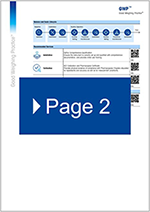
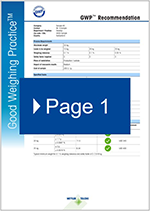
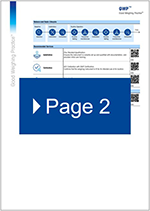
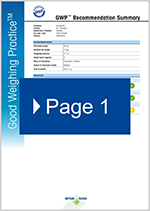
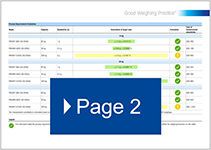
1. Exigences du processus : Il s’agit des exigences du processus qui proviennent de vous. De quoi avez-vous réellement besoin pour réussir dans votre processus ?
2. Balance spécifiée : Il s’agit de la balance recommandée qui répond à vos exigences du processus et s’en rapproche le plus. Cela est basé sur :
- Les exigences du processus comprennent le poids brut maximal, le plus petit poids net que vous souhaitez peser sur cet instrument, la tolérance de pesage en unité relative et le facteur de sécurité.
- Les normes et réglementations
- L’incertitude de mesure dite typique, basée sur les performances typiques que la plupart des instruments peuvent atteindre dans de bonnes conditions.
3. Évaluation des exigences du processus : Pour la balance spécifiée, l’incertitude de mesure et les coûts associés sont calculés sur la base des charges typiques que vous prévoyez de peser (que vous fournissez). L’incertitude de mesure est exprimée en valeurs absolues et relatives et est basée sur les spécifications typiques, ce qui signifie que la plupart des instruments atteignent cette incertitude de mesure dans de bonnes conditions.
Ces exigences peuvent être exprimées en termes absolus (dans l’unité de poids) ou relatifs (en %). Par exemple : 10 kg ± 0,1 % (relatif) ou ± 10 g (absolu).
Le facteur de sécurité calculé est déterminé sur la base de la tolérance de pesage requise et de l’incertitude de mesure calculée.
4. Coût de l’incertitude de mesure : C’est ce que l’incertitude de mesure vous coûtera avec l’instrument sélectionné. Pour une charge cible, l’incertitude de mesure correspondante en termes absolus est multipliée par le coût du matériau pour 100 pesages. Exemple concret : Pour une application de remplissage, cela reflète le coût du surremplissage systématique pendant le processus de remplissage, afin d’atteindre au moins le poids cible. Si l’incertitude de mesure est plus faible, le surremplissage peut alors être réduit en conséquence de la diminution de l’incertitude de mesure.
5. Évaluation : Le contrôle de l’adéquation à l’usage en termes de précision. Le code couleur du feu tricolore fournit le statut de l’instrument de pesage sélectionné par rapport à vos exigences du processus.
Vert : L’instrument répond à vos exigences et est donc adapté à l’usage en termes de précision.
Jaune : L’instrument est suffisamment précis, mais le facteur de sécurité dont vous avez besoin n’est pas atteint.
Rouge : L’instrument n’est pas assez précis pour vos besoins.