The HAZOP Hero: Preventing MOF Thermal Runaway
ReactIR and RC1mx measurements are used to better understand the kinetics and heat transfer in the synthesis, crystallization, and scale-up of ZIF-8 MOF.
There are a number of methods to produce MOFs, but the most practical and controllable method for industrial production of MOFs is solvothermal synthesis in reactors. Reaction temperature is critical in MOF synthesis and influences surface area and particle size distribution. In order to safely scale-up and achieve the desired product attributes, understanding temperature and heat-release behaviors is necessary.
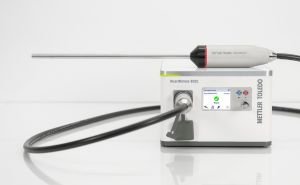
In the research described in this article, zeolitic imidazolate framework-8 (ZIF-8) was used as an example to study MOF scale-up synthesis. Various stages of ZIF-8 formation at room temperature, including nucleation, growth, and stationary, were investigated using in-situ FTIR to identify the 2-methylimidazole concentration evolution over time. The data from these experiments was then used in the Avrami equation, which describes how solids transform from one phase to another at constant temperature, to correlate the reaction kinetics based on the obtained concentration results. From these experiments, it was determined that Avrami’s constant for ZIF-8 crystallization varies with the reactor volume. The FTIR experiments were performed in an RC1e reactor system, which facilitated simultaneous identification of the reaction temperature and heat-release behaviors. These measurements enabled avoidance of inconsistent product properties from thermal runaway when scaling up the ZIF-8 production from the milliliter to liter scale. Furthermore, a full HAZOP analysis for each synthesis step was performed to investigate the effect of deviations and to ensure safe operations in production facilities.
Quan, Y., Parker, T. F., Hua, Y., Jeong, H., & Wang, Q. (2023). Process elucidation and hazard analysis of the Metal–Organic Framework Scale-Up Synthesis: A case study of ZIF-8. Industrial & Engineering Chemistry Research, 62(12), 5035–5041. https://doi.org/10.1021/acs.iecr.2c04570