Determination of Crystal Polymorphism by Thermal Analysis

Useful Techniques for Revealing Structural Differences and Behaviors

Crystal polymorphism is a fascinating phenomenon that refers to the ability of a substance to exist in more than one crystal form. Each polymorph possesses distinct structural characteristics and properties, such as solubility, stability, and melting point. This can significantly influence material behavior in applications such as pharmaceuticals, materials science, and nanotechnology. Understanding crystal polymorphism is crucial for optimizing the design and effectiveness of compounds in many industries.  

Thermal analysis provides several useful techniques for detecting polymorphism, revealing critical structural differences and behaviors. Continue reading to explore how these methods contribute to improving material performance and quality in real-life applications.

Polymorphism manifests in two types, based on the stability of the crystals. Each type influences the material properties in a unique way.

 Crystal modification (after effect B)
Crystal modification (after effect B) at around 120 °C.
Crystal modification (effect E)
Crystal modification (effect E) at about 177 °C.

Tips and Hints

  • Check the instrument calibration before performing experiments. For polymorphism studies, proper temperature and heat flow adjustments are important.
  • Consider light crucibles for sample preparation in order to diminish potential crucible influences.
  • Prepare the sample by quench cooling to be amorphous at the start of a measurement. In some cases, polymorphism is only visible then.
  • Spread the sample evenly over the bottom of the crucible. Uneven distribution can lead to identical polymorphic transitions occurring at slightly different temperatures.
  • Depending on the material, a typical heating rate is 10 °C/min, however for polymorphism studies slower rates of 5 or 2 °C/min are more suitable.
  • Operate the microscope during hot stage measurements in polarization mode. This helps to distinguish different crystal forms.
  • Check reproducibility using repeated measurements.
  • A short signal time constant of your instrument and a high resolution helps to distinguish fast polymorphic transitions.
Polymorphism Using DSC

Polymorphism Using DSC

Understanding polymorphism types is essential to correctly interpret DSC curves; examples here aid n...

Elucidation of Thermal Transitions by Hot-Stage Microscopy

Elucidation of Thermal Transitions by Hot-Stage Microscopy

Characterizing polymorphic forms and the study of melting and crystallization processes using hot-st...

The Characterization of Polymorphs by Thermal Analysis

The Characterization of Polymorphs by Thermal Analysis

Characterizing phase transitions that occur when heating polymorphs using differential scanning calo...

Curve Interpretation, Part 2: Variation of Heating and Cooling Rates

Curve Interpretation, Part 2: Variation of Heating and Cooling Rates

In this article we discuss the additional information that can be gained by varying heating and cool...

Thermal Analysis Application - Polymorphism of Tristearin

Polymorphism of Tristearin

This article shows how polymorphous materials can be investigated by DSC using tristearin as an exam...

PTFE Polymorphism by DSC and TMA

PTFE Polymorphism by DSC and TMA

Using differential scanning calorimetry (DSC) and thermomechanical analysis (TMA) curves to identify...

Thermal Analysis Application - Monotropic polymorphism in metallic alloys, Part 1: Flash DSC investigation of the melting of metastable phases

Monotropic Polymorphism in Metallic Alloys, Part 1: Flash DSC Investigation of the Melting of Metastable Phases

Using a gold-based alloy as an example, we show that monotropic polymorphic modifications can exist...

Thermal Analysis Application - Polymorphism in metallic alloys, Part 2: Measurement of the heat capacity of metastable phases by TOPEM™ and Flash DSC

Polymorphism in Metallic Alloys, Part 2: Measurement of the Heat Capacity of Metastable Phases by TOPEM and Flash DSC

The article describes how the specific heat capacity of metastable phases can be determined by tempe...

Thermal Analysis Application - Polymorphism in metallic alloys, Part 3: A thermodynamic description

Polymorphism in Metallic Alloys, Part 3: A Thermodynamic Description

The article shows how such measurements can provide information about the stability and properties o...

Why is the study of polymorphism important?

Polymorphism is the characteristic of a substance to form multiple crystal structures, which is of particular importance in the pharmaceutical industry for drug development. Different crystalline arrangements may impact the effectiveness of a drug. A polymorph may be used as an active pharmaceutical ingredient (API) to circumvent an existing patent. 

What is the difference between allotropy and polymorphism?

Allotropy refers to the existence of different molecular structures of elements, while polymorphism is the existence of multiple crystalline forms of elements or compounds of the same chemical composition. 

Do different polymorphs exhibit different properties?

Although the solutions and vapors of a compound can often be the same, polymorphs of the same compound can exhibit distinct physical and chemical properties. Chemical characteristics of polymorphs can vary significantly, including solubility, dissolving rate, bioavailability, density, color, hardness, electrical conductivity, hygroscopicity, latent heat of fusion, and melting point.

What information can be obtained from DSC and hot-stage microscopy thermal techniques?

DSC provides data on melting points, enthalpies of fusion, and heat capacities, while hot stage microscopy records morphological changes and physical changes in crystal morphology and polymorphism.

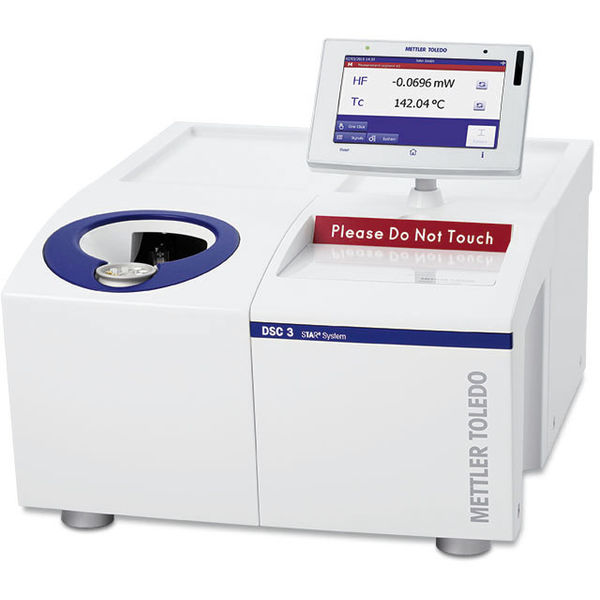
Thermal Analysis System DSC 3

Thermal Analysis System DSC 3

For routine analysis

Thermal Analysis System Flash DSC 2+

Thermal Analysis System Flash DSC 2+

Fast Scanning Calorimeter

Microscope Hot-stage System HS84

Microscope Hot-stage System HS84

Simultaneous hot stage and DSC

Thermal Analysis System TMA/SDTA 2+

Thermal Analysis System TMA/SDTA 2+

Reliable determination of length changes

I want to…
Need assistance?
Our team is here to help you achieve your goals! Speak with our experts.