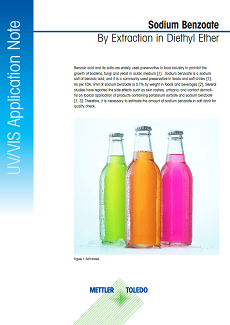
This application note provides a method for the determination of sodium benzoate in soft drinks using METTLER TOLEDO's EasyPlus UV/VIS spectrophotometer.
Sodium Benzoate: A Preservative
Sodium Benzoate is used as a preservative to prevent food from molding. It helps enhance a product's shelf life and is used in concentrations of less than 0.5% by volume. It also increases the acidity flavor of soft drinks.
Is Sodium Benzoate Safe?
The FDA allows up to a 0.1% concentration of sodium benzoate by weight in foods and beverages. If used, it must be included in the ingredient list on the product being sold. The human body doesn’t accumulate sodium benzoate. It quickly metabolizes and excretes it through urine within 24 hours, which contributes to its safety.
How to Determine Sodium Benzoate Content in Soft Drinks?
This application note focuses on the sodium benzoate content determination in soft drink samples using a METTLER TOLEDO EasyPlus UV/VIS spectrophotometer. Sodium benzoate is extracted in two steps: first with diethyl ether and in the second step with dihydrogen sodium phosphate solution. After the extraction, the absorbance of the aqueous phase is determined at 225 nm to estimate sodium benzoate concentration.
This application note includes information on:
- Sample preparation and procedures
- Chemistry
- Solutions and chemicals
- Instruments and accessories
- Results and discussion
- Remarks
Download our free application note to learn more and benefit from our experience in determining the sodium benzoate content in soft drinks.