Your Advantages With Our Solutions

Your Perfect Fit
From compact to large, balances that match your every weighing need.

Trust Every Measurement
Accurate, fast, and smart - giving you results you can count on.

Simple by Design
Ergonomic and easy handling from day one.

Built to Last
Quality design that stands the test of time, day after day.

Integrate and Connect
Effortless connectivity and seamless data management.

Easy Cleaning
Benefit from simple cleaning in your daily routine.

Accessorise Your Workflow
Find what you need for your ideal setup with our accessories.

Lifecycle Expert Services
Expert services for optimal performance, day one and beyond.
Discover Our Precision Balance Lines

XPR Balance Line
Peak Performance, Effortless Compliance
The flagship balance line offering outstanding weighing performance and data handling.

MX Balance Line
Effortless Weighing and Secure Data Handling
These advanced balances boost weighing performance, are easy to integrate and support various data management options.

MR Balance Line
All-Round Versatility
Thanks to their robust construction, the MR balances are the perfect choice for versatile weighing surroundings.

MA Balance Line
Easy Everyday Weighing
MA balances are ideal for essential, everyday weighing tasks, combining practical features with reliable quality.

LA Balance Line
Simple Balances You Can Rely On
These entry-level LA balances provide a budget-friendly, reliable solution for essential weighing tasks.
Choose Your Ideal Balance
Didn’t Find a Matching Balance? Explore Our Other Balance Types:
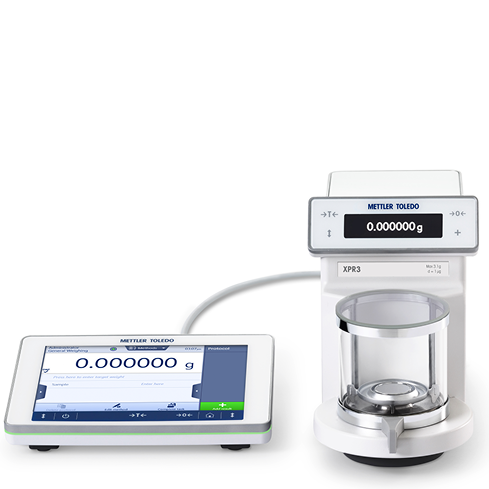
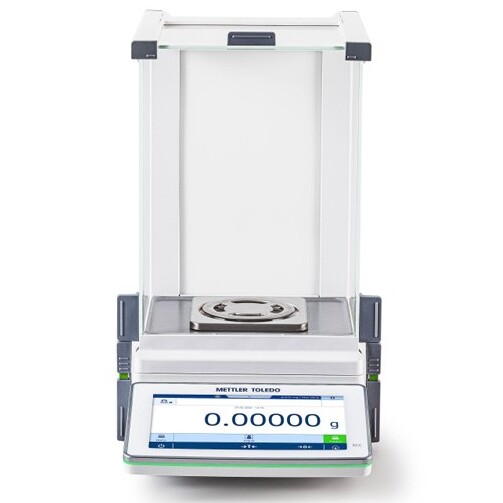
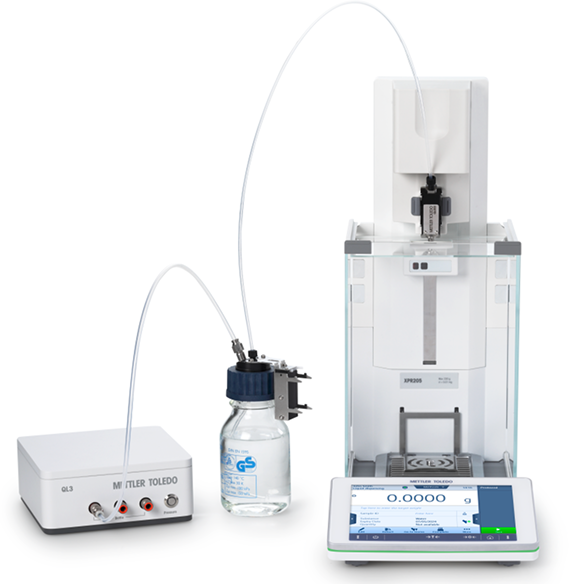
Why METTLER TOLEDO Precision Balances

Excellence
We are committed to lab weighing excellence, combining cutting-edge measurement science, deep regulatory expertise, and industry-specific insights. Our relentless focus on innovation and continuous improvement allows you to optimize processes, ensure compliance, and achieve outstanding performance every day.

Quality
Our commitment to lab weighing quality ensures that every solution you choose performs reliably and delivers lasting value. Swiss engineering excellence, premium materials, and rigorous testing mean that you can trust your analytical results for years to come.

Innovation
Our culture of lab weighing innovation compels us to continuously redefine our performance standards. This translates into forward-thinking benefits such as the easy ability to integrate automated, high-precision weighing into comprehensive analytical workflows, eliminating manual errors, ensuring traceability, and shortening time-to-result.

Partnership
Your partnership with lab weighing is built on a shared goal of producing the most accurate and efficient weighing experience possible over the whole lifecycle of your instrument. Our dedicated worldwide network of highly trained service technicians provides you with unparalleled service and support across your entire operation to optimize performance and ensure peace of mind.

Sustainability
In lab weighing, sustainability is an important part of our approach. We deliver durable, efficient analytical solutions designed to minimize waste, and reduce environmental impact throughout the equipment lifecycle.

Integrity
For METTLER TOLEDO lab weighing, integrity means fostering a culture where the needs of both our employees and our customers are consistently respected and supported. This is demonstrated by our commitment to innovation, quality, performance, and service that spans the entire lifecycle of every piece of equipment we produce.

Хотите, чтобы ваши весы работали наилучшим образом? Получите обслуживание у лидера рынка
Хотите, чтобы ваши весы работали наилучшим образом? Получите обслуживание у лидера рынка
FAQ - Precision Balances
What is a precision balance?
A precision balance is a weighing instrument with a readability between 1 g and 0.1 mg (0.0001 g), corresponding to 0-4 decimal places, and capacities of up to 64 kg. With this range, precision balances are used in both laboratory and production environments. Precision balances are used in a wide variety of industries and applications, including the preparation of samples, statistical quality control, and formulation, to weigh from just a few grams up to many kilograms.
The combination of high capacity and rugged construction makes precision balances ideal for harsh environments. With a wide range of precision balance accessories, they offer you high precision in all your processes.

Do precision balances and precision lab scales need draft shields?
Precision balances and precision lab scales produce steady readings in a wider range of environmental conditions than analytical balances. This is because the weighing cell of a precision scale or balance is less sensitive to temperature fluctuations and air currents.
While a draft shield is not usually necessary when using a precision balance with 1 or 2 decimal place readability under standard precision weighing conditions, it can help when working in a fume hood because it protects the precision weighing cell from the internal air flow. 1 mg and 0.1 mg precision balances have a highly sensitive weighing cell and are thus more susceptible to air drafts. A draft shield helps to maintain performance. In fact, many 1 mg and 0.1 mg readability precision balances are fitted with a draft shield as standard.
However, METTLER TOLEDO's XPR and MX precision balances and precision scales have an innovative SmartPan or Smart Pan Pro weighing pan. The smart pan has been cleverly designed to minimize the effects of air currents on the precision weighing cell. This has improved repeatability by up to 86% and also enables you to use 1 mg precision balances without a draft shield under standard weighing conditions. When working in a fume hood or safety cabinet, 5 mg and 10 mg precision balances with the SmartPan weighing pan deliver results up to twice as fast as models without SmartPan.
Read more in our white paper:

Where are precision balances and precision scales used? What are the application areas of precision balances?
Precision balances and precision lab scales are widely used in the laboratory and in production for many daily tasks where precision weighing is required including:
- Weighing items and samples / check weighing
- Sample preparation / reference standard preparation
- Piece counting
- Statistical quality control
- Formulation and recipe development
- Sieve analysis
- Differential weighing
- Dynamic weighing
- Interval weighing
- Density determination
Precision balances are used in general laboratories, research and development, and quality control in a wide range of industries, including chemical, pharmaceutical, food, textiles, metals, plastics, and academia. High-capacity precision balances and precision scales with capacities of 10 kg or more are available with a large weighing platform to accommodate larger loads. These high-capacity top loading balances are often used in aggregate, pharmaceutical, chemical, and adhesive formulation applications.
Watch our video to see how METTLER TOLEDO precision balances can simplify your formulation tasks:
Where can I find the specifications of METTLER TOLEDO precision balances?
Precision balances come in a variety of specifications. To find the specifications of precision balances of your interest, navigate to the model on the filter page. Below the precision balance model name, you will find a preview of some preliminary information. For details, you can click on the model to go to the precision balance product page, which includes a specification table and a tab with documentation on precision balances. Alternatively, you can compare METTLER TOLEDO precision balances by selecting different models and clicking Compare.
What is the accuracy of precision balances?
The accuracy of precision balances is given by the combination of their trueness and precision. The trueness of values measured on precision balances describes how close they are to the well-defined mass of a calibrated test weight. Precision refers to the range of variation of repeated measurements made under the same conditions on the same precision balance. Repeatability is the measure of precision typically reported on datasheets and should not be confused with the term readability. Readability, down to 0.1 mg for precision balances, is only a first indication of performance.
Which readability do precision balances have?
METTLER TOLEDO offers precision balances with readabilities ranging from 1 g to 0.1 mg, i.e., 0 to 4 digits to the gram are shown on the display of these precision balances.
What is the range of a precision balance or precision scale?
The range of a precision balance or precision scale refers to its weighing range. The weighing range is known as the capacity of the balance and is the maximum amount that can be weighed on the balance.
What is a high performance precision balance?
A high performance precision balance is specially selected for its high performance weighing cell, which offers a higher level of accuracy than a regular precision weighing cell. A high performance precision balance offers high capacity coupled with high readability, making it possible to weigh both light and heavy items accurately. Due to the high readability, a high performance precision balance enables small sample sizes to be weighed in heavy tare containers, for example in gas filling applications. When producing formulations consisting of large sample quantities together with small sample quantities, a high performance precision balance enables you to use just one container for the whole process. High performance precision balances are also used for mass determination by weight calibration service providers. Mass measurement applications involve comparing the mass of an artefact to the known mass of a reference weight, hence a high performance precision balance is often called a comparator balance.
Take a look at one of our most popular high performance precision balances that is widely used to dispense small sample quantities into heavy tare vessels, for example in gas filling and formulation applications:

How does a precision balance or precision scale function?
METTLER TOLEDO's precision balances and precision scales work using the principle of electromagnetic force compensation. The weight force of an object placed on the weighing pan of the precision balance is opposed by an electrodynamically generated force. In the stable state, this force is proportional to the applied weight and can therefore be used as a measurement signal. The precision balance interprets the compensating force as weight and displays the result on the balance terminal in the appropriate unit (milligrams, grams, kilograms).

How to weigh a sample on a precision balance?
Before starting to weigh on your precision balance or precision lab scale:
- Check that calibrations and routine tests are up to date.
- Check that the balance is level.
- If necessary, wear gloves to protect yourself as well as to avoid contaminating your sample. For some samples, personal protection equipment may be required; check your SOP.
To weigh a sample on your precision balance or precision lab scale:
- Zero the balance
- This gives you a zero point from which to start your weighing process.
- Place your container centrally on the weighing pan
- This avoids corner load error.
- Allow your precision balance to settle.
- The weight of your tare container will be shown on the display.
- Press the tare button.
- Although the display will now show zero (the number of decimal places will depend on the model of precision balance), the balance has recorded the weight of your container. This is not the same as the zero point and to indicate this, the net weight indicator 'N' will also be shown on the display.
- Add your sample to the container until you reach the target weight.
- Many METTLER TOLEDO precision balances and precision scales feature a weighing-in guide to help you weigh more precisely within your defined tolerances.
- When the balance has stabilized, you can record the net weight of your sample.
- The balance has now recorded the weight of your tare container and the weight of your sample.
- Print out or transfer your results.
- The different weights will be shown with T for tare, N for net, and G for gross (total).
- Clean the balance and the area around the balance according to your SOP.
To weigh an item on your precision balance or precision lab scale:
- Zero your precision balance.
- Place your item centrally on the weighing pan.
- The weight value is released once the precision balance has settled.
- Clean the balance.
For more information on all aspects of weighing, download our indispensable weighing guide:
What is the difference between zero and tare?
Using the zero function provides you with a zero point from which you can start weighing. If you already have something on the precision weighing pan, a protective cover for example, the zero function effectively ignores this. The zero function does not include any weight already registered by the weighing cell as part of your weighing process. However, it is important to note that any weight on the precision balance still counts towards the total load you can place on the balance (i.e. the balance capacity).
When you place a container on your precision balance and then press the tare function, the display resets to zero and the balance internally records the weight that is on the weighing pan. The balance is now ready for you to add your sample to your container. When you print out the results, the different weights are recorded with T for tare weight, N for net weight, and G for gross weight (the total weight).
In practice, you should start your weighing process by pressing zero →0←, and record the weight of your container by pressing tare →T←.

How to choose the best precision balance for laboratory and manufacturing applications?
Every precision weighing application is different, and the ideal precision balance for laboratory weighing may not be right for a very similar application in a production environment. A precision balance for a laboratory may have the challenges of drafts, vibrations, and fume hoods, whereas on a factory shop floor, for example, there may be dust, dirt, vibrations from machinery, and multiple operators across different shifts.
Precision weighing is often the first step of an analysis or process, so having accurate weighing results is important to avoid errors later. To achieve accurate results that meet your process tolerances, you need to be sure that your balance is fit for purpose. METTLER TOLEDO's free GWP® Recommendation service helps you choose the right precision balance for laboratory or manufacturing applications by considering several key factors:
- Maximum weight: the maximum amount you want to weigh (including the tare container)
- Smallest net weight: the smallest sample you want to weigh (excluding the tare container)
- Weighing tolerance: the degree of error that is acceptable, specified as a ± percentage
- Safety factor: to compensate for variations due to drafts, different operators, vibrations, etc., the minimum weight is multiplied by a factor that reflects the degree of risk associated with having an incorrect weighing result (i.e., a high negative consequence requires a high safety factor).
Not only does GWP® Recommendation help you choose the right precision balance for laboratory and production weighing applications, but it can also help you verify that your existing precision balance is fit for purpose. To learn more, see:
What is the smallest load I can weigh on my precision balance? What is the minimum weight of my precision balance?
The smallest net weight that can be weighed accurately on your precision balance or precision scale is known as its minimum weight. It is the accuracy limit of the instrument and is the smallest amount that the precision balance can weigh accurately. It is not the same as the scale division, d; this is the balance readability, which is the smallest difference in weight that can be determined. The minimum weight is not the same for every precision balance and depends on its location, the performance of the weighing cell, the ambient conditions, and the required weighing accuracy. Below the determined minimum weight value, the measurement uncertainty becomes larger than the required accuracy, and weighing results cannot be trusted.
To avoid this problem, many METTLER TOLEDO precision balances incorporate a function known as MinWeigh. MinWeigh monitors the weight of the sample being added to the balance. When the weight of your sample is below the minimum weight, the figures on the display remain red, and the weight value is not released. The minimum weight of each individual precision balance must be determined in its place of operation. For example, precision balances for the food industry and precision balances for the laboratory can require different minimum weight values depending on the application. METTLER TOLEDO service technicians can determine the minimum weight for you as a key part of the precision balance service.
Learn more from our white paper:
What is the maximum load I can weigh on my precision balance?
The capacity of your precision balance or precision scale defines the maximum load. METTLER TOLEDO precision balances offer capacities from 120 g up to 64 kg and the model name indicates the balance capacity. For example, the capacity of the XPR4002S is 4.1 kg with 2 decimal place readability (0.01 g), and the MX8001 has 8.2 kg capacity with 1 decimal place readability (0.1 g). The maximum load includes any container and the sample being weighed.
Why do I need to level my precision balance?
It is important to level your precision balance to ensure your results are accurate. Your precision balance is precisely engineered to operate in the level position so that the load cell registers the full weight force of any item placed on it. If your balance is not level, the weight value recorded will deviate from the true value in proportion to the square of the angle of tilt.
Many precision balances have a level bubble inside a small glass dome, which is usually positioned at the front of the balance, close to the display. Before using the balance, you should quickly check that the bubble is in the center of the dome. If it is not in the middle, use the balance's adjustable feet to adjust the level of the balance and bring the bubble back to the center. Many of METTLER TOLEDO's precision balances and precision scales feature the LevelControl function, which provides a warning if the balance is not level.
On some balance models, on-screen graphical guidance tells you which foot to turn, in which direction and by how much. Once leveled, you can now use your precision scale and balance.
What is the precision balance level bubble and and what is a balance level bubble used for?
The precision balance level bubble is a small circular bubble that can be found right next to the display at the front of your precision balance and it is meant to provide you with a visual aid to adjust the balance feet until the level bubble is positioned in the middle. Once the level bubble is placed in the middle you can ensure the measurements are accurate. At METTLER TOLEDO we offer precision balances with a built-in LevelControl function which issues warning when the balance is not level. Onscreen guidance tells you how much to turn each of the adjustable feet to help you level the balance in seconds.
The level bubble is conveniently located at the front of your balance, so it’s easy to confirm if your balance is level before you start weighing. With one fixed foot at the back and two large adjustable feet at the front, levelling your balance is quick and easy.
Can I operate my precision balance in a fume hood? Can air drafts influence my results?
Air drafts can certainly influence your precision scale or balance and hence affect your results. Air drafts act on the sample, the container, and the weighing pan, exerting an additional force on the precision weighing cell that the balance interprets as weight. Particularly when using a precision balance with a readability of 1 mg or even 10 mg, this additional weight force can be significant, affecting the accuracy of your results. Lower readability precision balances have a draft shield fitted for this reason.
METTLER TOLEDO's XPR and MX precision balances and precision scales are fitted with the SmartPan or Smart Pan Pro weighing pan. This unique weighing pan reduces the influence of air drafts on the precision weighing cell, minimizing the associated errors. Thanks to faster settling times, the SmartPan and Smart Pan Pro make it possible to deliver results in half the time compared to a standard weighing pan. Under harsh weighing conditions (inside a safety cabinet), results on a 1 mg readability precision balance with SmartPan Pro show an outstanding 86% improvement in repeatability compared to a standard weighing pan.
The extraordinary stability provided by our METTLER TOLEDO special weighing design also enables you to weigh with the draft shield open, minimizing process steps and further helping to speed up operations. Under normal weighing conditions, a 1 mg readability precision balance can even be used without a draft shield.
Download our white paper to learn more about SmartPan and how it supports our high precision balances:

Can temperature have an influence on my precision balance or precision scale?
Yes, ambient temperature can influence your precision scale or balance. Temperature changes cause expansion or contraction of the components of the weighing cell, affecting its performance and hence influencing your precision weighing results. If the ambient temperature fluctuates at the place where your precision balance is installed, you may experience poor repeatability. To ensure best performance, your precision scale or balance should be installed in a room where a constant temperature can be maintained. When a precision balance is first connected to the power supply or switched on, a warm-up time of approximately 1-2 hours is recommended. This period allows the precision balance to adjust to the ambient temperature and stabilize its environment. This warm-up should be repeated every time the balance is turned on after a period of inactivity. Ideally, you should leave your precision balance switched on.
Most METTLER TOLEDO precision balances and precision scales are equipped with FACT fully automatic internal adjustment. FACT automatically triggers an adjustment procedure whenever a predefined difference in temperature is exceeded. In this way, the accuracy of the precision balance is maintained automatically, without the need for operator intervention.
It should also be noted that articles, samples or containers to be placed on a precision scale should first be acclimatized to the ambient temperature. Items warmer or cooler than the precision scale itself can induce small air currents which influence the weighing cell due to the temperature differential. Not only can this cause drifting weight values, but items can appear heavier or lighter than they actually are.

Do I need to calibrate my precision balance? How often do I need to calibrate my precision balances?
Calibration is an assessment of balance performance. Whether you need to calibrate your precision balance or not will depend on where it is being used and whether there are any applicable regulations. In certain regulated environments, calibration is a necessity to verify that the balance is performing as required.
Calibration does not involve making any changes to the behavior of the balance. In contrast, a precision balance adjustment is an intervention that changes its behavior. Typically, a precision balance calibration procedure might indicate the need for an adjustment.
Calibration should always be carried out by an authorized service technician. As part of the whole calibration service, the technician may make an adjustment and calibrate the balance again to verify its performance.
Precision balances need to be calibrated regularly to ensure continued accuracy over the life of the instrument. The required calibration frequency for precision balances can be determined on an individual risk basis. It also depends on the use and environment of your precision balances. METTLER TOLEDO offers calibration services for your precision balances to help you keep your equipment operating at peak performance.
In between regular calibrations by a technician, you should also routinely test your precision balance using two external weights. These routine tests highlight any deviations from the weighing process requirements and detect potential issues early.
METTLER TOLEDO has developed a globally applicable scientific standard for the correct selection, calibration, and operation of weighing equipment known as GWP®, or Good Weighing Practice™. Our GWP® Verification service provides you with all the information you need concerning calibration frequency and routine testing for your specific process and quality requirements:
How to perform routine testing on a precision balance and how often do I need to test it?
To perform routine testing on a precision balance, it is crucial to have proper user training to ensure you can perform routine testing correctly. There are three routine tests you need to perform to ensure your precision balance is delivering reliable results: repeatability, sensitivity, and eccentricity. To perform routine testing correctly, we recommend you consider four important pillars: test frequency, test methods, test weights, and test tolerances. Learn more about how to correctly perform routine testing in our Routing Testing Webinar. and check out the video below for a quick summary. Additionally, you can download the Routine Resting Guide for step-by-step information. Further insights into the test methods pillars are available in the SOPs for sensitivity, repeatability, and eccentricity.
According to GWP®, the globally acknowledged weighing standard, you only need two test weights for the routine testing of a precision balance. A smaller weight is needed for the repeatability test and a larger weight for the sensitivity test. At METTLER TOLEDO we offer CarePac® test weights. These are expertly manufactured specially for routine testing.
The frequency of routine testing for your precision balance depends on your applications, environment, or your company SOPs recommendation. For customers who don't have an internal SOP advising which frequency or weights are suitable for testing their precision balance, METTLER TOLEDO offers GWP® Recommendation or Verification which provides you with advice on the frequency required for routine testing and which weights (OIML or ASTM class) and correct mass is needed for your high precision balance depending on your specific applications.
How often should I service my precision balance?
The frequency of servicing for a precision balance will depend on various factors, such as the frequency of use, the environment in which the balance is used, and the importance of the weighing results for your processes. METTLER TOLEDO offers GWP® Verification service to precisely help you answer this question based on your individual need to ensure your precision balance provides you with accurate results over the lifetime of the instrument.
If you use your balance frequently or if you work in a harsh or dusty environment, you may need to service your balance more often.
Additionally, regular maintenance can help prevent issues and minimizes the risk of breakdowns and ensures that it remains accurate and reliable. METTLER TOLEDO offers Balance Preventive Maintenance Service to help you prevent unplanned downtime.
What quality assurance features does my XPR precision balance have?
XPR precision balances have a range of quality assurance features that work together to help you ensure accurate results and to comply with any applicable regulations.
The StatusLight™ is built into the front of the balance terminal and uses color to let you see at a glance if the balance is ready for weighing to begin. The balance status is recorded against each weighing result to provide additional process security.
The GWP Approved function not only actively monitors the balance status, it also ensures you always weigh within the safe weighing range. The on-screen icon is your reassurance of accurate, reproducible results. GWP Approved needs to be activated by your service technician.
The Tolerance Profiles ensure weighing tasks meet defined quality requirements and regulations. An on-screen warning is given if results are out-of-spec. By using the same profile each time a specific task is carried out, consistency and traceability are assured.
How do I clean my precision balance/precision scale?
To clean your precision balance or precision scale, you will first select your cleaning agent. The cleaning agent selected will depend on your laboratory or workplace and the risk of exposure to harmful chemicals or active substances. However, the cleaning agent must be able to fully remove any contamination without damaging the balance. As a rule, your precision balance should be cleaned after each use or change of weighing substance, but this can vary according to your industry, application and frequency of use. Check your cleaning SOP for the recommended frequency.
A standard precision balance cleaning procedure follows:
- Get ready – protect yourself and have your cleaning SOP instructions on hand
- Disconnect the balance from the power supply
- Clean the area around the balance
- Disassemble all removable parts
- Clean the balance itself
- Reassemble the balance
- Ensure the balance is ready for use
Full details on how to clean your precision balance, including cleaning methods, cleaning agents, and tips on how to keep your precision balance clean, can be found in our free guide, a cleaning SOP is included:
Can I use my precision balance touchscreen while wearing gloves?
Wearing gloves while weighing not only protects you from harmful substances, but it also helps to prevent cross-contamination of your samples. All METTLER TOLEDO precision balances and precision scales are operable while wearing gloves. Our Advanced and Standard level precision balances feature a dedicated glove mode that optimizes the touchscreen for the wearing of reusable (rubber, neoprene) and disposable (nitrile, latex, or vinyl) gloves. To learn more, see:
What is overload protection on my precision balance?
As the name indicates, overload protection safeguards the weighing cell when objects that are too heavy are placed on the weighing pan or if something is accidentally dropped on it; without this protection, the sensitive weighing cell could be damaged. A warning is provided on your balance display when the balance capacity is exceeded. All METTLER TOLEDO precision balances and precision scales incorporate overload protection.
Is my precision balance Legal-for-Trade?
In commercial applications that involve the direct selling of products by weight, a Legal for Trade balance is required. You should check the legal requirements of the country and area in which you are manufacturing the products and where they are sold. Most METTLER TOLEDO precision balances are available as Legal for Trade versions. Our Legal for Trade precision balances undergo additional testing. We can supply precision balances verified as Legal for Trade (/M models). However, your local regulations may require that the verification is done by weights and measurement inspectors or authorized service technicians in your area (/A models). Local regulations should always be checked prior to making a purchase.
The Legal for Trade seal gives your customers confidence that the balance mechanism has not been tampered with and the weighing results are true.
Which precision balance model is suitable for weighing large loads and bulky items?
Our portfolio of precision balances and precision scales includes several large platform balances. The larger weighing pan enables large loads and bulky items to be weighed with ease. Our large platform precision balances offer capacities from 10 kg up to 64 kg and 0, 1 and 2 decimal place readabilities (1 g, 0.1 g and 0.01 g). Our high-performance precision balances offer 3 decimal place (0.001 g) readability. The choice of capacity and readability will depend on your individual application.
METTLER TOLEDO precision balances enable an optional hook to be installed on the base of the balance that enables you to weigh large items by suspending them below the balance. The hook can also be used as part of a customized density determination apparatus. This setup is ideal for determining the density of bulky and awkwardly shaped items.
Take advantage of our free GWP® Recommendation service to ensure you select the right precision balance for your needs:

How do I transfer data from my precision balance into Excel or export it to my own system?
There are a few things you can do to transfer data from your precision balance into Excel. The transfer of data depends on the model of your balance and the software it uses. With METTLER TOLEDO precision balances you can transfer data into Excel thanks to the multiple interfaces including USB and our unique METTLER TOLEDO MT-SICS commands which allow you to easily connect your precision balance to LIMS, PLC, and MES systems as well as other lab instruments. This helps you save time, avoid errors, and meet regulatory requirements thanks to GxP-compliant data transfer.
Additionally, our precision balances are available with two laboratory software packages. With EasyDirect Balance, you can collect weighing data on your PC from up to 10 balances via RS232 to USB converter cable or Ethernet. With this, you minimize manual transcription errors and efficiently analyze, report, and export your data and results. Additionally, LabX™ Balance software integrates fully with laboratory information systems, such as LIMS, and enables a seamless flow of data.
How can I transfer my precision weighing results to a PC or other computer?
METTLER TOLEDO precision scales & balances can support you with simple data transfer without the need for additional software. Your precision balance must first be connected to your PC, either through the RS232 or USB connections.
- With Advanced and Standard level precision balances, you need to activate PC Direct. Simply press 'Print' to transfer your weighing result to an Excel spreadsheet or Word document.
- With Excellence level precision balances, you need to activate the HID (drop-to-cursor) function. After weighing your sample, press 'Add result' on the balance display, and your result will be transferred directly to an Excel spreadsheet or Word document.
For more advanced data management possibilities, we can offer you dedicated software:
- Our EasyDirect™ software provides extended result management capabilities for our Advanced and Standard level precision balances, including csv file exporting, statistical calculations, and review of results.
- LabX® laboratory software offers advanced data management and results analysis for our Excellence level precision balances. LabX is a highly flexible solution for the centralized management of data, tasks, instruments, and users, and can assist you with compliance with 21 CFR part 11 and ALCOA+ data integrity requirements.
What is the difference between a precision balance and an analytical balance?
A precision balance or precision scale typically offers readability from 0-3 decimal places (1 g to 1 mg) whereas an analytical balance is defined as having readability of 4 decimal places or more (0.1 mg).
What are the different types of precision balances?
METTLER TOLEDO offers many precision balances and precision scales that can be broadly categorized as shown below:
- Large platform
- Precision balance with a large weighing platform to accommodate heavy and bulky loads.
- Readability: 1 g – 1 mg
- Decimal places: 0-3
- Capacity range: 12.1 kg – 64.1 kg
- Weighing pan: Rectangular pan SmartPan (large)
- Small platform
- Precision balance with a small weighing platform to accommodate standard loads and less bulky items.
- Readability: 1 g – 1 mg
- Decimal places: 0-3
- Capacity range: 310 g – 10.1 kg
- Weighing pan: Rectangular pan SmartPan
- High-performance, large platform
- Comparator precision balances, carefully selected for their exceptional repeatability at higher capacities.
- Readability: 1 mg
- Decimal places: 3
- Capacity range: 26.1 kg – 64.1 kg
- Weighing pan: LevelMatic weighing pan (large)
- High-performance, small platform (supplied with a draft shield)
- Comparator precision balances, carefully selected for their exceptional repeatability at higher capacities.
- Readability: 0.1 mg
- Decimal places: 3-4
- Capacity range: 2.3 kg – 10.1 kg
- Weighing pan: LevelMatic weighing pan (small)
- With a draft shield
- Precision balances with a higher readability for weighing smaller loads.
- Readability: 1 mg – 0.1 mg
- Decimal places: 3-4
- Capacity range: 101 g – 5.1 kg
- Weighing pan: Circular pan Square pan SmartPan (small)
- Portable
- Lightweight precision balances, easily moved to wherever you need to weigh and can be battery operated.
- Readability: 100 mg – 10 mg
- Decimal places: 1-2
- Capacity range: 220 g – 6.2 kg
- Weighing pan: Circular pan
What are the different precision balance levels offered by METTLER TOLEDO?
METTLER TOLEDO offers a wide range of high-quality precision balances:
Excellence Level Precision Balances
Outstanding weighing performance and innovative sample-handling technologies, these high-precision balances help make your challenging weighing tasks efficient, error-free, and compliant.
Product Lines: XPR
Advanced Level Precision Balances
The right choice when you need great performance and durability. Intuitive operation and integrated applications make your weighing processes fast and convenient.
Product Lines: MX, MR
Standard Level Precision Balances
Enter the professional world of weighing with our robust and easy-to-use Standard Precision Level Balances. High-quality construction and solid performance ensure consistent and precise weighing results.
Product Lines: MA, LA
If you are unsure which precision balance is right for your process requirements, METTLER TOLEDO offers a free GWP® Recommendation service to help you select the right precision balance by matching your precision balance performance and characteristics to your requirements.
What is the performance of a precision balance?
The performance of a precision balance can vary depending on the specific model and manufacturer. METTLER TOLEDO precision balances are highly accurate and provide the best performance, capable of showing accuracy down to 0.1 mg even in the harshest weighing environments. Additionally, they are intelligently engineered with smart design and stainless-steel surfaces offering resistance against scratch, corrosion, water, dust and other particles.
How to use my precision balance in a sustainable way?
There are various factors you can consider and apply if you wish to use your precision balance in a sustainable way.
Purchasing a precision balance that is designed with sustainability in mind helps you be more sustainable. Key factors you can consider are efficient use of electricity consumption during use, robust construction made of materials offering long-lasting durability, possibility to reduce waste by saving precious samples, and design-for-repair.
METTLER TOLEDO precision balances provide you with sustainable value in terms of exceptionally long-lasting design made for durability, ease of repair, and availability of spare parts with no compromise to your high precision balance. Additionally, our MX and MR precision balance lines are equipped with power saving mode to prevent unnecessary waste of power and allows you to configure when your balance will automatically go into its ultra-power mode, overnight and at weekends. On working days, you can set the balance to start early so it’s warmed up and performing optimally once it’s needed. This not only saves costs but also supports efforts to protect the environment.

How much power do precision balances consume?
The power consumption of a laboratory precision balance can vary depending on the model and manufacturer. Some models may have additional features that increase their power consumption slightly, but in general, precision balances are designed to be energy efficient. METTLER TOLEDO precision balances are available with power saving capabilities such as Stand-by Mode (applicable to our XPR, MA, LA balance lines) or Power Saving Mode (applicable to MX and MR balance lines). The typical power consumption of a precision balance can be around 3.1 KWh but with our sustainable built-in feature, the Power Saving Mode, our precision balances MX and MR allows you to save energy up to 55% annually. This is calculated based on an average number of hours a high precision balance is used in a laboratory per week.
What type of packaging is used for my precision balance?
METTLER TOLEDO precision balances are packed in 100% recyclable packaging. Our MA-P balances are packed with 100% renewable materials. They are made completely out of cardboard and have minimal carbon footprint due to low energy requirements in the production process. Additionally, all our accessories for balances without draft shields are packed in full cardboard. For the packaging of the other balance lines and accessories for balances with draft shields, we used EPP foam (expanded polypropylene). EPP is 100% recyclable, highly elastic and provides high impact resistance capabilities. It’s a sustainable and lightweight material that consumes minimal resources (it’s composed of 90% air) and minimizes emissions thanks to the lightweight of the material.
For which lab applications can I use my precision balance?
Precision balances are used in a wide range of laboratory applications that require highly accurate and precise measurements. Here are some common lab applications where precision balances are commonly used:
- Analytical chemistry: Precision balances are often used to measure the mass of chemical substances used in analytical chemistry, including reagents and solvents.
- Microbiology: In microbiology, precision balances are used to accurately measure the mass of small samples, such as bacterial or fungal cultures, or for weighing out precise amounts of growth media.
- Material testing: Precision balances are used in material testing to measure the mass of samples used in mechanical and physical property testing.
- Pharmaceutical research: In pharmaceutical research, precision balances are used to accurately weigh out small quantities of active ingredients or excipients for use in drug development.
- Quality control: Precision balances are also used for quality control purposes, such as measuring the mass of products or ingredients to ensure they meet certain specifications.
Our precision balance for the laboratory can be used for all your lab applications and laboratory settings. You can also check out our precision balance accessories to find more to support your applications.